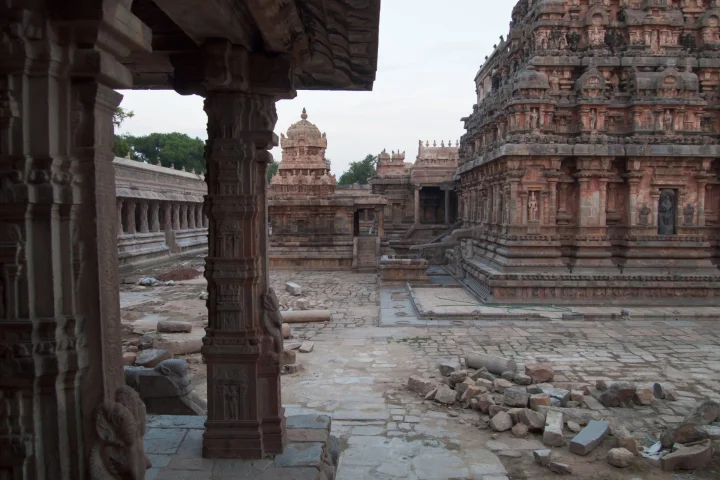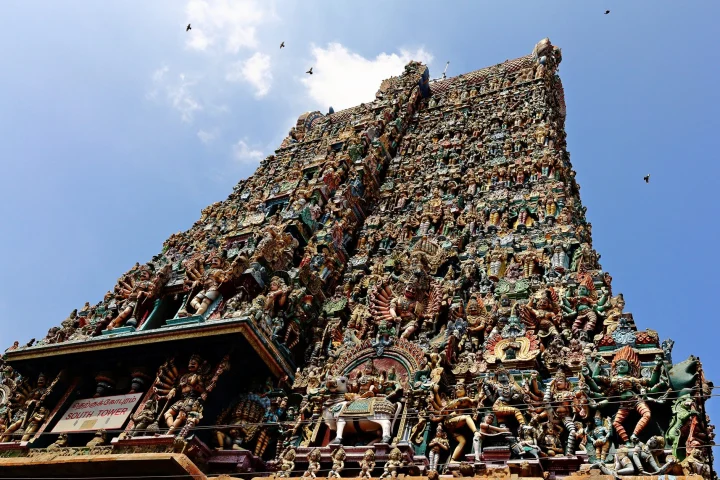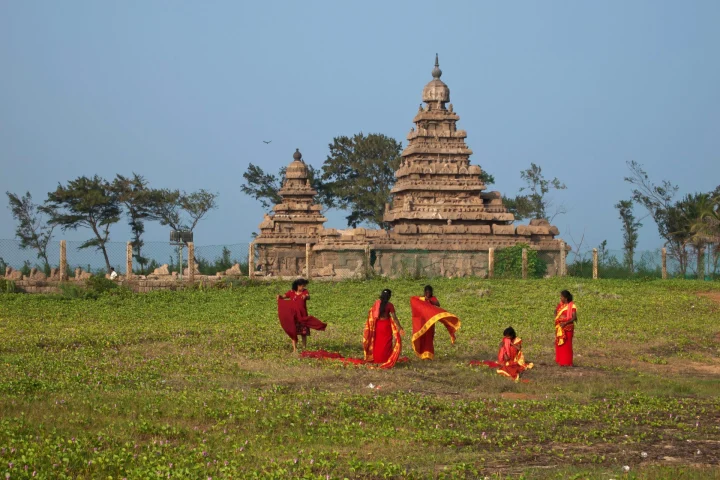
Tamil Nadu’s great temples are working places of worship, not museums. That is what makes them so rewarding to visit, and also why a little preparation helps. Nobody expects a visitor to know every custom, but turning up in shorts with a phone in your hand at the Meenakshi temple will mean a detour to the cloakroom, or being turned away at the gate.
This guide covers what to wear, what to do with shoes and phones, how darshan queues and paid tickets work, and the rules that apply to non-Hindu visitors. Rules differ between temples and change from time to time, so treat this as a practical starting point and follow the notice boards and staff at each temple.
On this page
- Is there an official dress code for Tamil Nadu temples?
- What to wear to a Tamil Nadu temple
- Footwear: always outside
- Mobile phones and photography
- Darshan queues and special entry tickets
- Can non-Hindus enter Tamil Nadu temples?
- Etiquette inside the temple
- Special cases: Tiruvannamalai and Rameswaram
- Frequently asked questions
Is there an official dress code for Tamil Nadu temples?
There is no single dress code enforced by law across every temple in the state. In November 2015 a single judge of the Madras High Court directed a dress code for temple visitors – dhoti or trousers with a shirt for men, and saree, churidar or half-saree for women – to take effect from 1 January 2016. That order was stayed in January 2016 by a division bench, on an appeal filed by the Hindu Religious and Charitable Endowments (HR&CE) Department.
In practice, many large temples display their own dress guidance at the entrance, and staff do stop visitors who are clearly under-dressed. The Madurai Meenakshi temple, for example, was among the shrines that put up notice boards, and visitors report being asked not to enter in lungis, Bermuda shorts or similar clothing. The safe approach is simple: dress as you would for a formal family function.
What to wear to a Tamil Nadu temple
For men
- Full-length trousers or a veshti (dhoti) with a shirt or kurta.
- Avoid shorts, three-quarter pants, lungis and sleeveless vests.
- Loose cotton is far more comfortable than jeans on hot stone floors.
For women
- Saree, salwar kameez or churidar, or a long skirt with a top that covers the shoulders.
- Avoid shorts, short skirts, sleeveless or low-cut tops and very tight clothing.
- A light dupatta or stole is useful for covering shoulders and for shade outside.
For everyone
Choose clothes that cover the shoulders and knees, and that you don’t mind sitting on the floor in. If you are on a multi-temple trip, pack at least two sets of temple-appropriate clothes: the heat means you will want to change midway through the day. Temple streets usually have shops selling veshtis and shawls if you arrive unprepared.
Footwear: always outside
Shoes and sandals are never worn inside a Hindu temple. Large temples have footwear counters near each main gopuram where you leave them in exchange for a token; smaller shrines may simply have a rack or a corner by the gate. Remember which gate you entered by – at a temple the size of Meenakshi or Rameswaram, walking round to find your shoes can take a while.
Stone courtyards get very hot by late morning, especially from March to June. Visit early, keep to the shaded mandapams where possible, and consider thin cotton socks where they are allowed – ask at the gate, as some temples do not permit them.
Mobile phones and photography
This is the rule most likely to catch travellers out. Following a December 2022 order of the Madurai Bench of the Madras High Court, the Tamil Nadu HR&CE department began enforcing a ban on mobile phones inside major temples from 1 September 2026. Visitors deposit their phones at counters near the entrance for a small fee (reported as ₹5 per phone at the time of writing) and collect them after darshan. The Madurai Meenakshi temple has restricted phones for several years already.
What this means for you: plan to be without your phone for an hour or two. Agree on a meeting point with your group and your driver beforehand, carry a little cash for offerings and the deposit, and keep hotel details written down. If you want photographs, take them outside the temple walls; photography is not allowed inside sanctums anywhere, and many temples do not allow cameras inside at all.
Temples in the Union Territory of Puducherry, such as Manakula Vinayagar Temple, are not run by the Tamil Nadu HR&CE department, so their rules can differ. Follow the notices at each gate.
Darshan queues and special entry tickets
At the bigger temples there are usually two or more queues to the main sanctum: a free general (dharma) darshan queue and one or more paid ‘special entry’ queues. Paid tickets are sold at counters inside the temple and move faster, especially on weekends and festival days. Fees vary by temple and change from time to time, so check at the counter rather than relying on figures quoted online.
Some things that help:
- Go early in the morning on a weekday. Queues on Saturdays, Sundays, new moon (amavasai), full moon (pournami) and major festival days can be many times longer.
- Buy tickets only from official temple counters and keep the receipt.
- Be wary of people offering ‘quick darshan’ outside the gates.
- Carry small notes and coins for archanai (offering) tickets, the footwear counter and the hundi (offering box).
- Many temples close for a few hours in the afternoon. Arriving just before the midday closure can mean a long wait.
Can non-Hindus enter Tamil Nadu temples?
Generally, yes – non-Hindu and foreign visitors are welcome in the outer parts of most Tamil Nadu temples: the gopurams, courtyards, pillared halls and tanks. Entry to the innermost sanctum is a different matter. At the Madurai Meenakshi temple, for instance, signs have long marked the point beyond which non-Hindus may not go, and the main shrines of Meenakshi and Sundareswarar are reserved for Hindu worshippers.
In January 2024 the Madurai Bench of the Madras High Court, hearing a case about the Palani Murugan temple, directed the HR&CE department to put up boards in Hindu temples stating that non-Hindus are not permitted beyond the kodimaram (the flagstaff in front of the main shrine). The court said a non-Hindu who wishes to worship a particular deity may be admitted after giving a written undertaking of faith in the deity and agreeing to follow the temple’s customs.
How strictly this is applied varies from temple to temple. If you are not Hindu, the respectful approach is to enjoy the architecture and atmosphere of the outer halls, follow any signs, and ask temple staff before going further in. Temples such as the Brihadisvara at Thanjavur, which is also a UNESCO World Heritage monument, see many international visitors in their open courtyards.
Etiquette inside the temple
- Walk around shrines clockwise, keeping the deity on your right.
- Don’t touch idols, priests or ritual items unless invited to.
- Accept prasadam (sacred food) and vibhuti (holy ash) with your right hand.
- Keep voices low, and don’t point your feet at a shrine when seated.
- Couples should avoid public displays of affection.
- Leather items such as belts and bags are frowned on at some temples; leave them in the car if unsure.
- Women who are menstruating traditionally do not enter many temples; this is a personal choice, but you should be aware of the custom.
- If a puja or procession is under way, step aside and let it pass.
Special cases: Tiruvannamalai and Rameswaram
At Tiruvannamalai, many pilgrims walk Girivalam, the roughly 14 km path around Arunachala hill, traditionally barefoot. On full moon nights, and especially during the Karthigai Deepam festival, the town is extremely crowded. If you are not there for the festival, a weekday visit away from the full moon is far calmer.
At Rameswaram, pilgrims traditionally bathe in the sea at Agni Theertham and then at the wells inside the Ramanathaswamy temple before darshan. Expect to get wet: carry a change of clothes and a plastic bag, and leave valuables with someone you trust or in your vehicle.
If you are planning a multi-temple trip, our Grand Tamil Nadu temple tour and Madurai–Rameswaram–Kanyakumari tour can be arranged with a driver who knows the gates, footwear counters and parking at each temple.
Official information: Temple website (Tamil Nadu HR&CE)
Frequently asked questions
Can I wear jeans to a temple in Tamil Nadu?
Full-length jeans are usually tolerated for men at most temples, but some temples discourage them. Loose cotton trousers or a veshti are cooler and always acceptable. Avoid shorts entirely.
Are mobile phones allowed inside Tamil Nadu temples?
From 1 September 2026, mobile phones are banned inside major temples run by the Tamil Nadu HR&CE department. You deposit them at a counter near the entrance for a small fee and collect them afterwards.
Can foreigners enter the Madurai Meenakshi temple?
Yes, foreign and non-Hindu visitors can enter the temple complex and see its halls and corridors, but the main sanctums of Meenakshi and Sundareswarar are reserved for Hindu worshippers. Follow the signs inside.
Do I need to remove my shoes at Tamil Nadu temples?
Yes. Footwear must be left outside at every Hindu temple, usually at a counter near the entrance where you receive a token.
What is special darshan at Tamil Nadu temples?
It is a paid queue that reaches the sanctum faster than the free general queue. Tickets are sold at official counters inside the temple, and fees vary by temple.