Tiruvannamalai is a temple town built around a single hill. For Shaivites, Arunachala is Shiva himself, and the Arunachaleswarar Temple at its foot is one of the Pancha Bhoota Sthalams – the five great Shiva temples linked to the elements – representing fire. For many visitors from abroad, it is better known as the home of the sage Ramana Maharshi, whose ashram still draws seekers from around the world.
The town is busy and not especially pretty, but the temple is spectacular and the hill has a quiet pull. From Pondicherry it is an easy day trip, and it combines naturally with Gingee Fort, which lies on the same road.
On this page
Why visit Tiruvannamalai
Come for the temple, one of the largest in India, with four great gateway towers and a series of courtyards that take an hour or more to walk through. Come also for the atmosphere: pilgrims walking barefoot around the hill, sadhus along the road, and the calm of the ashram. If you have any interest in meditation or Indian philosophy, a morning at Sri Ramanasramam is a very different experience from a typical temple visit.
Top sights in Tiruvannamalai
Arunachaleswarar Temple
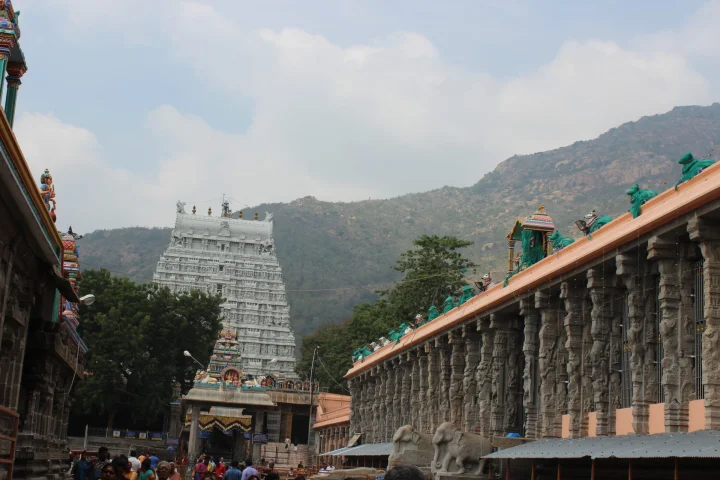
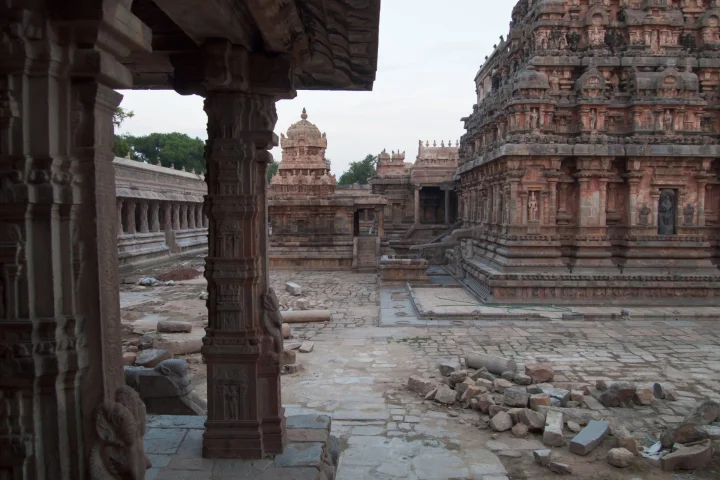
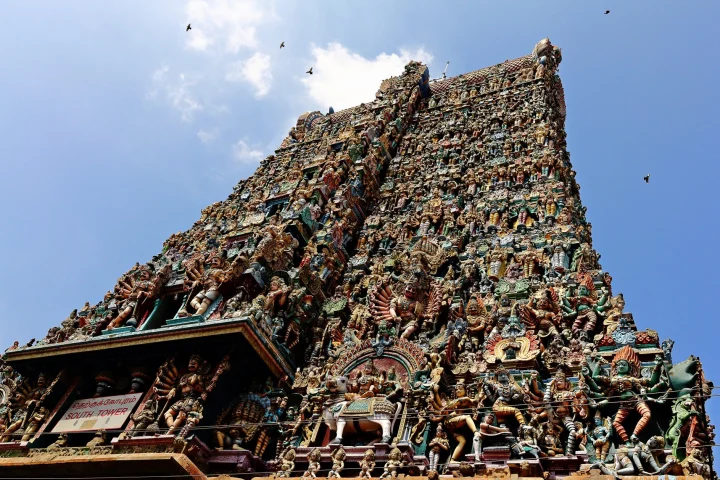
The temple covers about 10 hectares, and its eastern Rajagopuram rises to around 66 metres with 11 tiers – among the tallest temple towers in India. Much of the present structure dates from the Chola period onward, with major additions under the Vijayanagara rulers and later Nayaks. Inside, look for the thousand-pillared hall, the temple tanks and the shrines to Shiva as Arunachaleswarar and to the goddess Unnamulai Amman. From the inner courtyards the hill appears framed between the towers.
Sri Ramanasramam
Ramana Maharshi came to Tiruvannamalai as a teenager in 1896 and never left. His ashram at the foot of the hill, on the Girivalam road, is open to visitors: you can sit in the old hall where he received people, visit his samadhi shrine and walk through the peaceful grounds. Silence and modest dress are expected.
Virupaksha Cave and Skandashram
A footpath from near the temple and the ashram climbs the lower slopes to Virupaksha Cave, where Ramana lived for many years, and further up to Skandashram. The walk takes around 30–45 minutes each way and gives fine views over the temple towers. Go early, carry water, and be aware that access to higher parts of the hill is restricted at times by the authorities.
Girivalam
Girivalam is the roughly 14 km walk around Arunachala, traditionally done barefoot and clockwise. Along the route are eight small lingam shrines (the Ashta Lingams) and many smaller temples and ashrams. On full-moon nights (Pournami) huge crowds walk the circuit through the night. For a quieter experience, walk it at dawn on an ordinary day, or drive the route and stop at the Ashta Lingams.
One-day plan from Pondicherry
This is the route of our Tiruvannamalai–Gingee day trip. The temple is also part of the Pancha Bhoota Sthalam tour, which links the element temples of Kanchipuram, Chidambaram and Trichy. If you want to walk the Girivalam on a full moon, plan an overnight stay.
- 6:00 am – leave Pondicherry.
- 7:15 am – short stop at Gingee Fort (or keep it for the return if the heat allows).
- 8:45 am – Arunachaleswarar Temple for morning darshan.
- 11:00 am – Sri Ramanasramam and the walk to Virupaksha Cave.
- 1:00 pm – simple South Indian lunch near the ashram.
- 2:30 pm – drive part of the Girivalam route, stopping at a few Ashta Lingams.
- 4:00 pm – head back, arriving in Pondicherry by evening.
How to reach Tiruvannamalai from Pondicherry
The road runs west through Villupuram district farmland to Gingee, where the fort’s granite hills appear beside the highway, and then on to Tiruvannamalai. Arunachala is visible from far away as you approach. A car and driver is the most practical option for a day trip because the temple, the ashram and the Ashta Lingams are spread along the 14 km hill road. Buses also connect Pondicherry with Tiruvannamalai, usually via Villupuram, but they are slower and crowded on full-moon days.
Best time and weather
November to February is the most comfortable time, with cool mornings that suit the Girivalam and hill walks. Tiruvannamalai is inland and gets hotter than the coast from March to June, often well above 35 °C, so walk only at dawn in summer.
The biggest event of the year is Karthigai Deepam, in the Tamil month of Karthigai (November–December). On the main evening a huge ghee lamp is lit on the summit of Arunachala and hundreds of thousands of pilgrims gather. It is extraordinary to witness but extremely crowded, with road closures and long walks; book hotels well in advance and check official ticket arrangements for the temple.
Food and where to eat
Food in Tiruvannamalai is simple. Around the temple you will find vegetarian meals, idli, dosa and filter coffee. The area near Sri Ramanasramam has small cafés catering to long-stay foreign visitors, with fresh juices, salads and baked goods alongside South Indian dishes. Temples and ashrams do not allow food or drink inside the main halls.
Practical tips
- At the time of writing, the temple opens around 5:30 am and stays open into the evening (darshan queues may close earlier than the gates), with longer hours on full-moon and festival days – check locally before you go.
- Wear modest clothing covering shoulders and knees; traditional dress is appreciated. Footwear is left at the gate.
- Some inner shrines may be closed to non-Hindus; follow staff instructions.
- Paid special-darshan tickets can shorten the queue on busy days.
- Avoid Girivalam in the midday heat, and watch out for traffic on the road sections.
- On full-moon days, expect traffic jams on the approach roads and plan extra time.
Frequently asked questions
How far is Tiruvannamalai from Pondicherry?
About 108 km by road via Gingee, which takes around two and a half hours.
How long is the Girivalam path?
The Girivalam around Arunachala hill is about 14 km. Walking it barefoot at a steady pace takes roughly four to five hours.
Which element does Tiruvannamalai represent?
The Arunachaleswarar Temple is the Pancha Bhoota Sthalam for fire (Agni), one of the five element temples of Shiva.
When is Karthigai Deepam celebrated?
It falls in the Tamil month of Karthigai, usually in late November or December. The Maha Deepam is lit on the hilltop in the evening of the main day.
Can I visit Tiruvannamalai and Gingee in one day?
Yes. Gingee lies on the road from Pondicherry, so you can see the fort’s lower areas and the temple in one long day.
Can foreigners visit Sri Ramanasramam?
Yes. The ashram is open to visitors of all backgrounds; dress modestly and keep silence in the meditation hall and samadhi area.