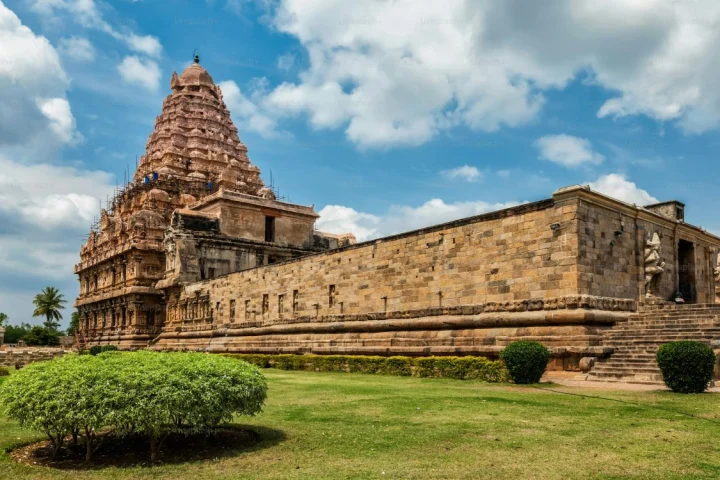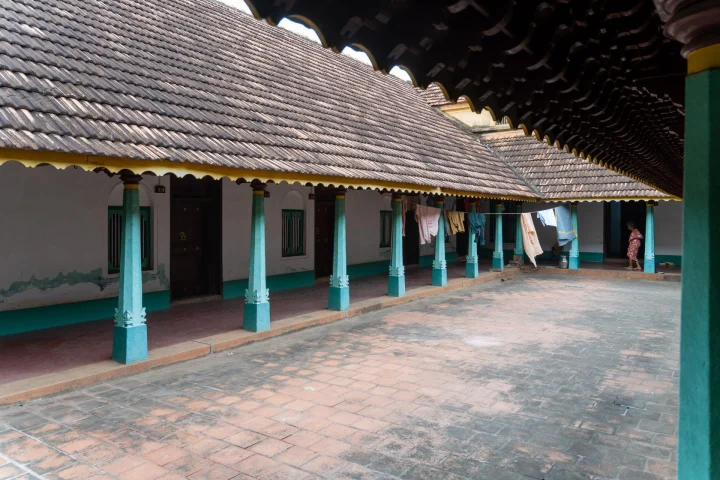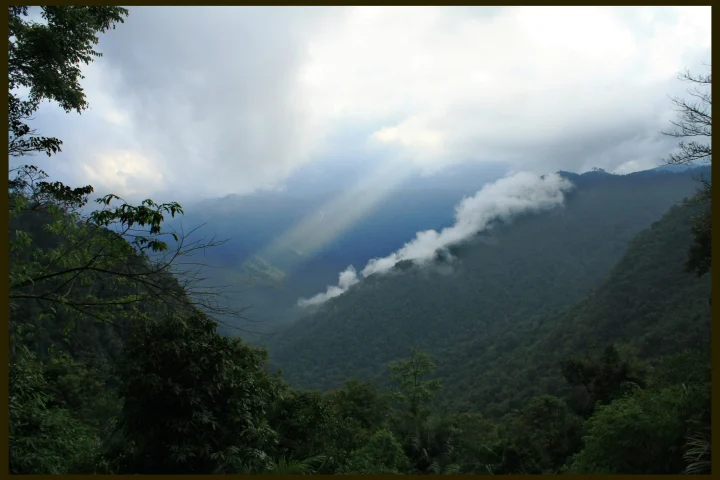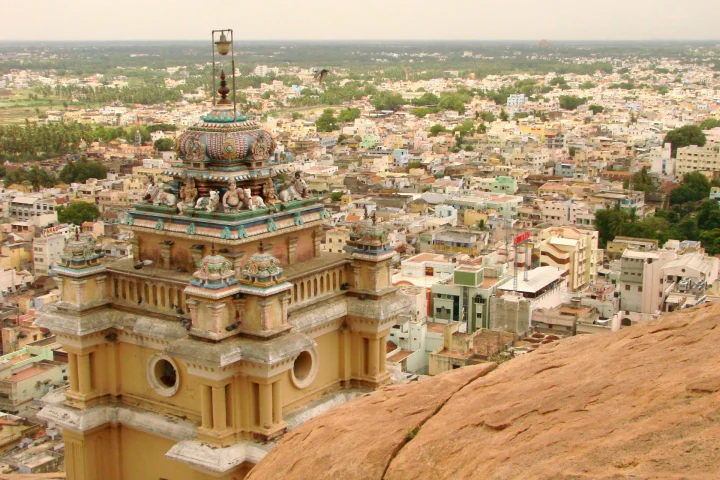
Madurai on the Vaigai river is one of the oldest continuously inhabited cities in South India, the capital of the Pandya kings and a centre of Tamil literature since the Sangam age. Later the Nayak rulers rebuilt it around the great temple of Meenakshi and Sundareswarar, and the old city still radiates out from the temple in concentric streets named after Tamil months.
It is the southernmost of the big temple cities on our routes, and the gateway to Rameswaram, Kanyakumari and the hills of Kodaikanal.
On this page
Why visit Madurai
The Meenakshi Amman Temple is one of the most spectacular in India – a whole walled precinct of colourful gopurams, pillared halls and shrines that are busy from dawn until late at night. Madurai is also a lively, very Tamil city, known locally as the city that never sleeps, with a food scene that carries on well after dark.
Top sights in Madurai
Meenakshi Amman Temple
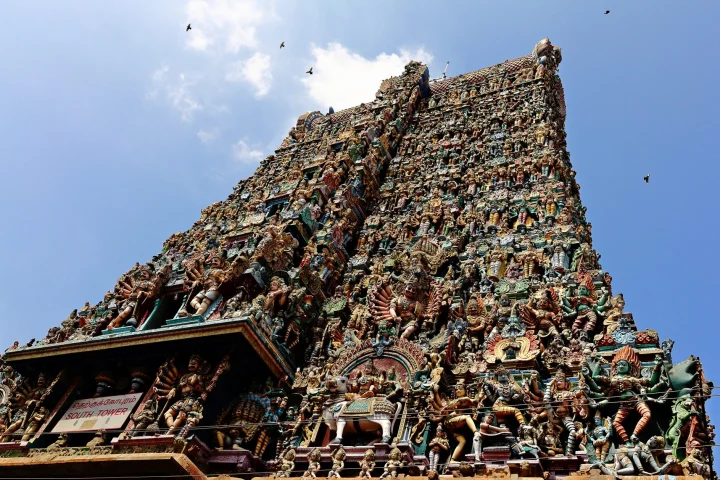
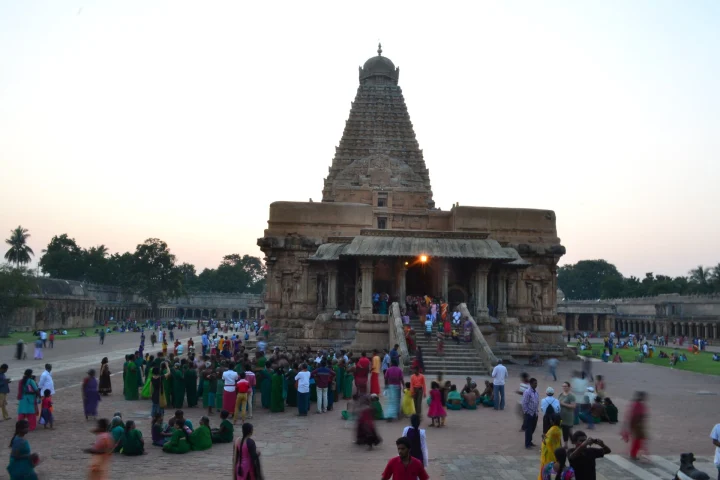
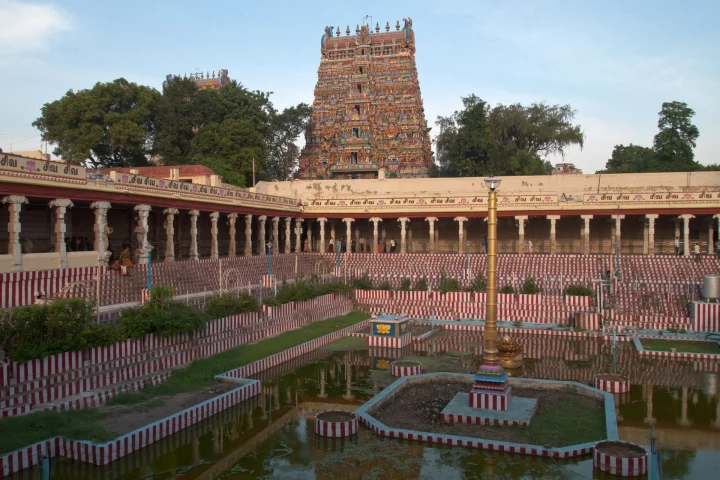
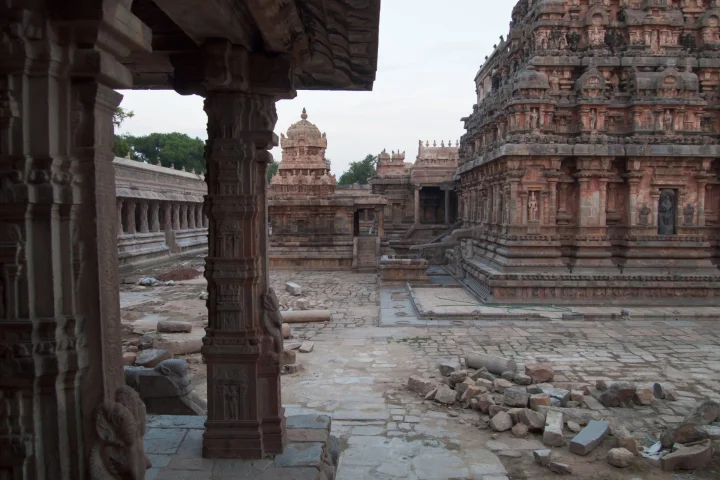
Dedicated to the goddess Meenakshi and her consort Sundareswarar (Shiva), the temple has 14 gopurams, the tallest – the southern tower – rising about 50 metres, covered in thousands of painted stucco figures. Most of what stands today dates from the Nayak period of the 16th and 17th centuries. Inside, look for the Golden Lotus Tank, the long corridors with carved pillars, and the Thousand-Pillared Hall, which houses a small art museum. The evening ceremony when Sundareswarar is carried to Meenakshi’s chamber for the night is worth staying for.
Thirumalai Nayak Palace
Built in 1636 by the Nayak king Thirumalai, the surviving part of the palace has a huge courtyard lined with tall columns and an ornate throne hall with stucco decoration. A sound-and-light show in the evening tells the story of the palace – check schedules locally.
Gandhi Memorial Museum
Housed in the old Tamukkam Palace, the museum traces the Indian independence movement and Gandhi’s life. Its most moving exhibit is the blood-stained cloth Gandhi was wearing when he was assassinated in 1948.
Around Madurai
Thiruparankundram, on the southern edge of the city, is a Murugan temple partly cut into a rock hill and one of the six abodes of Murugan. Alagar Koil, a Vishnu temple in the hills north-east of the city, links with Madurai through the Chithirai festival. The Vandiyur Mariamman Teppakulam, a large tank with a temple on an island, hosts the float festival in the Tamil month of Thai (January–February).
Sample plan from Pondicherry
This follows our Trichy, Thanjavur and Madurai tour. To continue to the southern tip, see the Madurai, Rameswaram and Kanyakumari tour, or take in the whole state on the Grand Tamil Nadu temple tour. Kodaikanal is about three to four hours away if you want to add a hill station – see the Kodaikanal hill holiday.
Three days, one way via Trichy
- Day 1: Pondicherry to Trichy (about 4 hours); Rockfort at sunset and overnight.
- Day 2: Srirangam in the early morning, then drive to Madurai (about 2.5–3 hours). Evening at the Meenakshi Amman Temple for the night ceremony.
- Day 3: Meenakshi temple again in the morning, Thirumalai Nayak Palace and Gandhi Memorial Museum; street food in the evening. Return, or continue south.
How to reach Madurai from Pondicherry
The standard road route joins the highway at Villupuram and continues via Perambalur and Trichy to Madurai – mostly four-lane road, about six to six and a half hours of driving. It is a long day, so we normally recommend a night in Trichy or Thanjavur on the way. Madurai airport has domestic flights to several Indian cities, and Madurai Junction has trains from Villupuram and Chennai, so you can also end your tour here and fly or take the train home.
Best time and weather
November to February is the most comfortable time. Madurai is inland and very hot from March to June, often around 40 °C, so plan temple visits for early morning and after sunset, and keep the middle of the day for the indoor museums or a rest at the hotel. Rain is moderate and falls mostly between October and December.
The Chithirai festival in April–May, celebrating the wedding of Meenakshi and Sundareswarar and Alagar’s arrival at the Vaigai river, is the city’s biggest event, drawing huge crowds. The float festival in January–February is another colourful time to visit.
Food and local specialities
Madurai is one of the best food cities in Tamil Nadu. Try jigarthanda, a cold drink of milk, almond gum, syrup and ice cream; bun parotta and kari dosai (a thick dosa topped with spiced meat); and the many mess-style non-vegetarian restaurants. Vegetarian travellers will find excellent tiffin and meals around the temple.
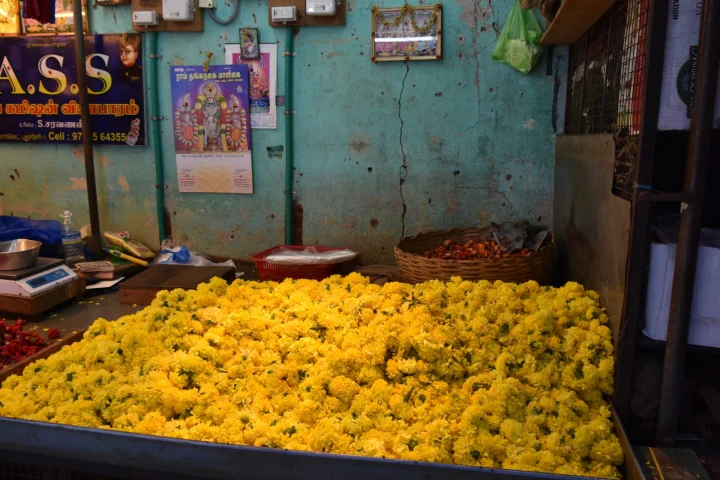
Shopping specialities include Madurai malli (jasmine, sold in strings outside the temple), Sungudi cotton saris with their tie-and-dye dots, and brass and bell-metal items from the old bazaars.
Practical tips
- At the time of writing, the Meenakshi temple is open roughly 5 am to 12:30 pm and 4 pm to 10 pm – check before you go.
- Mobile phones, cameras and bags are not allowed inside the Meenakshi temple; use the paid lockers at the gates.
- Dress modestly: shoulders and knees covered; shorts, caps and sleeveless tops are not accepted. Footwear is left outside.
- Non-Hindus can see most of the complex, but the inner sanctums are for Hindus only.
- The Gandhi Memorial Museum and palace are best visited in the late morning, when the temple is on its midday break.
Official information: Incredible India (Ministry of Tourism)
Frequently asked questions
How far is Madurai from Pondicherry?
About 334 km by road via Trichy, which takes six to six and a half hours of driving.
Are mobile phones allowed in the Meenakshi temple?
No. Mobile phones, cameras and bags must be deposited in lockers at the entrance gates before you enter.
What is the dress code for the Meenakshi Amman Temple?
Wear modest clothing covering shoulders and knees. Shorts, sleeveless tops and caps are not allowed.
How many days are enough for Madurai?
One full day covers the temple, palace and Gandhi museum. Allow two days to see the temple both morning and evening and explore the food scene.
When is the Madurai Chithirai festival?
It is held in the Tamil month of Chithirai, usually April–May. Exact dates change each year, so check the temple calendar.