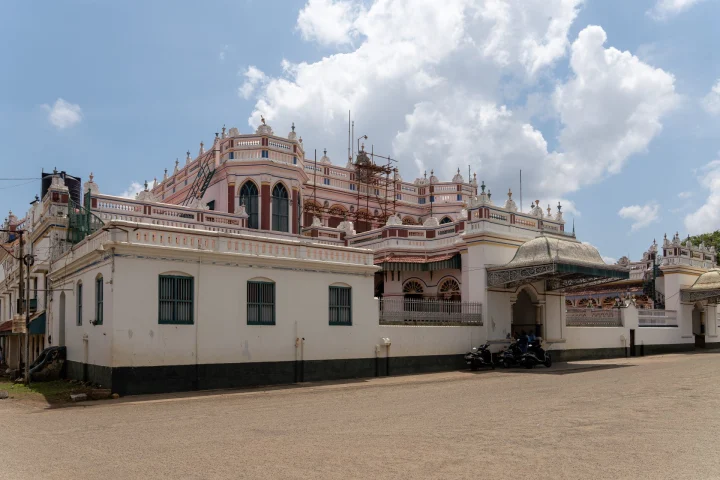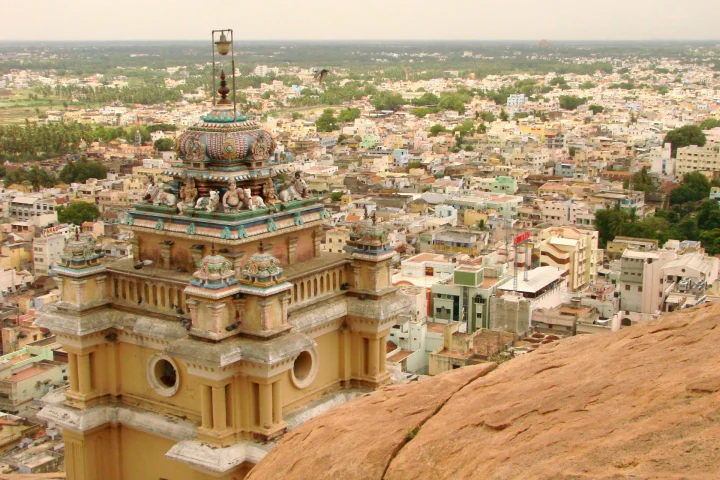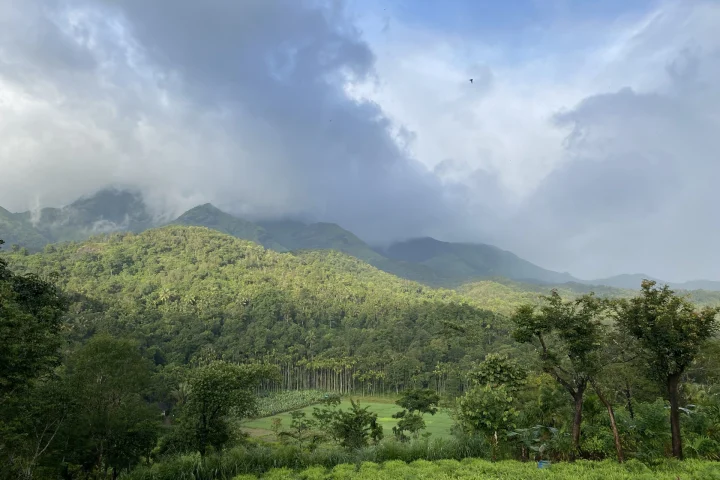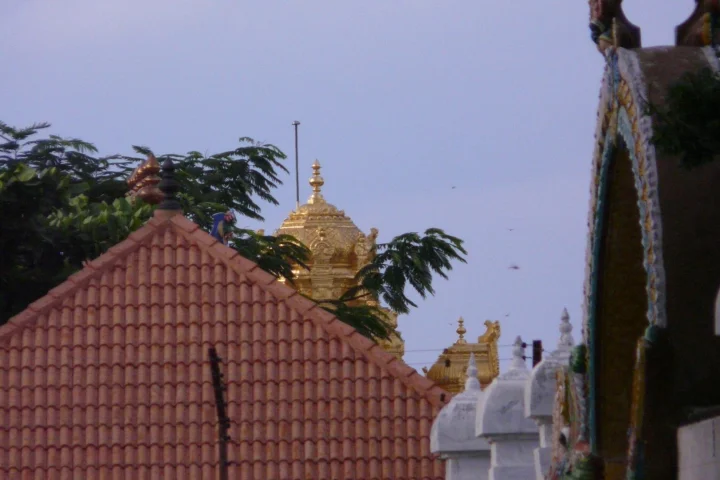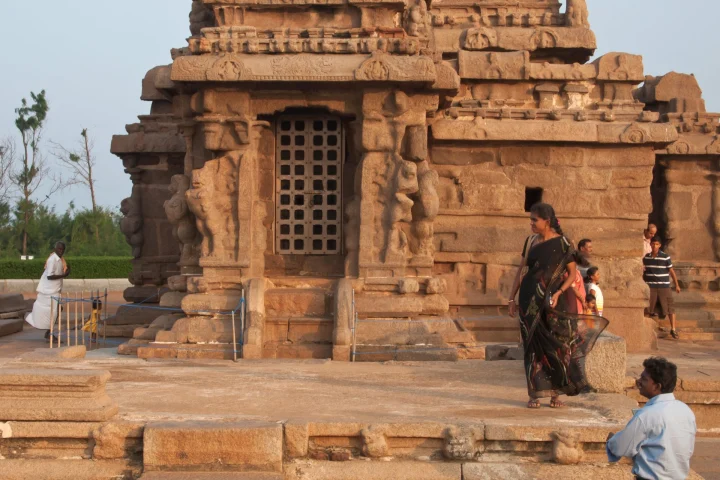
Chettinad is the home region of the Nattukottai Chettiars, a community of traders and bankers who made fortunes across Southeast Asia in the 19th and early 20th centuries and spent much of it building grand family houses in their home villages. Today the area around Karaikudi, in Sivaganga and Pudukkottai districts, is on India’s tentative list for UNESCO World Heritage status as ‘Chettinad, Village Clusters of the Tamil Merchants’.
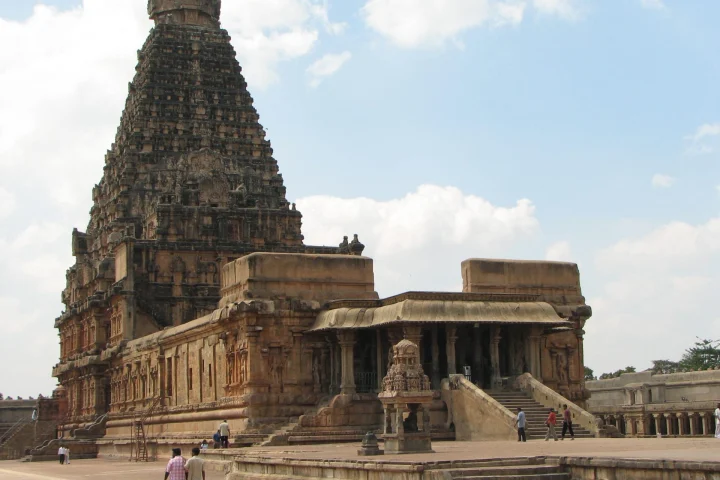
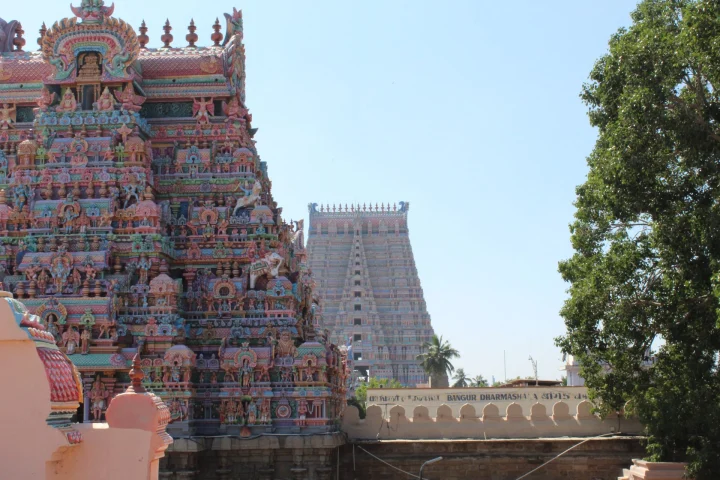
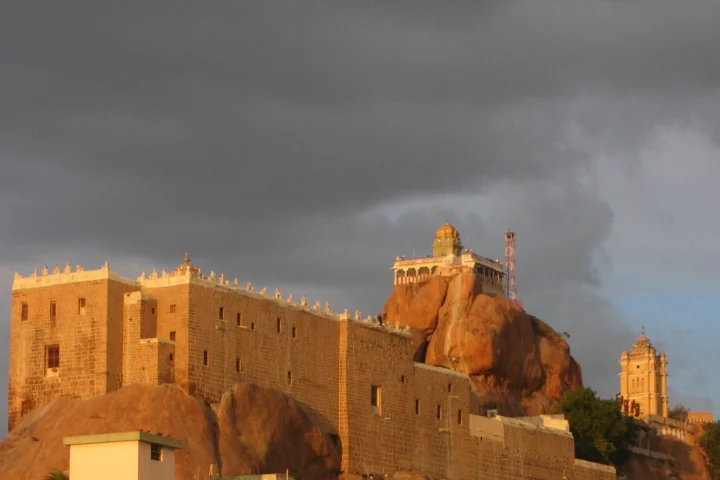
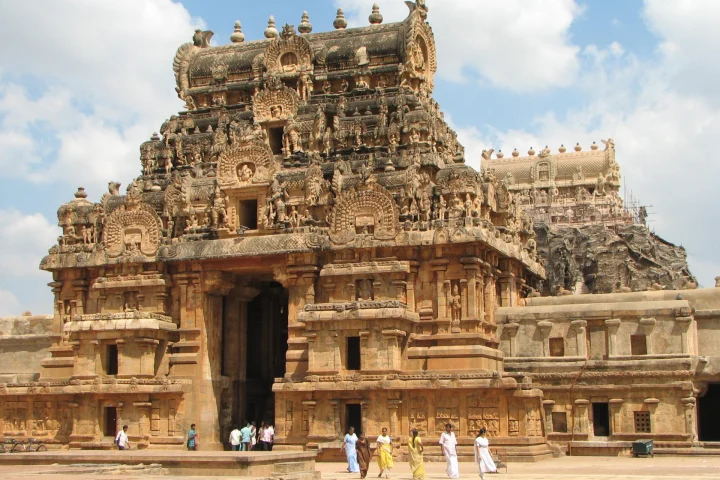
This three-day tour gives you a full day among the mansions and adds the Brihadeeswarar Temple at Thanjavur on the way in and Trichy on the way back, so the long drive from Pondicherry is broken by two major sights.
What makes Chettinad different
The mansions were mostly built between the mid-19th century and the 1940s. Behind plain street walls they open into a sequence of courtyards with pillared verandas, carved wooden doors and ceilings, lime-plastered walls with a polished finish, and floors laid with the patterned tiles made in Athangudi. Much of the timber and many fittings were brought from abroad through the families’ trading links.
Many houses are still privately owned and closed, some are crumbling, and a few have become hotels or open to visitors for a small fee. That mix is part of the experience: you walk streets where house after house has the same raised entrance platform and heavy doorway, and step inside those that welcome visitors.
Route at a glance
- Pondicherry → Thanjavur: about 175 km via Chidambaram and Kumbakonam
- Thanjavur → Karaikudi: about 105 km via Pudukkottai
- Karaikudi → Trichy: about 90 km
- Trichy → Pondicherry: about 205 km
Food and shopping
Chettinad cooking is known well beyond Tamil Nadu for its use of freshly roasted and ground spices, pepper and dried chillies. Meals in the region are often served on a banana leaf with several vegetable dishes, and non-vegetarian food is an important part of the tradition. Heritage hotels usually serve home-style Chettinad meals; tell us if you are vegetarian or prefer mild food and we will pass it on.
Karaikudi is known for antique and old-furniture shops selling brass, wood and household items from dismantled houses, and the region weaves Kandangi cotton saris with bold checks and borders. Athangudi tiles can be bought at the workshops, but they are heavy, so arrange shipping if you buy in quantity.
Who this tour suits
Travellers interested in architecture, photography, food and social history. The pace on Day 2 is relaxed, with short drives, but Days 1 and 3 involve 5–6 hours on the road. Walking is mostly on level streets and inside houses; the Rockfort climb at Trichy is optional.
Visiting the mansions respectfully
Most Chettinad houses are family homes, even when the family lives elsewhere. Do not enter a house or courtyard unless it is clearly open to visitors or you have been invited, and ask before photographing people. Where a caretaker shows you around, a small fee or tip is usual. Footwear is often removed at the inner threshold, so wear shoes that slip off easily.
Houses open to visitors keep their own hours and may close without notice for family functions, so we plan Day 2 with alternatives.
Best season
October to March is the most comfortable time, with November to February the coolest. Summers are hot and dry. Temple festivals in Karaikudi and Pillaiyarpatti can mean crowds and closed roads on certain days, so tell us your dates and we will check.
How to customise
- Stay in a restored Chettiar mansion hotel instead of a town hotel
- Add a night to include the fort and museum at Pudukkottai or the rock-cut temples nearby
- Continue to Madurai, about 90 km from Karaikudi, instead of returning via Trichy
- Combine with the Great Chola Temples tour for a longer heritage trip
- A local guide for the mansions, arranged on request
Official information: UNESCO World Heritage Centre
Frequently asked questions
How far is Chettinad from Pondicherry?
Karaikudi, the main town of Chettinad, is roughly 280–290 km from Pondicherry by road, about 6 hours of driving via Thanjavur or Trichy.
Can you go inside the Chettinad Palace at Kanadukathan?
Entry inside usually requires prior permission from the family, so most visitors see it from outside. Athangudi Palace and several other houses are open to visitors for a fee.
What are Athangudi tiles?
They are handmade cement floor tiles with coloured patterns, made in the village of Athangudi using local sand and glass plates rather than kilns. Several workshops allow visitors to watch the process.
Is Chettinad on the UNESCO World Heritage list?
Not yet. ‘Chettinad, Village Clusters of the Tamil Merchants’ is on India’s tentative list, which is the first step towards nomination.
Is two nights enough for Chettinad?
Two nights give you one full day among the villages, which covers the main sights. Add a night if you want a slower pace or a cooking session at a heritage hotel.