Rameswaram sits on Pamban Island, at the south-eastern tip of Tamil Nadu, where the Bay of Bengal meets the Palk Strait. For Hindus it is one of the holiest places in India: the Ramanathaswamy Temple is one of the twelve Jyotirlingas of Shiva, and the town is part of the Char Dham circuit along with Badrinath, Puri and Dwarka. For everyone else it is a remarkable place to see – a narrow island reached by a long sea bridge, a temple with some of the longest pillared corridors anywhere, and the wind-blown ruins of Dhanushkodi at the end of a road that runs out into the sea.
From Pondicherry it is a long trip, about 429 km by road. This page explains honestly what that means, how to break the journey and how to combine Rameswaram with Madurai and Kanyakumari so the drive is worth it.
On this page
Why visit Rameswaram
Most visitors come for darshan and the ritual bath in the temple’s 22 theerthams. Tradition links the town to the Ramayana: Rama is said to have worshipped Shiva here after returning from Lanka, and the bridge to Lanka is believed to have begun from Dhanushkodi. Even if you are not a pilgrim, the architecture, the island landscape and the sense of standing at the edge of the country make it a memorable stop.
It is also the hometown of former President Dr APJ Abdul Kalam, and his memorial and family house draw many visitors, especially school groups and families.
Top things to see in Rameswaram
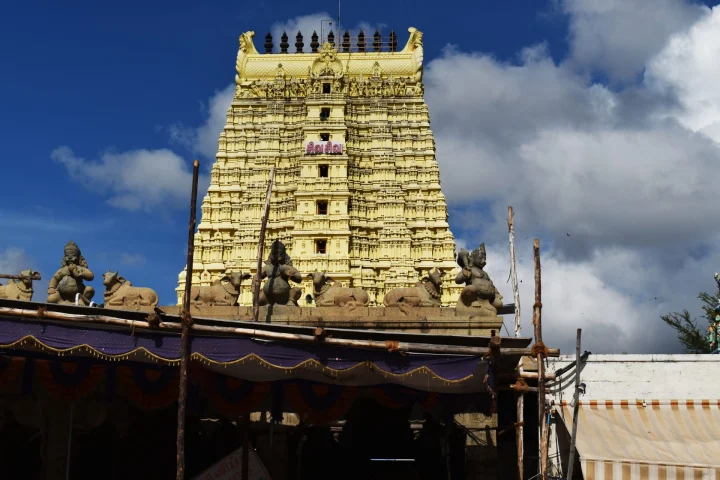
Ramanathaswamy Temple
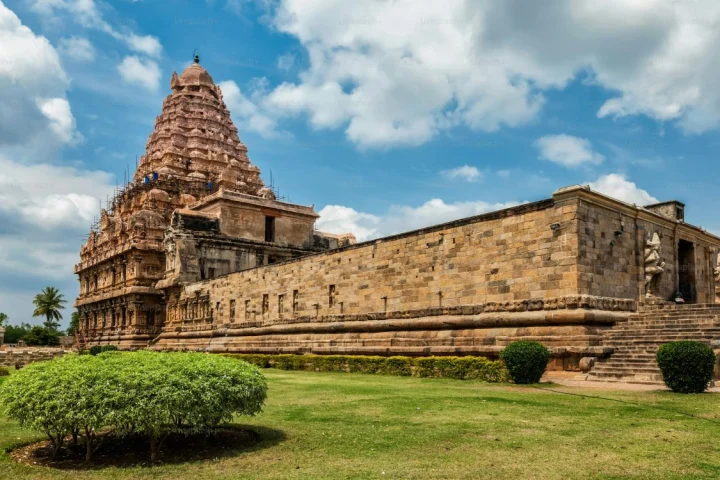
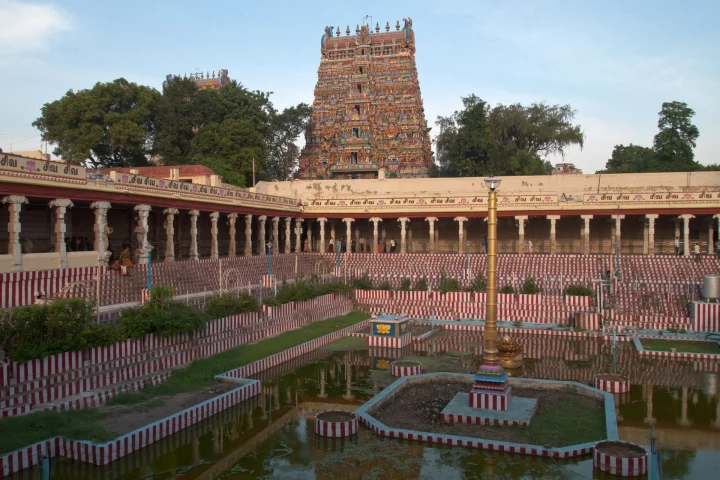
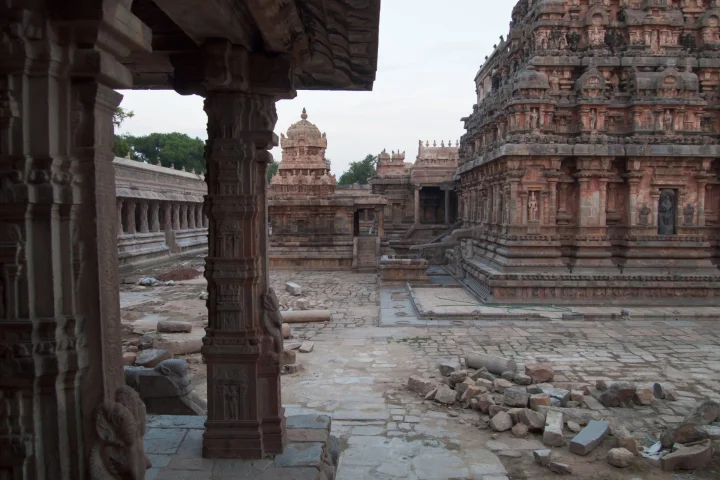
The temple is famous for its corridors lined with carved pillars, which run for hundreds of metres around the complex. Inside are 22 theerthams – wells and tanks – and pilgrims move from one to the next while attendants pour a bucket of water over them. Many first take a dip in the sea at Agni Theertham, just outside the east gate, and then enter the temple in wet clothes for the well bath.
The temple opens early in the morning and closes for a break in the afternoon; timings change on festival days, so check before you go. Traditional dress is expected, and mobile phones and cameras are not allowed inside the main temple – there are counters to deposit them.
Pamban bridges
The road bridge from Mandapam to the island gives a wide view of the sea and the rail bridges below. The old Pamban rail bridge of 1914, with its cantilever section that opened for ships, has been replaced by the New Pamban Bridge, India’s first vertical-lift sea bridge, opened in April 2025. Stopping on the road bridge for photographs is common, but traffic can be heavy, so let your driver choose a safe spot.
Dhanushkodi and Arichal Munai
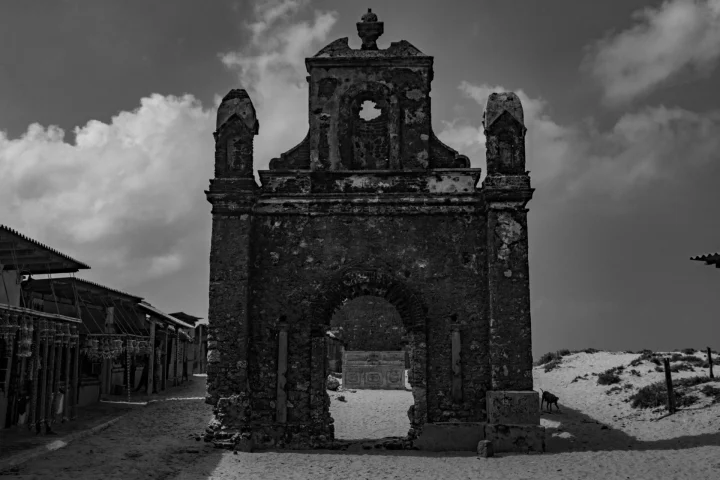
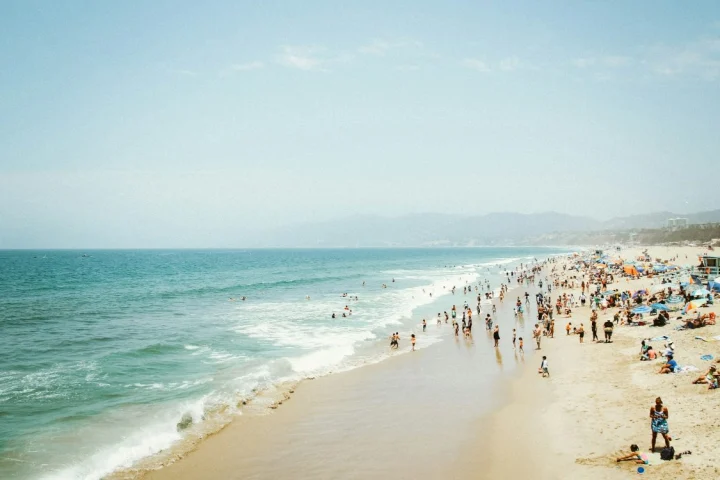
Dhanushkodi was a busy port town until the cyclone of December 1964 destroyed it. The broken church, railway station and other buildings still stand in the sand. A good road now continues to Arichal Munai, the land’s end point where the sea meets on both sides. The sea here can be rough and swimming is not advised. Access hours may be restricted by local authorities, so go in the morning and check the current rules.
Other stops
- Dr APJ Abdul Kalam National Memorial at Pei Karumbu, with exhibits on his life and work
- House of Kalam, his family home, with a small museum
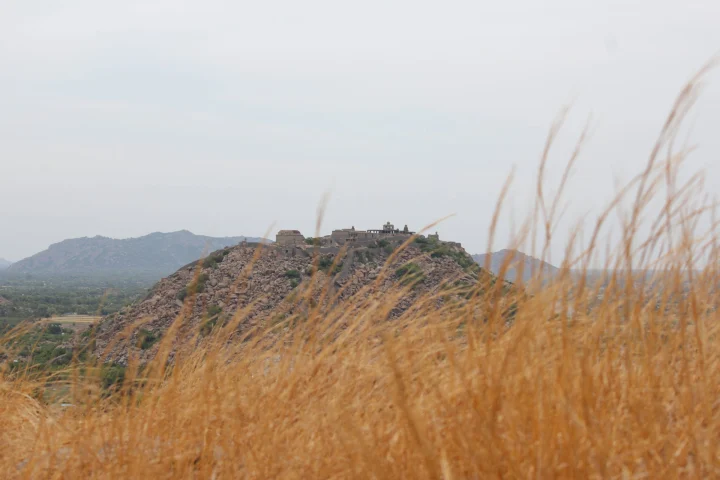
- Gandhamadhana Parvatham, a small hill with a view over the island
- Panchamukhi Hanuman Temple, where floating stones are displayed
- Kothandaramar Temple on the road to Dhanushkodi
A realistic plan from Pondicherry
Rameswaram is not a day trip from Pondicherry. The drive takes roughly 8–9 hours with meal and tea stops, and the last stretch across Ramanathapuram district can be slow. We recommend one of these approaches:
- Short pilgrimage (3 days): Day 1 drive to Rameswaram, arriving by evening. Day 2 Agni Theertham and temple bath early, then Dhanushkodi and the Kalam memorial. Day 3 drive back, or break at Thanjavur.
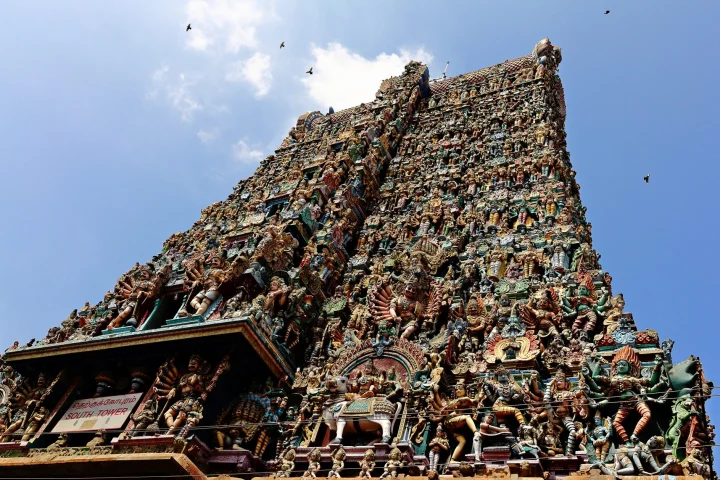
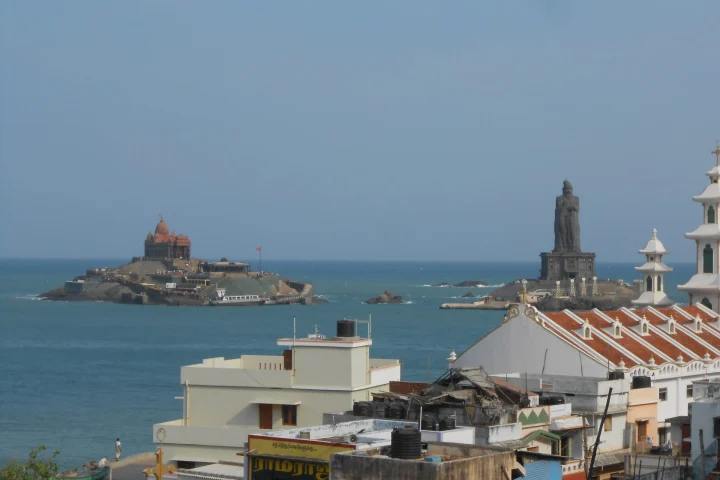
- Southern circuit (5–6 days): Pondicherry – Madurai – Rameswaram – Kanyakumari – return via Madurai or Trichy. This is covered by our Madurai, Rameswaram and Kanyakumari tour.
- With the Chola temples: go via Thanjavur or Kumbakonam on the way down; see the Grand Tamil Nadu Temple Tour.
Best time to visit and weather
Rameswaram is hot for most of the year. October to March is the most comfortable period, though the north-east monsoon brings rain and occasional cyclone warnings from mid-October to December. April to June is very hot and humid, and the wind picks up strongly from June to September, which makes Dhanushkodi sandy but dramatic.
Festivals such as Maha Shivaratri and the Aadi Amavasai and Thai Amavasai new-moon days bring very large crowds for ancestral rites. If you want a calmer visit, avoid these dates; if you want to see the town at its most devout, plan well ahead and book rooms early.
How to reach Rameswaram from Pondicherry
By road
The usual routes run via Cuddalore or Villupuram to Trichy or Thanjavur, then Pudukkottai, Devakottai and Ramanathapuram to Mandapam and across the Pamban road bridge. A private car with driver lets you stop at temples on the way and reach Dhanushkodi, which has no regular transport beyond local vans and buses.
By train
Rameswaram has its own station, and rail services onto the island resumed after the new Pamban Bridge opened in 2025. Trains from Chennai towards Rameswaram pass Villupuram, around 40 km from Pondicherry. Check current schedules on the Indian Railways website.
By air
Madurai airport, about 170 km away, is the nearest. Flying from Pondicherry is not practical for this trip; most people either drive the whole way or combine Madurai and Rameswaram by road.
Food in Rameswaram
Because it is a pilgrim town, most restaurants near the temple serve simple vegetarian South Indian meals – idli, dosa, pongal, and banana-leaf meals at lunch. Fresh seafood is available in parts of town and at Mandapam, but many pilgrims keep to vegetarian food during the trip. Carry water and snacks for Dhanushkodi, where facilities are limited to a few stalls.
Practical tips
- Carry a spare set of clothes and a small towel for the theertham bath; there are changing rooms near the temple.
- Leave phones, cameras and leather items in the vehicle or at the deposit counter.
- Start early – the well bath queues grow through the morning.
- Dhanushkodi has strong currents; paddle only, do not swim.
- Hotels near the temple fill up on new-moon days and festival weekends. We can help you book a room.
- Sunscreen, a cap and sandals that can get wet are useful all year.
Plan your Rameswaram trip with us
We arrange tailor-made tours from Pondicherry with an AC car and an experienced driver, and can help with hotel bookings along the route. Message us on WhatsApp at +91 96265 65138 with your dates and the places you want to include, and we will send a suggested plan and quote.
Frequently asked questions
How far is Rameswaram from Pondicherry?
Rameswaram is about 429 km from Pondicherry by road, which usually takes 8–9 hours including stops. Most travellers break the journey or combine it with Madurai.
Can I do Rameswaram as a day trip from Pondicherry?
No. The round trip is over 850 km. Plan at least one night in Rameswaram, or two if you want to see Dhanushkodi and the temple without rushing.
What is the 22 theertham bath at Rameswaram?
Inside the Ramanathaswamy Temple are 22 sacred wells and tanks. Pilgrims move from one to the next while water from each is poured over them, usually after a sea dip at Agni Theertham.
Are mobile phones allowed inside Rameswaram temple?
No. Phones and cameras are not permitted in the main temple, and there are deposit counters outside. Rules can change, so check at the gate.
Is it safe to swim at Dhanushkodi?
Swimming is not advised. The sea around Dhanushkodi and Arichal Munai has strong currents, so paddle only near the shore.
What is the best time to visit Rameswaram?
October to March is the most comfortable period, though October to December can bring heavy rain. Summer from April to June is very hot.