Kanchipuram was the capital of the Pallava kings, and later an important city under the Cholas and the Vijayanagara rulers. It is counted among the seven sacred cities of Hinduism and is often called the city of a thousand temples. Today it is equally famous for silk: a Kanchipuram sari, woven here on handlooms, is a fixture of South Indian weddings.
From Pondicherry it makes a full and rewarding day trip, or the second half of a two-day heritage loop with Mahabalipuram.
On this page
Why visit Kanchipuram
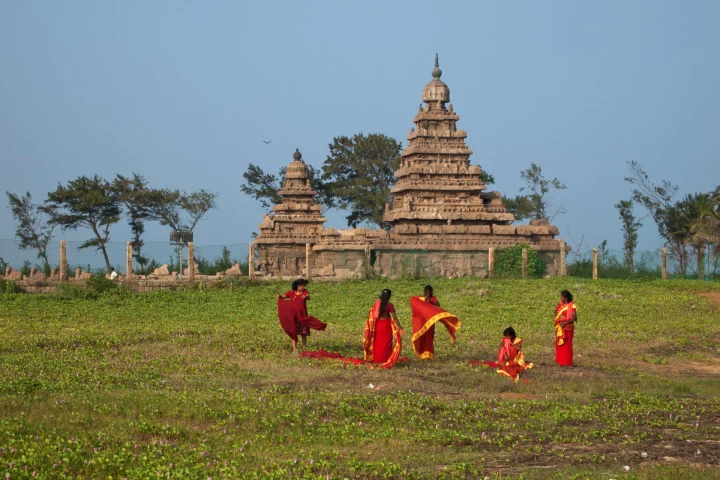
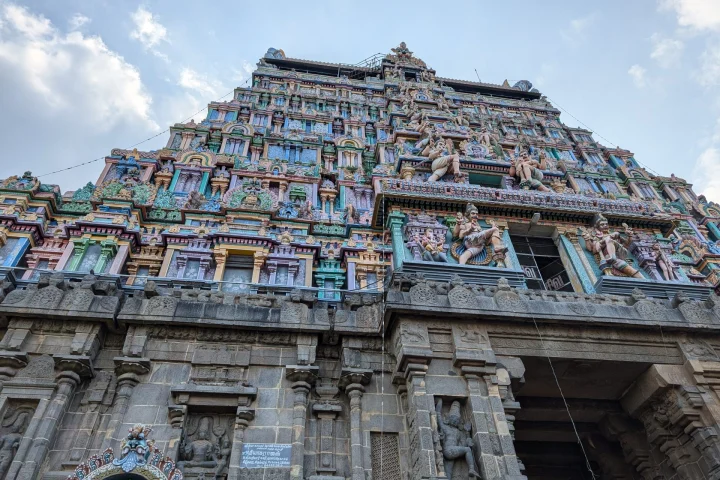
Kanchipuram lets you follow temple architecture over roughly a thousand years in a single town. The sandstone Kailasanathar Temple shows the Pallava style at its height, while the big Shiva and Vishnu temples in the centre grew over centuries with towering gopurams added by later dynasties. The town is also a working pilgrimage centre for both Shaivites and Vaishnavites, so the temples are full of life, not just monuments.
Top sights in Kanchipuram
Kailasanathar Temple
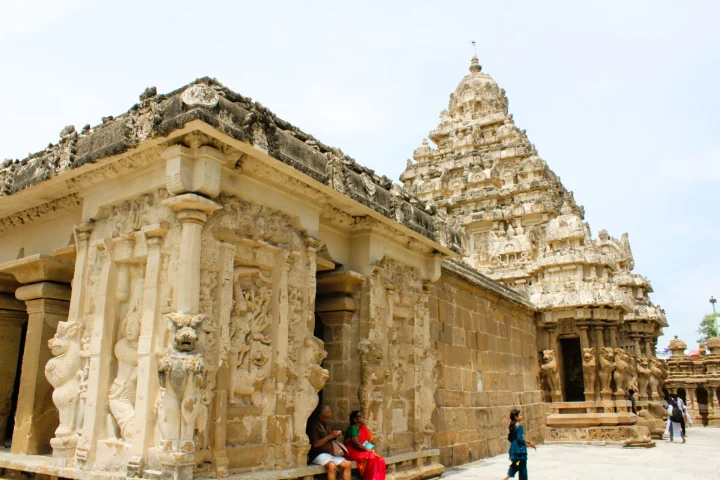
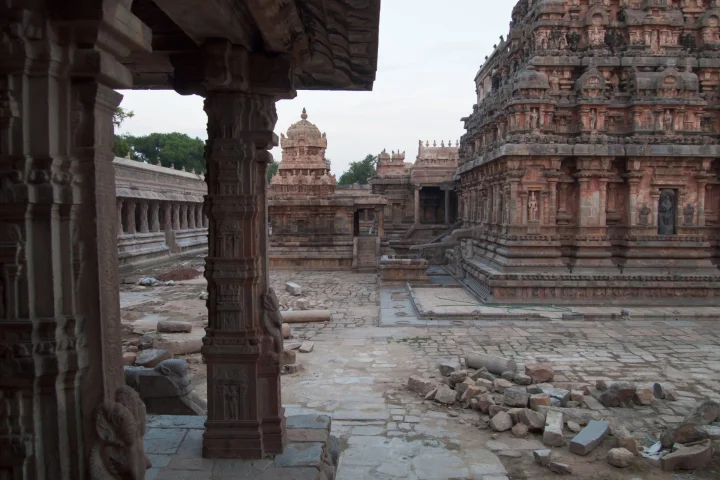
Built around 700 CE under the Pallava king Narasimhavarman II (Rajasimha), this is one of the earliest structural temples in South India and the most important stop for history lovers. The inner walls are lined with small shrines carved with Shiva in many forms, and traces of old paintings survive in places. It is protected by the Archaeological Survey of India and is quieter than the town’s bigger temples.
Ekambareswarar Temple
This large Shiva temple is one of the Pancha Bhoota Sthalams – the five temples linked to the elements – representing earth. Its best-known feature is the old mango tree in the inner courtyard, associated with the legend of Parvati’s penance. The complex, with its long pillared corridors and tall gopuram, was expanded over many centuries.
Kamakshi Amman Temple
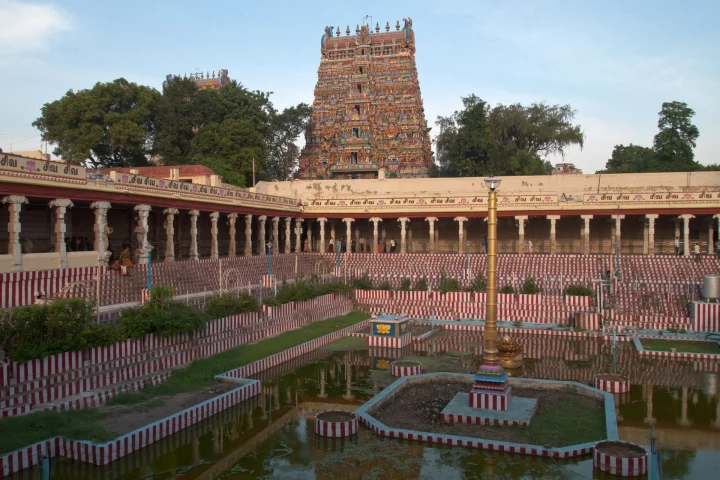
Dedicated to the goddess Kamakshi, a form of Parvati, this is one of the most revered goddess temples in Tamil Nadu and sits at the heart of the old town. The temple’s golden vimana and the tank are the main sights for visitors.
Varadharaja Perumal and Vaikunta Perumal
The Varadharaja Perumal Temple is the town’s great Vishnu temple, known for its hall of carved pillars. Its wooden Athi Varadar image is brought out for public viewing only once every 40 years – most recently in 2019. The smaller Vaikunta Perumal Temple, another Pallava work from the 8th century, has sculpted panels that record events from the dynasty’s history.
Silk weaving
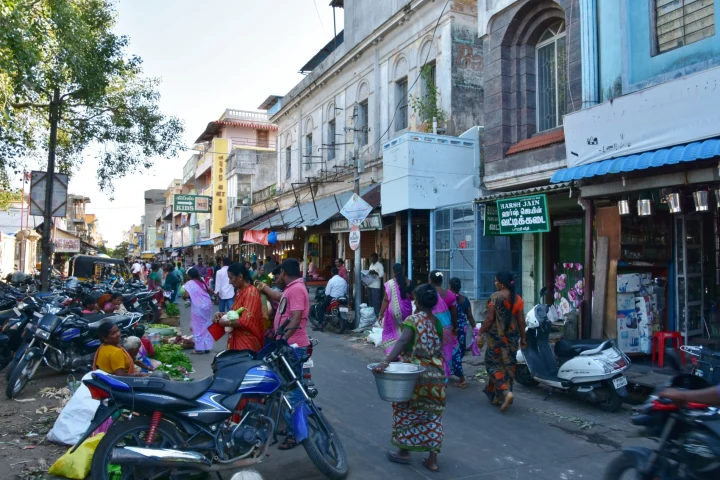
Kanchipuram silk saris carry a Geographical Indication tag, and weaving families still work on pit looms in the streets around the temples. Watching a weaver work the zari border is worth half an hour. Buy from a cooperative society or a well-established showroom, and ask for the silk mark certification.
One-day plan from Pondicherry
To combine it with Mahabalipuram, see our Mahabalipuram and Kanchipuram heritage tour. Ekambareswarar is also one stop on the Pancha Bhoota Sthalam tour, which links it with Tiruvannamalai, Chidambaram and Trichy.
- 6:00 am – leave Pondicherry.
- 8:45 am – breakfast in town, then Kamakshi Amman Temple.
- 10:00 am – Ekambareswarar Temple.
- 11:15 am – Kailasanathar Temple before it closes for the afternoon.
- 12:30 pm – lunch, then a visit to a weaving cooperative or silk shop.
- 4:00 pm – Varadharaja Perumal Temple when it reopens.
- 5:30 pm – drive back to Pondicherry.
How to reach Kanchipuram from Pondicherry
By car the usual route heads north on the Chennai highway to Tindivanam and then turns inland through Vandavasi or Uthiramerur – farmland, small towns and the occasional village temple. Allow two and a half to three hours each way. Inside Kanchipuram the main temples are a few kilometres apart and the lanes around them are narrow and busy, so having your own vehicle and driver saves a lot of time compared with hiring autos between each stop.
There is no direct train from Pondicherry. Buses run via Tindivanam, but you will usually need to change, which makes a same-day return difficult. If you are travelling on from Kanchipuram to Chennai airport, the airport is roughly 60–70 km away, so it can be the last stop of your holiday.
Where to stay
Most visitors do Kanchipuram as a day trip. If you prefer an overnight stop, the town has simple hotels near the bus stand, but many travellers stay in Mahabalipuram instead, where there are more beach resorts, and visit Kanchipuram the next morning. We can suggest hotels in both places to suit your budget.
Best time and weather
November to February is the best time, with manageable heat for walking between temples. The northeast monsoon brings rain mainly from October to December. April to June is hot, and temple floors in open courtyards get too hot to walk on barefoot by late morning – another reason to start early.
Food and local specialities
The town lends its name to Kanchipuram idli, a spiced idli with pepper, cumin, ginger and cashew, traditionally steamed in leaf-lined containers and linked with the Varadharaja temple kitchen. Simple vegetarian restaurants near the temples serve good South Indian meals at lunchtime. Filter coffee is everywhere.
Practical tips
- Most temples close from about 12:30 pm to 4 pm. At the time of writing, Kailasanathar opens around 6:30 am to 12:30 pm and 4 pm to 7:30 pm – check before you go.
- Wear modest, traditional clothing covering shoulders and knees; shorts and sleeveless tops may be refused entry.
- Footwear must be left outside – use the paid stands at temple entrances.
- Some inner sanctums are open only to Hindus; follow signs and staff instructions.
- Photography is often restricted inside sanctums, and there may be camera fees.
Official information: Kancheepuram District
Frequently asked questions
How far is Kanchipuram from Pondicherry?
About 118 km by road, which takes around two and a half to three hours.
Can I visit Kanchipuram and Mahabalipuram in one day?
It is possible, but rushed – you would spend about six hours driving. A two-day trip with a night in either town is much more comfortable.
Which is the oldest temple in Kanchipuram?
The Kailasanathar Temple, built around 700 CE by the Pallava king Rajasimha, is the oldest major structural temple in the town.
What is the dress code for Kanchipuram temples?
Wear modest clothing that covers shoulders and knees. Traditional dress is preferred, and footwear is removed before entering.
Where can I buy genuine Kanchipuram silk?
Buy from weavers’ cooperative societies or established showrooms, and ask for the Silk Mark label that certifies pure silk.