Last updated:
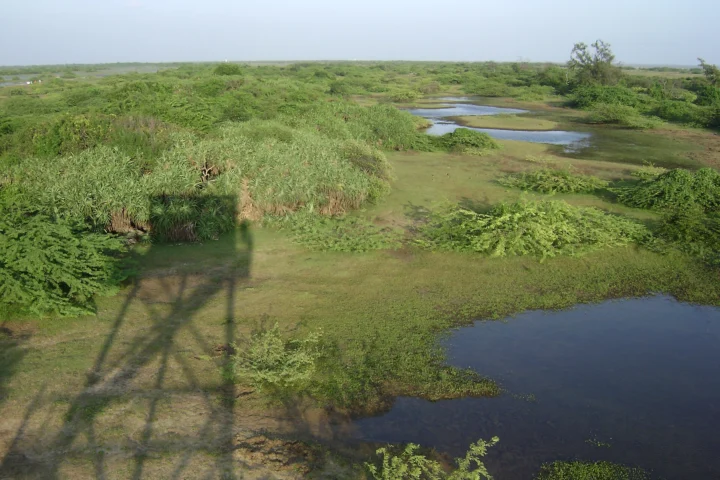
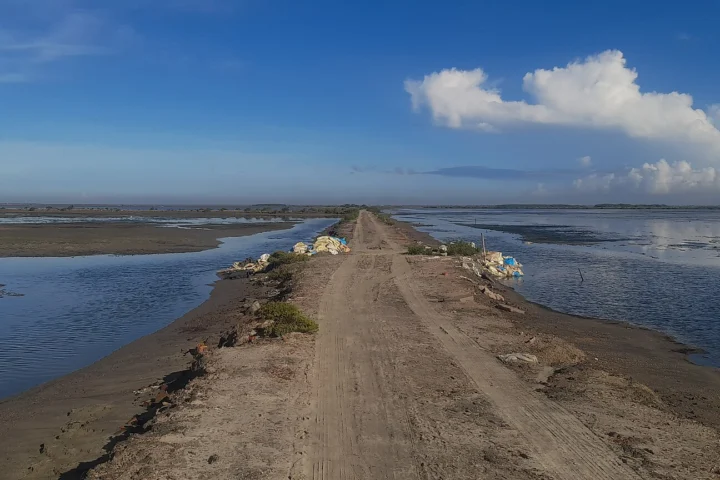
Point Calimere – Kodiakkarai in Tamil – is the low cape at the south-eastern corner of Tamil Nadu, where the coast turns west and the Bay of Bengal meets the Palk Strait. On a map it looks like the end of the world; on the ground it is a mix of beach, sand dunes, thorny dry evergreen forest, grassland, salt pans and vast shallow mudflats that stretch into the Great Vedaranyam Swamp.
Those mudflats are why birders come. In winter, Point Calimere holds one of the largest gatherings of migratory waterbirds in India, with peak counts reported at over 100,000 birds of more than a hundred species. Add blackbuck, a quiet fishing village and almost no tourist infrastructure, and you have one of the most rewarding nature trips within a day’s drive of Pondicherry.
On this page
The sanctuary at a glance
The Point Calimere Wildlife and Bird Sanctuary was created in 1967, mainly to protect the blackbuck, and covers about 21.5 sq km. In 2002 the wider wetland complex of about 385 sq km was declared a Ramsar site, a wetland of international importance. More than 15 sq km of the sanctuary is tropical dry evergreen forest, a habitat that once lined much of the Coromandel coast but now survives only in fragments. The Bombay Natural History Society has studied and ringed birds here since 1959, making it one of the best-researched bird sites in the country.
Our Point Calimere Sanctuary guide has more on entry, routes inside and what to look for.
What you can see
Flamingos and shorebirds
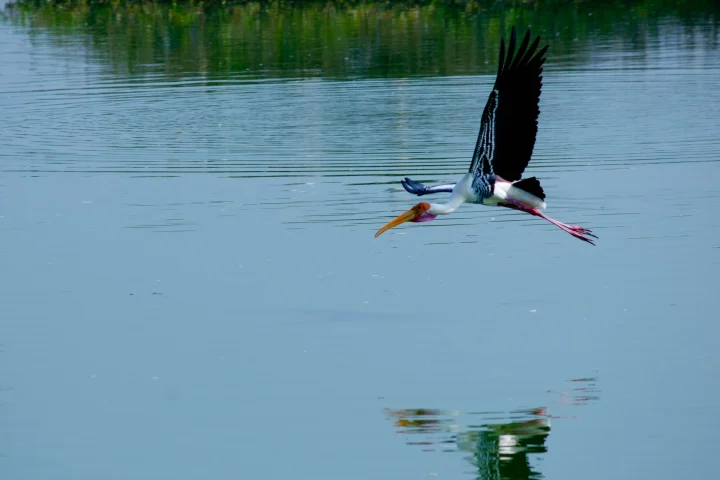
From October to March the swamp and salt pans fill with migrants. Greater and lesser flamingos are the headline, often in flocks that turn the water pink at a distance, along with pelicans, painted storks, herons, gulls, terns and great numbers of small waders such as sandpipers, plovers and stints. Numbers usually peak from November to January, but they depend on rainfall and water levels each year. Carry binoculars – many flocks stay far out on the flats.
Blackbuck and other wildlife
Blackbuck are the sanctuary’s flagship species. The population grew from about 750–800 when the sanctuary was set up to nearly 1,900 by the late 1990s, and they are easy to see on the open grasslands, especially early and late in the day. Spotted deer and wild boar also live here, and small herds of feral horses roam the coastal scrub.
Ramar Padam and the lighthouses
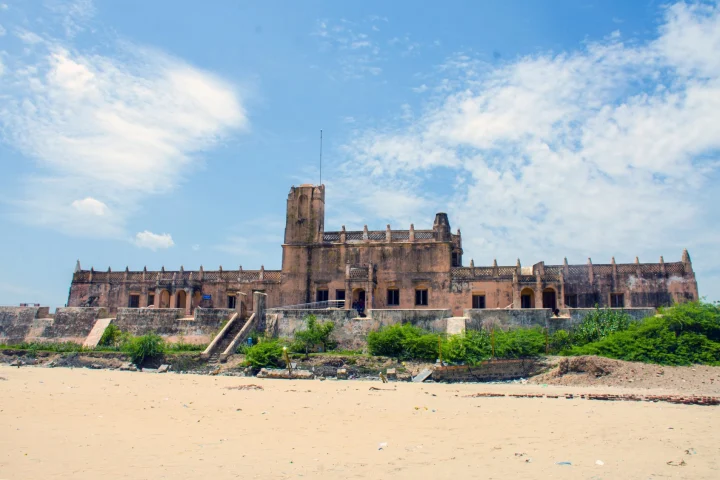
A small shrine called Ramar Padam, linked in local belief to Rama’s footprints, stands on top of the highest sand dune in the district and gives a view over the forest canopy. Legend says Rama stood here to look towards Lanka. Nearby are the remains of an old beacon said to date from the Chola period, badly damaged in the 2004 tsunami, and the Kodiakkarai lighthouse, first lit in 1890 and modernised several times since.
Vedaranyam: temple and salt march
The town of Vedaranyam, on the way to the cape, is worth an hour. Its large Shiva temple, Vedaranyeswarar (Thirumaraikadu), was sung by the Tevaram saints. Vedaranyam also has a place in the freedom struggle: in April 1930, alongside Gandhi’s march to Dandi, C. Rajagopalachari led about 150 volunteers on a salt march from Trichy, reaching Vedaranyam on 28 April and collecting salt from the nearby swamp in defiance of British law. A memorial marks the event, and the salt pans that still surround the town show why it was chosen.
Best time to visit
October to March is the bird season, with November to January usually the peak for flamingos and waders. The north-east monsoon (October to December) can bring heavy rain and occasional cyclones to this coast, so keep plans flexible. From April to September it is hot and dry; blackbuck are still easy to see, but most migrant birds have left.
How to plan Point Calimere from Pondicherry
The drive runs down the coast through Cuddalore, Chidambaram and Sirkazhi to Nagapattinam, then south through Thirupoondi to Vedaranyam and Kodiakkarai, about 215 km in all. A day trip is possible but tiring and misses the best light; one night lets you be in the sanctuary at dawn and dusk.
Point Calimere pairs naturally with Velankanni, about an hour to the north, where you can visit the Velankanni Basilica. Our Point Calimere and Velankanni birding tour follows this plan. For other wetlands closer to home, see Vedanthangal and our bird watching page.
Sample two-day plan
- Day 1: Leave Pondicherry early, stop at Vedaranyam temple, reach Kodiakkarai by early afternoon and visit the sanctuary in the late afternoon.
- Day 2: Dawn at the mudflats and grasslands, breakfast, then drive back via Velankanni and Nagapattinam.
Timings, entry and stay
At the time of writing the sanctuary opens in daylight hours only, with a small entry fee and separate camera charges collected by the Forest Department at Kodiakkarai – check before you go. Accommodation near the cape is very limited: a modest forest department rest house that is booked through the wildlife warden, and simple lodges in Vedaranyam. Some visitors stay in Velankanni or Nagapattinam instead. We can help you choose.
Practical tips
- Bring binoculars and, if you have one, a spotting scope or long lens.
- Start at first light; by late morning the heat haze makes viewing hard.
- Wear a hat and carry plenty of water – there is little shade on the flats.
- Food options are basic around Kodiakkarai; carry snacks.
- Do not walk onto the mudflats or disturb roosting flocks.
Frequently asked questions
How far is Point Calimere from Pondicherry?
About 215 km by road via Chidambaram, Nagapattinam and Vedaranyam, a drive of four and a half to five hours.
When can you see flamingos at Point Calimere?
Flamingos are present roughly from October to March, with the largest numbers usually between November and January, depending on the year’s rainfall.
Is Point Calimere a Ramsar site?
Yes. The Point Calimere wildlife and bird sanctuary complex was designated a Ramsar wetland in August 2002.
Can I visit Point Calimere and Velankanni in one trip?
Yes. Velankanni is about an hour north of Vedaranyam, so the two fit well into a two-day trip from Pondicherry.
What animals live at Point Calimere?
Blackbuck are the best-known, along with spotted deer, wild boar and feral horses; the birdlife is the bigger draw in winter.