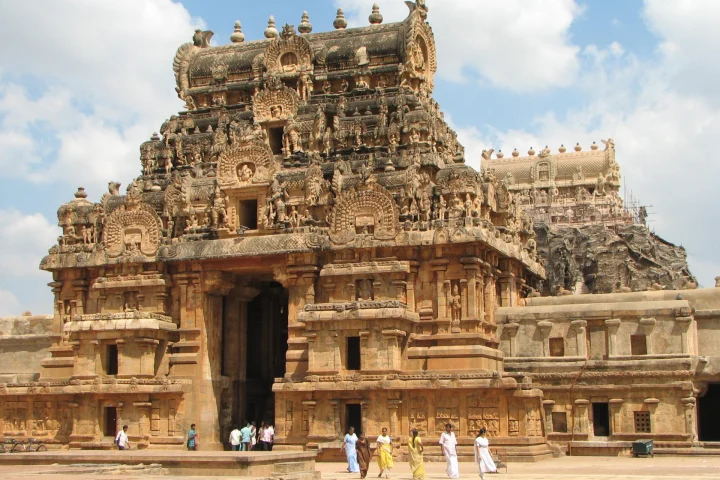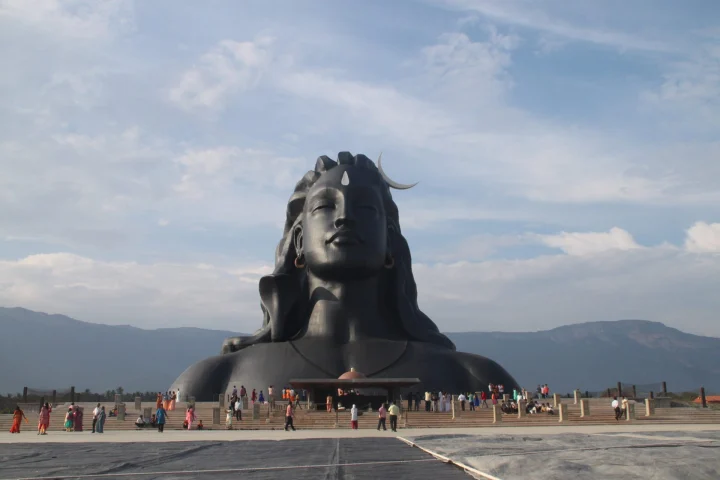
Vellore is best known across India for its large hospital and university, but for travellers the draw is two very different monuments. In the middle of the city stands Vellore Fort, a granite fort from the 1560s ringed by a wide moat, with a richly carved Vijayanagara temple inside its walls. On the southern edge of town is Sripuram, a modern temple whose shrine is covered in gold and which draws huge crowds, especially in the evening when it is lit up.
The two make a good pairing: centuries-old military architecture and living temple art in the morning, and one of Tamil Nadu’s most talked-about new temples by evening. Vellore sits on the road to Bengaluru and Tirupati, so it also works as a stop on a longer trip.
On this page
Why visit Vellore
Few forts in South India are as complete as Vellore’s. The double walls, bastions and moat are still largely intact, and you can walk the ramparts in a leisurely hour. Inside, the Jalakandeswarar Temple has some of the finest stone carving from the Vijayanagara period in this part of the state. Add the gold-covered Sripuram temple and you have a full, varied day out that is less crowded with tourists than the coastal heritage towns.
Top sights in Vellore
Vellore Fort
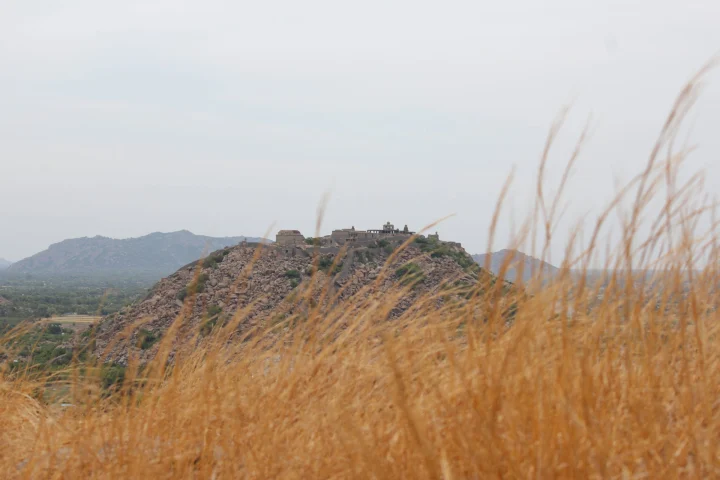
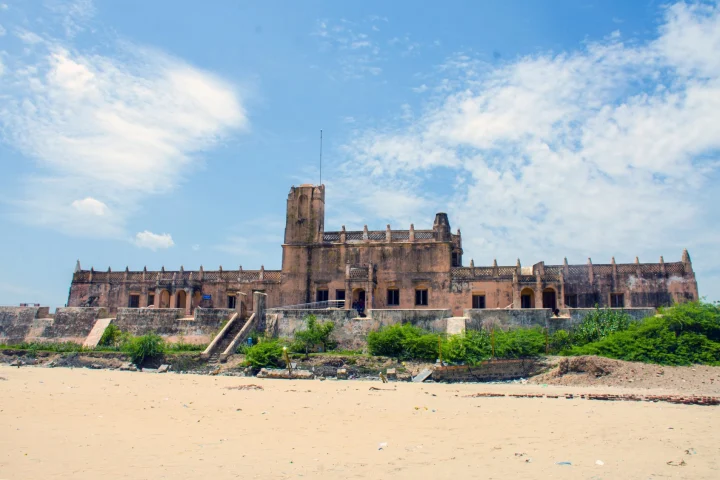
The fort was built around 1566 by the Reddy chieftains Chinna Bommi and Timma, who governed Vellore for the Vijayanagara Empire. It covers about 133 acres and is built of large granite blocks, with irregular bastions projecting from double walls. The moat that surrounds it once held crocodiles, according to local accounts, as an extra defence.
Over the next centuries the fort passed to the Bijapur Sultanate, the Marathas, the Nawabs of Arcot and finally the British. After the fall of Tipu Sultan in 1799, his family was held prisoner here. On 10 July 1806 Indian soldiers of the garrison rose against new dress regulations in what became known as the Vellore Mutiny, one of the earliest large revolts against the East India Company. The fort is a protected monument under the Archaeological Survey of India.
Jalakandeswarar Temple
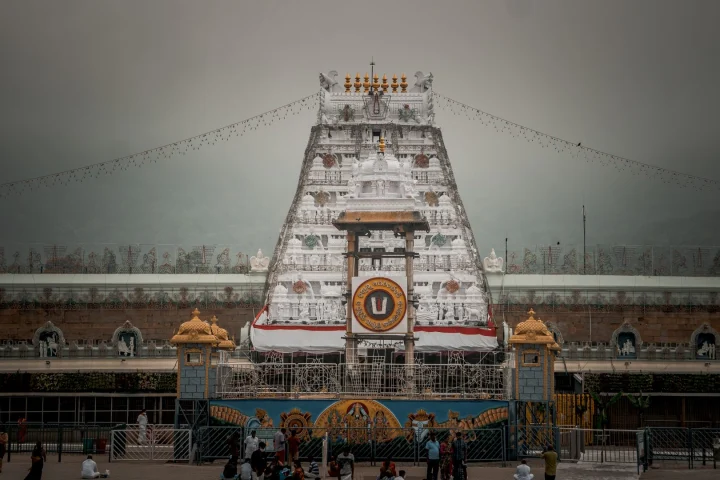
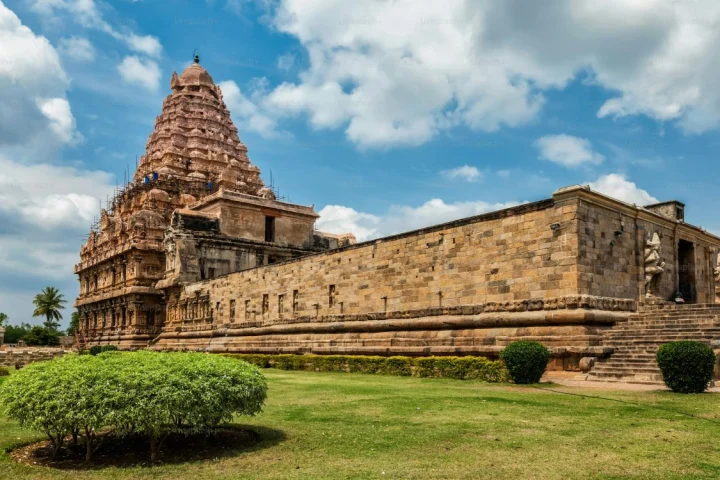
Inside the fort walls, this Shiva temple is the reason many visitors come. It dates from the mid-16th century and is famous for its kalyana mandapa (marriage hall), whose pillars are carved with rearing horses, yalis and other mythical beasts in crisp, deep relief. Look out for the sculpture that shows a bull or an elephant depending on which side you view it from.
The temple has an unusual history: for centuries it was not used for worship, and the main idol was only reinstalled in 1981. Today it is an active temple again, so dress modestly and remove footwear before entering.
Government Museum and St John's Church
The Government Museum inside the fort has a modest collection of sculpture, coins, weapons and local history displays, including material on the fort itself. Tamil Nadu government museums are usually closed on Fridays, so check before you plan around it. St John’s Church, built in 1846 for the British garrison, also stands within the walls.
Sripuram Golden Temple
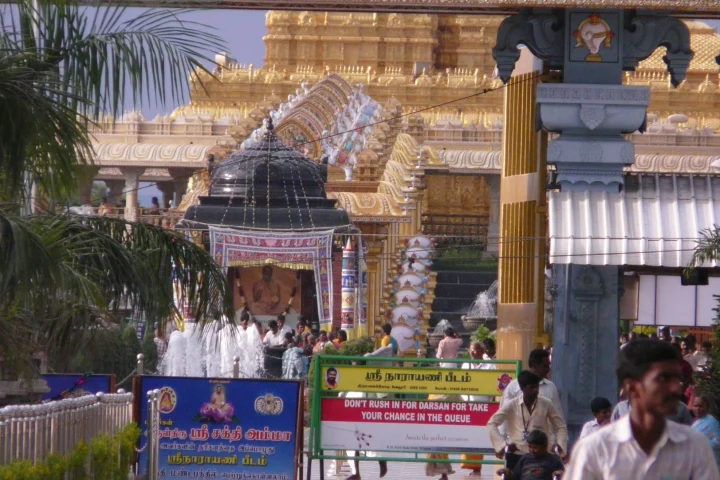
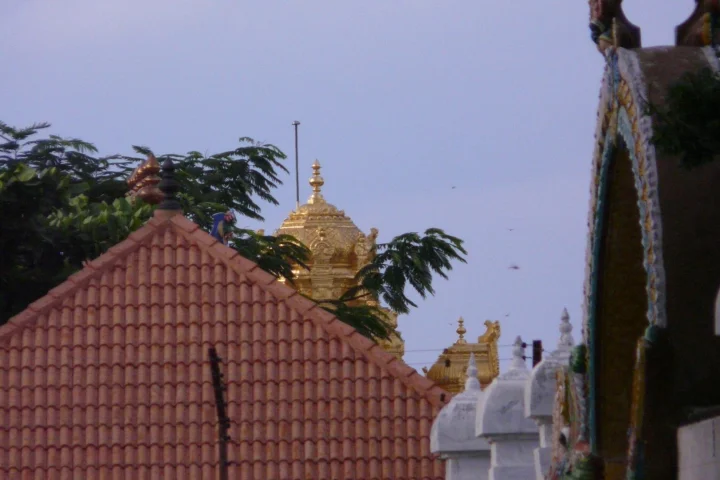
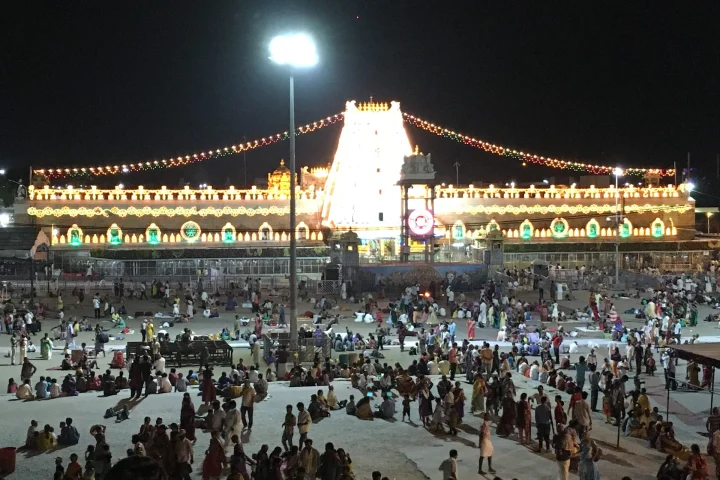
The Sri Lakshmi Narayani Golden Temple at Thirumalaikodi, usually called Sripuram, was consecrated in 2007. It is run by the Sri Narayani Peedam trust. The shrine’s walls and roof are covered in layers of gold foil mounted on engraved copper plates, all worked by hand.
To reach the shrine you follow a star-shaped path of more than 1.8 km through landscaped gardens, lined with boards carrying spiritual messages. The walk takes time, especially on weekends and holidays, when queues can be long. Many visitors time their visit for dusk, when the gold catches the lights and is reflected in the surrounding water.
Sripuram rules: phones, bags and dress code
Sripuram is stricter than most temples, and it helps to know the rules before you arrive. At the time of writing, the temple’s official site lists these points – check before you go:
- Mobile phones, cameras and other electronic gadgets are not allowed inside; deposit them at the counters near the entrance.
- Backpacks, large bags, outside food, tobacco and sharp objects are prohibited.
- Dress code: no sleeveless tops, shorts or skirts above the knee, crop tops or beachwear. Men can wear trousers, a dhoti or kurta; women a saree, salwar kameez or kurta.
- Darshan is listed as 8 am to 8 pm daily.
- Do not throw coins or other objects into the water.
Sample one-day plan from Pondicherry
This is the plan behind our Vellore Golden Temple day trip. With a second day, you can climb to the hill station of Yelagiri, or continue north to Tirupati on the Tirupati darshan tour. Tiruvannamalai and Gingee are also within easy reach on the way back.
- Leave Pondicherry by 6:30 am and reach Vellore by about 10 am.
- Walk the ramparts and moat, then spend an hour at Jalakandeswarar Temple.
- Lunch in town, then the fort museum (if open) or a rest at your hotel.
- Reach Sripuram by 4 pm, leaving time for the long walk and the evening lights.
- Drive back to Pondicherry in the evening, or stay overnight and continue.
How to reach Vellore from Pondicherry
By car, the usual route goes north to Tindivanam and then inland to Vellore, about 155 km in total. It is a straightforward drive of three to three and a half hours with a tea stop. If you are combining Vellore with other temples, you can go out via Gingee and Tiruvannamalai and return via Tindivanam.
Katpadi Junction, a few kilometres from the city centre, is on the main Chennai–Bengaluru railway line. Government buses link Vellore with Chennai, Bengaluru and other towns in the state, but a car with driver is by far the easiest way to combine the fort and Sripuram in one day.
Best time and weather
Vellore is inland and noticeably hotter than Pondicherry. November to February is the most comfortable time, with warm days and cooler evenings. From April to June daytime temperatures are often near 40 °C, which makes the Sripuram walk and the fort ramparts hard work in the middle of the day. The northeast monsoon brings rain from October to December; showers are usually short.
Whatever the season, plan the fort for the morning and Sripuram for late afternoon. Weekdays are far calmer at Sripuram than weekends, public holidays and full-moon days.
Food and where to stay
Because of the hospital, Vellore has plenty of simple restaurants serving South Indian meals and snacks, as well as places cooking North Indian food for the many patients and families who come from other states. Hotels range from basic lodges to comfortable business hotels near the city centre and Katpadi. We can help you choose a hotel if you want to stay overnight.
Practical tips
- Carry a small bag only: at Sripuram, large bags and phones must be deposited before entry.
- Wear clothes that meet the Sripuram dress code all day so you do not need to change.
- The fort grounds are open and sunny; bring a hat and water.
- At the time of writing, the Jalakandeswarar Temple closes around midday and reopens in the late afternoon – check timings locally.
- A Tamil Nadu tourist car travelling on to Tirupati pays interstate permit charges at the border.
Official information: Sripuram Golden Temple
Frequently asked questions
How far is Vellore from Pondicherry?
About 155 km by road via Tindivanam, which usually takes three to three and a half hours.
Can I visit Vellore as a day trip from Pondicherry?
Yes. With an early start you can see the fort and Jalakandeswarar Temple in the morning, Sripuram in the evening, and drive back the same night.
Are mobile phones allowed in the Vellore Golden Temple?
No. Phones, cameras and electronic items must be deposited at the counters near the entrance before you walk to the shrine.
What is the dress code at Sripuram Golden Temple?
Clothes should cover shoulders and knees. Sleeveless tops, shorts, short skirts, crop tops and beachwear are not allowed.
Who built Vellore Fort?
It was built around 1566 by the Reddy chieftains Chinna Bommi and Timma, who ruled Vellore under the Vijayanagara Empire.