Last updated:
Most heritage tours in Tamil Nadu are built around temples. This one follows the people who built the forts and palaces: the Vijayanagara governors and Nayaks, the Marathas of Thanjavur, the Sethupathis of Ramnad and the kings of Travancore. Between them, these monuments cover four centuries of South Indian history.
The route runs from Gingee and Vellore in the north to Kanyakumari in the south. The days are planned around closing days, which matter on this trip: the Padmanabhapuram Palace closes on Mondays, the Vellore museum on Fridays and the Saraswathi Mahal Library on Wednesdays.
The forts
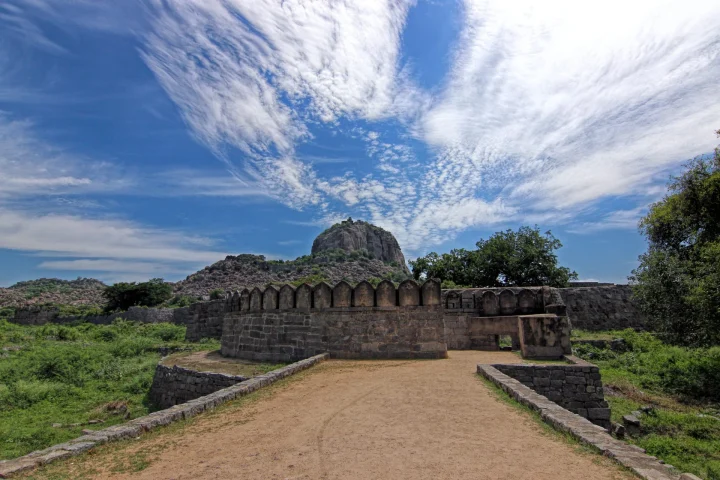
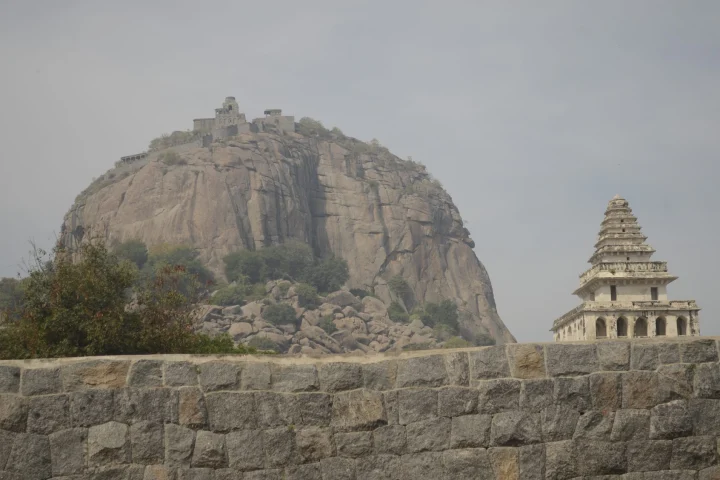
Gingee Fort links three hills, Rajagiri, Krishnagiri and Chakkiliya Durg, with walls, gateways, granaries and the seven-storey Kalyana Mahal. Rajagiri rises about 800 feet above the plain. Shivaji took the fort in 1677, and the British later called it the ‘Troy of the East’.
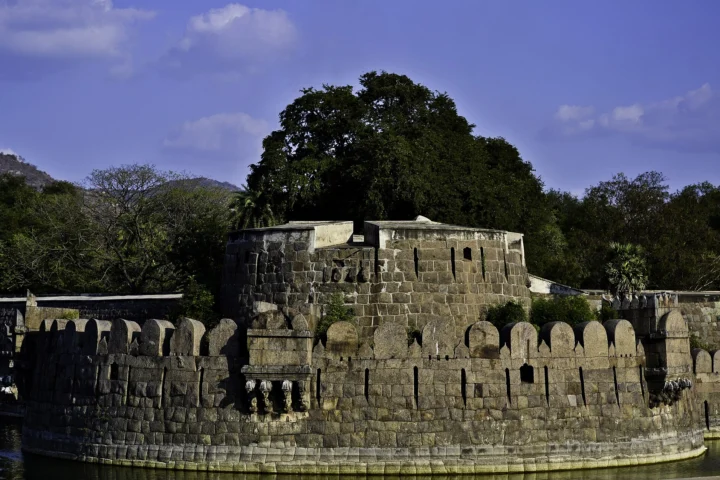
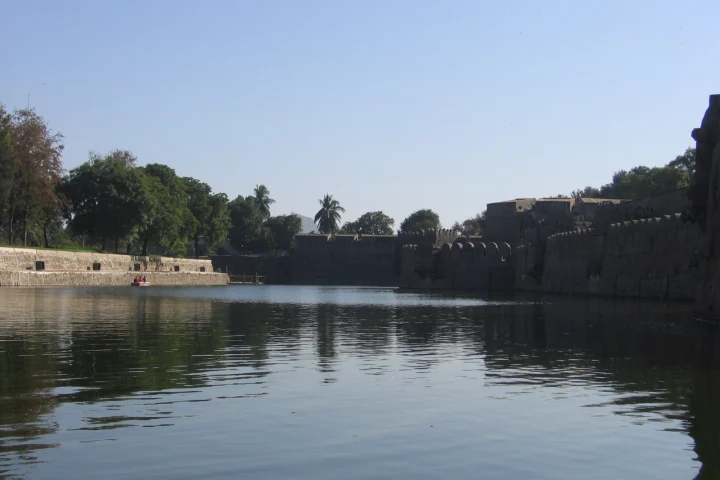
Vellore Fort was built in the 1560s by Vijayanagara governors in granite, with a wide moat. Inside are the Jalakandeswarar temple, a 19th-century church and a mosque. The fort held Tipu Sultan’s family after 1799, and in July 1806 it was the scene of the Vellore mutiny, one of the first large sepoy uprisings against the East India Company.
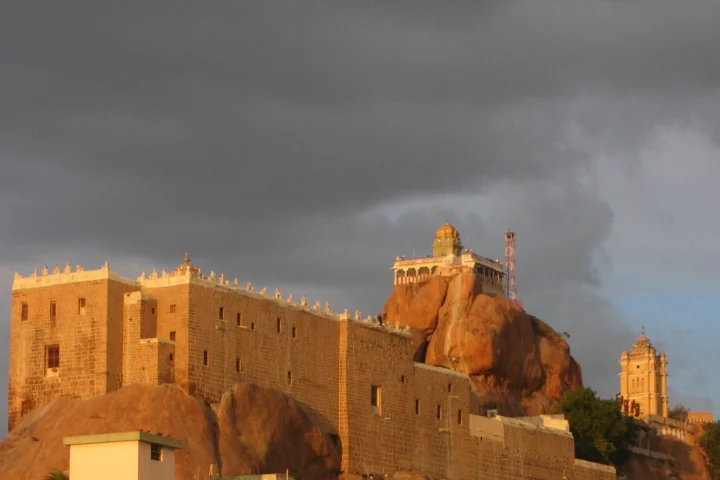
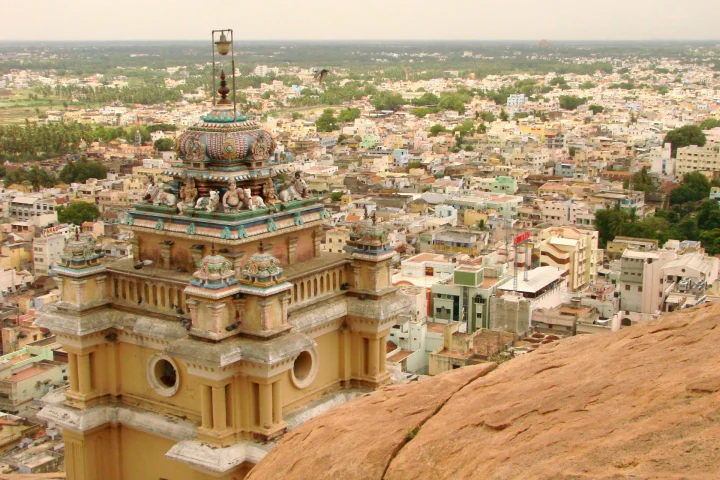
The Rockfort at Trichy is a rock outcrop crowned by temples, with a long climb of steps cut into the rock. Thirumayam Fort, built in 1687 and restored by the Archaeological Survey of India, wraps around a rocky hill, and Vattakottai near Kanyakumari is a small coastal fort of granite.
The palaces
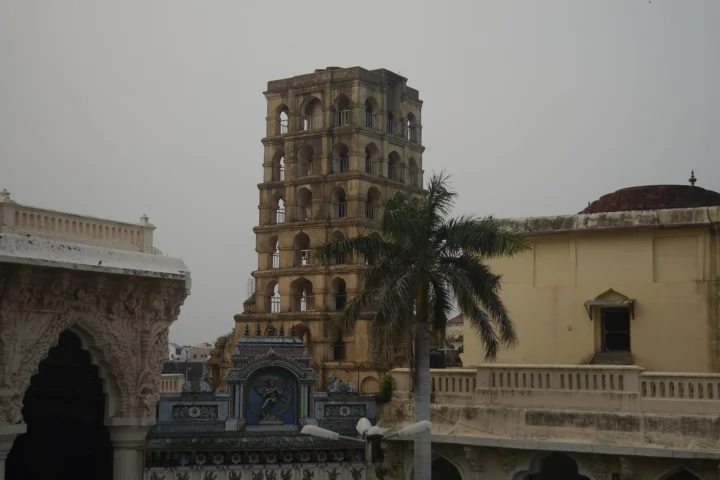
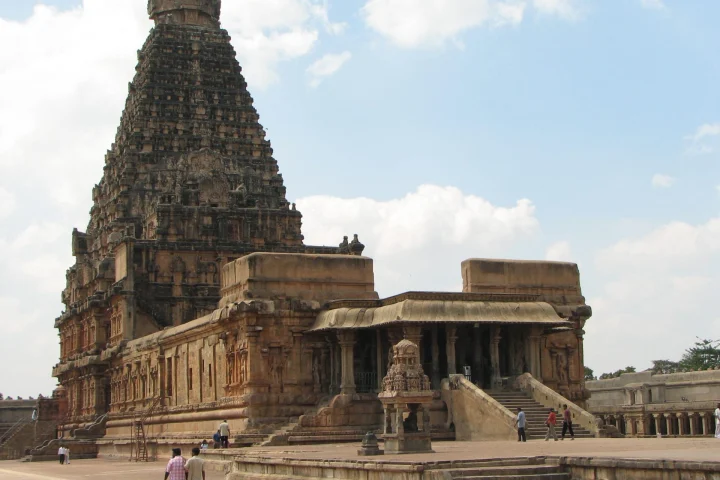
The Thanjavur Maratha Palace was built partly by the Nayaks and partly by the Marathas, and members of the Maratha royal family still live in part of it. Its complex includes the Saraswathi Mahal Library, with rare palm-leaf manuscripts, and an art gallery of Chola bronzes.
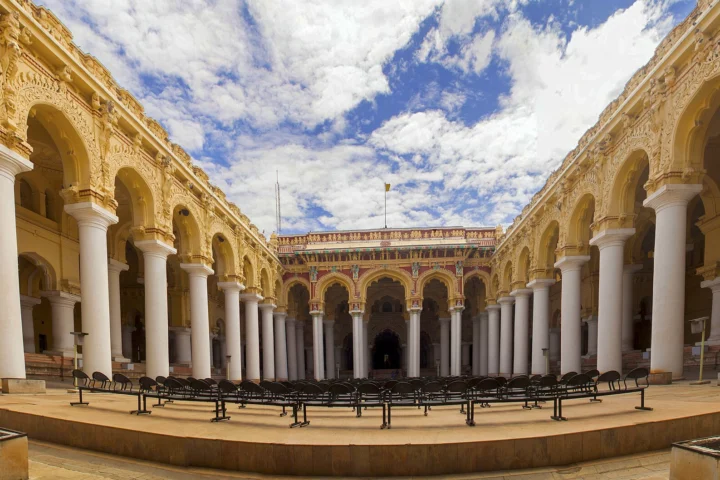
The Thirumalai Nayakkar Mahal in Madurai was completed in 1636 for Tirumala Nayaka. What survives is only part of the original palace, but its courtyard of giant white columns is one of the grandest interiors in South India.
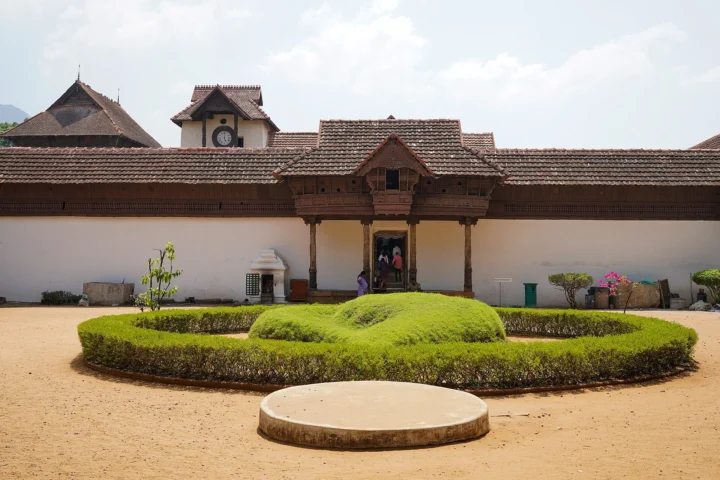
Padmanabhapuram Palace, about 39 km from Kanyakumari, was the seat of the Travancore kings until the capital moved to Thiruvananthapuram in 1795. Rebuilt around 1750 by Marthanda Varma, it is a complex of carved timber halls, including the council chamber and the dance hall. Though in Tamil Nadu, it is maintained by the Kerala Archaeology Department. At the time of writing it opens from 9 am with last entry around 4.30 pm and a lunch break, closed on Mondays.
Practical tips
- Wear good shoes for Gingee and Thirumayam; carry water and a hat, as there is little shade
- Shoes are removed at temples and inside some palace halls
- Camera fees are charged at several monuments; video often costs more
- A local guide at Gingee, Thanjavur and Padmanabhapuram is worth the small extra cost
- Avoid April and May, when the climbs are very hot
Best time to go
November to February is best for climbing and walking. The north-east monsoon in October and November can bring heavy rain to the coast and make rock steps slippery, but it rarely stops sightseeing for long.
Route at a glance
- Pondicherry → Gingee: about 67 km; Gingee → Vellore: about 80–90 km
- Vellore → Trichy: about 290 km, 5.5–6 hours
- Trichy → Thanjavur: about 60 km; Thanjavur → Thirumayam → Madurai: about 185 km
- Madurai → Padmanabhapuram: about 250 km, 5 hours; Padmanabhapuram → Kanyakumari: about 39 km
- Kanyakumari → Madurai: about 245 km; Madurai → Pondicherry: about 335 km
How to customise
- Shorten to five days by dropping Vellore and Kanyakumari and returning from Madurai
- Add Chettinad after Thirumayam for its mansions, as in the Chettinad heritage tour
- Add Fort Dansborg at Tranquebar on the coast
- Combine with the Great Chola Temples tour
Frequently asked questions
Which day is Padmanabhapuram Palace closed?
It is closed on Mondays and national holidays at the time of writing. We plan the dates so that you reach it on another day.
How long does it take to climb Gingee Fort?
The Rajagiri climb and descent take about two to three hours for most people. Entry to the climb closes at about 3 pm, so start in the morning.
Is Padmanabhapuram Palace in Kerala or Tamil Nadu?
It is in Kanyakumari district, Tamil Nadu, but is managed by the Kerala Government’s Archaeology Department because it was the old Travancore royal palace.
Can we shorten this tour?
Yes. A five-day version covering Gingee, Trichy, Thanjavur, Thirumayam and Madurai works well; Padmanabhapuram needs the extra days because of the distance.