Last updated:
Vellore Fort sits right in the middle of Vellore town, yet once you cross the moat it feels like a different place. Massive granite walls, a double line of ramparts and a broad, water-filled moat enclose about 133 acres that hold a richly carved Shiva temple, a 19th-century church, a mosque, palace buildings and museums. It is one of the best-preserved examples of military architecture in South India and is protected by the Archaeological Survey of India (ASI).
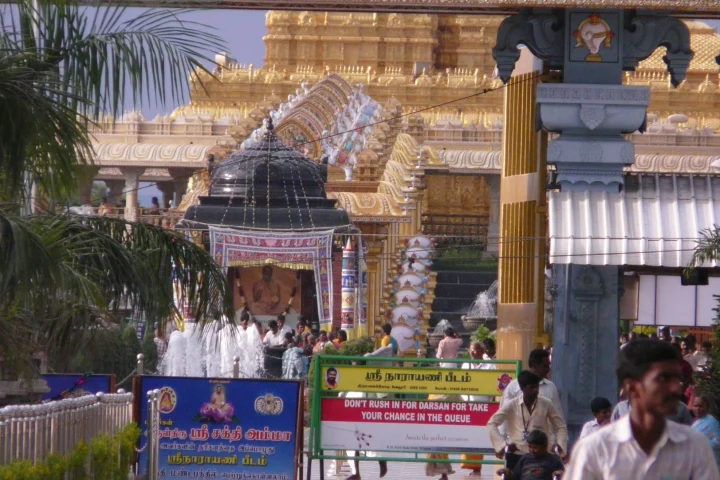
From Pondicherry it makes an easy and varied day out, especially when paired with the Sripuram Golden Temple on the edge of town.
On this page
History of Vellore Fort
The fort was built in the 16th century by Vijayanagara chieftains, the Nayaks Chinna Bommi and Thimma Reddy, under the Vijayanagara emperor Sadashiva Raya. Granite for the walls came from quarries in the Arcot and Chittoor areas. After the decline of Vijayanagara the fort changed hands many times: the Bijapur Sultanate, the Marathas, the Mughal commander Daud Khan and the Nawabs of Arcot all held it before the British took control in 1768.
Under the British the fort became a place of detention for important captives. After the fall of Srirangapatna in 1799, the family of Tipu Sultan was held here. Later, Sri Vikrama Rajasinha, the last king of Kandy in Sri Lanka, was imprisoned in Vellore for 17 years until his death; his memorial is in the town.
The Vellore Mutiny of 1806
On 10 July 1806, Indian sepoys inside the fort rose against the East India Company. The immediate cause was a new dress code that banned religious marks and introduced a round hat that soldiers believed was made with leather from cattle. Around 15 British officers and about 100 British soldiers were killed before cavalry from Arcot retook the fort the same day, and the reprisals were severe. Historians see it as the first large-scale rebellion of Indian soldiers against British rule, half a century before 1857.
What to see inside the fort
- The moat and ramparts: walk part of the ramparts for views over the moat, which old accounts say was once stocked with crocodiles. The morning light on the granite is the best time for photos.
- Jalakandeswarar Temple: a Vijayanagara-period Shiva temple just inside the main gate, famous for the carvings of its kalyana mandapam (wedding hall) – rearing horses, yalis and intricate pillars. It is a working temple, so dress modestly and leave footwear outside.
- St John’s Church: built in 1846 by the Madras government, it is the oldest standing church of its diocese.
- The mosque: a small mosque from the Nawab period, seen from outside.
- Museums: the ASI museum, set in the Badshah Mahal and Begum Mahal within the fort, displays sculptures, hero stones and material on the 1806 mutiny. A separate Government Museum inside the fort has galleries on prehistory, coins, geology, botany, zoology and anthropology.
- Palace buildings: halls such as the Tipu Mahal and Begum Mahal recall the years when Tipu Sultan’s family was held here.
Timings and tickets
At the time of writing the fort grounds are open from about 8 AM to 6 PM. The ASI museum is open from about 10 AM to 5:30 PM and is closed on Fridays and government holidays. The fort grounds are free or carry a nominal fee, and the museums charge small separate tickets. Timings and fees change, so check before you go.
Tips for your visit
- Avoid Fridays if the museum matters to you.
- Temple dress code: cover shoulders and knees for the Jalakandeswarar Temple.
- Heat: Vellore is one of the hottest towns in Tamil Nadu from March to June. Go early, carry water and wear a hat on the ramparts.
- Combine: the Sripuram Golden Temple is busiest in the evening, so see the fort in the morning or afternoon and the golden temple after dark.
Visiting Vellore Fort from Pondicherry
Vellore is about 155 km from Pondicherry, roughly three and a half hours by car. That is close enough for a long day trip or a relaxed overnight stop. Our Vellore Golden Temple day trip combines the fort and Sripuram by car with driver; for a trip built around forts and palaces, see our Tamil Nadu forts and palaces tour. If you enjoy forts, Gingee Fort can be added on the drive with an early start. For more ideas see our heritage and forts and weekend getaways pages.
Frequently asked questions
Who built Vellore Fort?
It was built in the 16th century by the Vijayanagara chieftains Chinna Bommi Nayak and Thimma Reddy Nayak, during the reign of Sadashiva Raya.
What happened at Vellore Fort in 1806?
On 10 July 1806 Indian sepoys mutinied against new dress regulations, killing many British officers and soldiers before the revolt was crushed the same day. It is regarded as the first major sepoy rebellion against the East India Company.
Is the Vellore Fort museum open on Fridays?
At the time of writing, the ASI museum inside the fort is closed on Fridays and government holidays, although the fort grounds stay open. Check before you go.
How far is Vellore Fort from Pondicherry?
About 155 km, roughly three and a half hours by car. It is often combined with the Sripuram Golden Temple in a single day trip.
Can you visit the Jalakandeswarar Temple inside Vellore Fort?
Yes. It is a working Shiva temple inside the fort walls. Dress modestly and leave footwear at the entrance.