A houseboat on the backwaters is the one experience almost every visitor to Kerala wants, and it is usually the last stop on a road trip from Pondicherry. It is also the part of the trip where people make the most avoidable mistakes: booking the wrong type of cruise, choosing a base that doesn’t suit them, or discovering on board that the air-conditioning only runs at night.
This guide explains how houseboats actually operate, how Alleppey and Kumarakom differ, whether a day cruise is enough, and what to confirm before you pay. For the drive itself and how the backwaters fit into a longer route, see how to plan a South India trip from Pondicherry.
On this page
How a Kerala houseboat works
The boats are modelled on the kettuvallam, the covered wooden barges that once carried rice and spices through the backwaters. Today’s versions have one to several bedrooms with attached toilets, an open lounge at the front, a kitchen at the back, and a crew that normally includes a driver, a cook and a helper. Meals are cooked on board and are usually part of the package.
Most cruises run on Vembanad Lake and the canals and rivers that feed it. Vembanad is the largest wetland system in Kerala, bordered by Alappuzha, Kottayam and Ernakulam districts, and it is a Ramsar site of international importance. South of it lies Kuttanad, where rice is grown on land below sea level behind earth bunds – the reason you often see paddy fields lower than the water you are floating on.
The daily rhythm
An overnight cruise typically boards around midday and ends the next morning after breakfast. Boats stop cruising and anchor in the early evening – local rules require motor vessels to tie up so that fishermen can lay nets after dark – so the actual time moving on the water is the afternoon and a short stretch the next morning. Operators commonly quote noon check-in and 9 am check-out, but confirm the exact times for your boat at the time of booking.
Alleppey vs Kumarakom: which base suits you?
Both sit on the same lake system, roughly 30 km apart by road, and boats from either can reach the other. The difference is in the feel of the place and the stretch of water you are most likely to see.
Alleppey (Alappuzha)
Alleppey is the main houseboat hub, with the largest fleet and the widest choice from simple one-bedroom boats to large multi-deck vessels. Cruises from here head into Kuttanad, where narrow canals run between paddy fields, village houses, churches and temples. You see daily life at close quarters: ferries, school children, people washing clothes and fishing.
The downside is traffic. In peak season many boats leave from the same area at the same time, and the first stretch can feel busy. Alleppey town also has a beach, the old pier and more budget-friendly stays.
Kumarakom
Kumarakom is a village on the eastern shore of Vembanad Lake, about 13 km from Kottayam town. It is known for lakeside resorts, many with their own jetties, and it feels quieter and more spread out. Cruises here spend more time on the open lake with wide views and sunsets, and less time in narrow village canals.
Kumarakom is also home to the Kumarakom Bird Sanctuary, a 14-acre area on the lake shore where egrets, herons, cormorants, darters and kingfishers are resident and many migrant species arrive from roughly November to February. Early morning is the best time for a walk there. If birds interest you, see our bird-watching page and our guide to bird watching near Pondicherry.
Quick verdict
- Choose Alleppey for village canals, the widest choice of boats and a livelier atmosphere.
- Choose Kumarakom for a quieter, resort-style stay, open-lake views and birdlife.
- Can’t decide? Stay in a Kumarakom lakeside hotel and take a day cruise, or board a houseboat in Alleppey and spend a second night on land.
Day cruise, overnight cruise or a smaller boat?
Day cruise
A day cruise on a houseboat generally runs from late morning to late afternoon and includes lunch. It suits travellers who prefer a hotel bed, families with small children who may get restless, and anyone on a tight schedule. You see the same scenery as an overnight guest; what you miss is the quiet evening and the early-morning light.
Overnight cruise
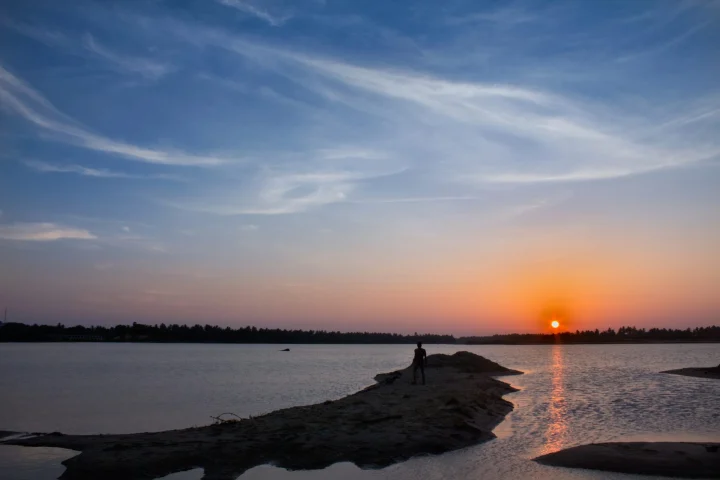
An overnight stay is what most people picture: lunch on board, a slow afternoon, tea and snacks at sunset, dinner, a night moored in a calm spot, and breakfast as the boat sets off again. It is the better choice for couples – see our honeymoon ideas – and for anyone who wants to switch off completely. One night is enough for most people; a second night on the same stretch of water rarely adds much.
Shikara and country boats
Small covered motorboats (often called shikaras) and hand-rowed country boats can reach narrow canals that big houseboats cannot enter. A two- or three-hour ride is a good add-on to a hotel stay, or an alternative if you want village canals without committing to a whole day.
What to check before you book
Houseboat quality varies more than hotel quality, and descriptions online can be optimistic. Kerala’s Department of Tourism runs a classification scheme for houseboats, currently graded Silver, Gold and Diamond, which covers construction, bedrooms, staff, kitchen hygiene, safety equipment and waste management. Classified boats must display their registration number, name and classification certificate on board. Kerala Tourism also publishes a list of approved houseboats on its official website.
- Classification and registration: ask for the boat’s name and certificate before paying, and check it matches when you board.
- Air-conditioning hours: many boats run AC in the bedrooms only at night, often powered by a generator. Ask for the exact hours in writing.
- Private or shared: confirm you are booking the whole boat, not a room on a shared vessel, unless that is what you want.
- Meals: check what is included (lunch, evening tea, dinner, breakfast), and mention vegetarian, Jain or low-spice needs in advance.
- Route: ask whether the boat goes into the canals of Kuttanad or stays mostly on the open lake.
- Safety: life jackets, life buoys and a fire extinguisher should be visible. Keep children away from open edges.
- Upper decks: useful for views, but on some boats they are not screened – ask about mosquito nets or screens for the evening.
Best season for a houseboat
September to March is the most popular period. The south-west monsoon has passed, water levels are good and the paddy fields are green. December and January bring the most comfortable weather but also the highest demand, especially around Christmas and New Year, when good boats sell out well in advance.
April and May are hot and humid, though evenings on the water are still pleasant. From June to September the south-west monsoon brings heavy rain; boats keep operating in most conditions, rates are usually lower and many people enjoy the rain on the lake, but cruises can be cut short in bad weather. The Nehru Trophy snake boat race on Punnamada Lake near Alleppey is traditionally held on the second Saturday of August; it is spectacular but brings crowds and road closures.
For a month-by-month view of Kerala alongside Tamil Nadu and the Karnataka hills, see our guide to the best time to visit South India.
Fitting the backwaters into a trip from Pondicherry
Alleppey is around 600 km from Pondicherry, so the backwaters are almost always the final stop of a Kerala circuit rather than a destination on their own. The usual approach is through the hills: Munnar for tea country, then Thekkady for spice gardens and Periyar, then down to the water. Thekkady to Kumarakom is roughly 120 km through Kottayam, which makes Kumarakom a natural first backwater stop, with Alleppey a short drive further on.
From the backwaters, Kochi is close enough to finish the trip with a walk around Fort Kochi and a flight home, while Varkala to the south adds cliff-top beaches. Our Munnar, Thekkady and Alleppey tour and Kochi, Kumarakom and Varkala tour follow these routes with a car and driver from Pondicherry. Houseboats are not included in our tours, but we can help you choose one and arrange it on request. Before the long drive, read our South India road trip tips.
Practical tips on board
- Carry mosquito repellent and light long sleeves for the evening.
- Pack a small overnight bag; big suitcases are awkward in houseboat cabins and can stay in the car with your driver.
- Keep phones and cameras away from the open sides of the boat.
- Don’t swim in the lake – currents, boat traffic and water quality make it unwise.
- Keep some cash for tips and small purchases; card and UPI acceptance on board varies.
- If you only want a taste of the water closer to home, Pondicherry’s Chunnambar backwaters and the Pichavaram mangroves near Chidambaram make good short boat trips. More ideas are on our backwaters and lakes page.
Frequently asked questions
Which is better for a houseboat, Alleppey or Kumarakom?
Alleppey has the most boats and the best access to village canals in Kuttanad. Kumarakom is quieter, with lakeside resorts, open-lake views and a bird sanctuary. Both use the same Vembanad lake system.
Is a day cruise enough, or should I stay overnight?
A day cruise shows you the same scenery and suits families and tight schedules. An overnight stay adds the sunset, a quiet evening and early-morning light, which is what most people remember.
Do Kerala houseboats sail at night?
No. Boats anchor in the early evening and spend the night moored, so most cruising happens in the afternoon and for a short time the next morning.
How can I tell if a houseboat is officially approved?
Kerala’s Department of Tourism classifies houseboats as Silver, Gold or Diamond. Classified boats must display their registration number, name and classification certificate on board, and Kerala Tourism publishes a list of approved houseboats.
What is the best time for a Kerala houseboat trip?
September to March is the most popular season, with December and January the most comfortable and busiest. Boats also run in the monsoon from June to September, when rates are usually lower.