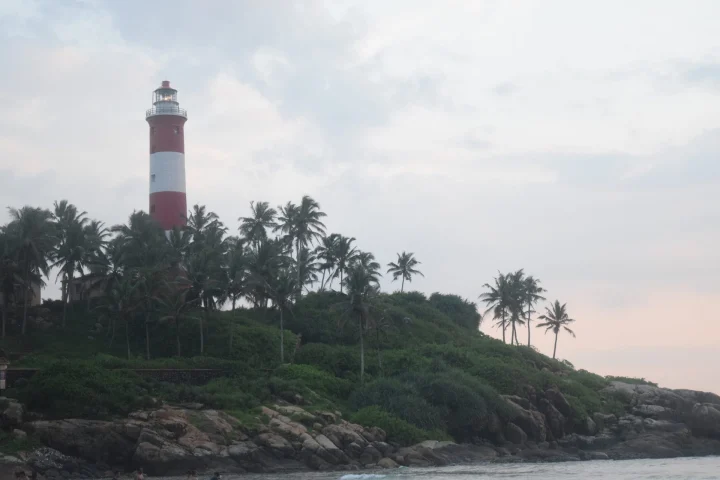
Varkala is a small town on the coast of Thiruvananthapuram district, about 50 km north of the state capital. It has two quite different sides. One is a pilgrim town, centred on the Janardhana Swamy Temple and the beach below it, where Hindus come to perform rites for their ancestors. The other is a relaxed beach resort along the top of the cliffs, lined with guesthouses, cafés and Ayurveda centres.
What sets Varkala apart is the cliff itself. Along this stretch of coast, sandstone and red laterite rise straight up from the beach – the only place in southern Kerala where cliffs meet the sea like this. The Geological Survey of India has declared the Varkala cliffs a National Geological Monument. At about 590 km from Pondicherry, Varkala is best visited as part of a southern Kerala trip rather than on its own.
On this page
Why visit Varkala
Most Kerala beaches are flat, and many are working fishing beaches. Varkala gives you something different: a long walk along the cliff edge with the sea below, sunsets that are hard to beat, and steps down to a sandy beach for a swim when the sea allows. It is quieter and more compact than Kovalam, and the town suits couples and anyone wanting a few unhurried days after a long road trip.
It also combines well with spiritual and cultural stops. The temple, the Sivagiri Mutt and the ritual beach are all within a short drive of the cliff, so a visit can be as devotional or as lazy as you like.
Top things to see in Varkala
The cliff and Papanasam beach
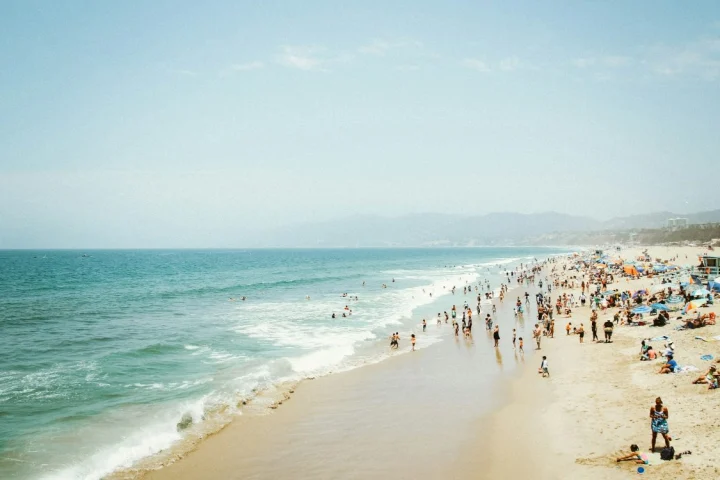
The main beach is called Papanasam, meaning ‘destruction of sins’, because a dip here is believed to cleanse the soul. The southern end, below the temple, is where ancestral rites (bali tharpanam) are performed, especially on Karkidakam Vavu in the Malayalam month of Karkidakam (July–August). The northern end, below the North Cliff, is where most visitors swim and sunbathe.
Springs of fresh water trickle out of the cliff face in places and are traditionally believed to have healing properties. A paved path runs along much of the North Cliff, with steps down to the sand at several points. Stay well back from the edge, which is crumbling in places.
Janardhana Swamy Temple
Dedicated to Vishnu as Janardhana, this temple stands on a rise just inland from Papanasam beach and is the reason Varkala is sometimes called the ‘Kashi of the South’. Local tradition holds it to be around 2,000 years old. It has a round sanctum with a copper-covered conical roof, typical of Kerala temples, and a bronze bell said to have been given by the captain of a Dutch ship. The ten-day annual festival, usually in March–April, includes a procession of decorated elephants.
Non-Hindus are generally allowed into the outer areas but not the inner sanctum. Dress conservatively; men are usually expected to remove their shirts before entering the inner areas, and shorts and sleeveless tops are not appropriate.
Sivagiri Mutt
On a hill near the railway station, a short drive from the beach, Sivagiri is the headquarters of the order founded by Sree Narayana Guru, the social reformer who campaigned against caste discrimination in Kerala. His samadhi (memorial) is here and draws large numbers of visitors, especially during the annual Sivagiri pilgrimage from 30 December to 1 January, when devotees arrive dressed in yellow.
Kappil
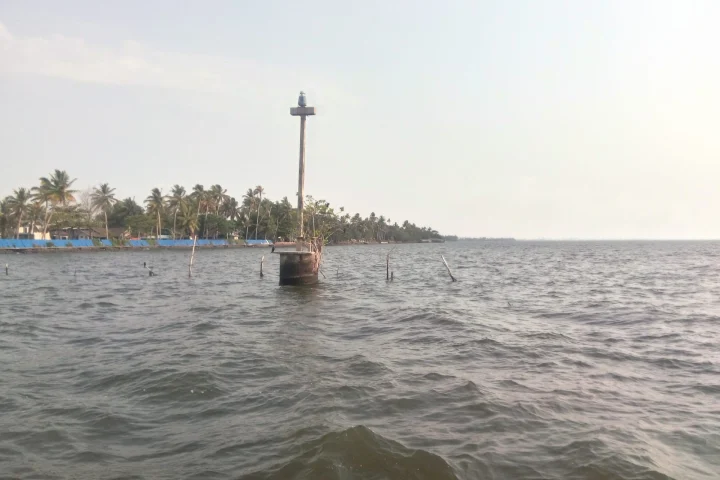
About 6–7 km north of Varkala, Kappil is where the Edava–Nadayara backwater reaches the sea across a narrow strip of sand. You can see backwater on one side of the road and surf on the other. It is a good late-afternoon drive; swimming is not advisable because of currents at the estuary.
Anchuthengu Fort
South of Varkala, on the way to Thiruvananthapuram, is the small fort at Anchuthengu (formerly Anjengo). The English East India Company built it between 1696 and 1699, and it was the company’s first permanent post on the Malabar coast. It is a protected monument today and makes an easy short stop.
A realistic plan from Pondicherry
Varkala pairs well with Thiruvananthapuram and Kovalam to the south and the backwaters to the north. Our Kochi, Kumarakom and Varkala tour links them. One way to plan it:
- Day 1: Pondicherry to Madurai (about 334 km), with the Meenakshi Temple in the evening.
- Day 2: Madurai to Varkala across the Ghats or via Kanyakumari and the coast. Sunset on the cliff.
- Day 3: Temple and Papanasam beach in the morning, Sivagiri, then Kappil in the afternoon.
- Day 4: North to Kumarakom or Alleppey for the backwaters, then on to Kochi.
Best time to visit Varkala
October to March is the main season, with calmer seas, sunny days and most cafés and guesthouses open. December and January are the busiest. April and May are hot and humid. The south-west monsoon from June to September brings heavy rain and rough seas; many cliff-top businesses close for part of this period, and swimming is unsafe. The monsoon is, however, a traditional season for Ayurvedic treatments, and some centres stay open for this.
How to reach Varkala from Pondicherry
By road
The drive begins on the familiar road through Villupuram and Trichy to Madurai. From there you can cross the Western Ghats via Tenkasi and the Punalur side to Kollam and turn south along the coast, or continue through Tirunelveli and Nagercoil to Thiruvananthapuram and head north. Both take a full day, so an overnight halt in Madurai makes the trip far more comfortable. Interstate permit charges apply for a Tamil Nadu tourist car entering Kerala.
By train and air
Varkala Sivagiri station is on the main coastal line between Thiruvananthapuram and Kollam, and many long-distance trains stop here. Thiruvananthapuram International Airport is roughly 57 km away, about an hour and a half by road.
Food and shopping
The cliff-top cafés serve fresh seafood, often displayed on ice in the evening for you to choose, alongside Kerala dishes and international menus. In town, simple restaurants offer Kerala meals and fish curry with rice. Shops along the cliff sell textiles, handicrafts and books; spices and Ayurvedic oils are better bought from established shops.
Practical tips
- Swim only in the areas marked by lifeguards and follow their flags; currents can be strong.
- Keep back from the cliff edge, especially after dark and after rain.
- Dress modestly in town and near the temple; swimwear belongs on the beach.
- Use a torch on the cliff path at night – some stretches are poorly lit.
- Choose an Ayurveda centre with qualified doctors, and consult them before any treatment.
- We can help book hotels or cliff-side stays in Varkala.
Plan your Varkala trip
We arrange tailor-made tours from Pondicherry with an AC car and driver, including southern Kerala circuits through Varkala, Kovalam and the backwaters, and can help with hotel bookings. Message +91 96265 65138 on WhatsApp with your dates for a plan and quote.
Official information: Kerala Tourism
Frequently asked questions
How far is Varkala from Pondicherry?
About 590 km by road via Trichy and Madurai, which takes around 11–12 hours. It is best split with a night in Madurai.
Why is Varkala beach called Papanasam?
Papanasam means ‘destruction of sins’. A dip in the sea here is believed to cleanse the soul, and Hindus perform rites for their ancestors on the beach below the Janardhana Swamy Temple.
Can non-Hindus visit the Janardhana Swamy Temple?
Non-Hindus are generally allowed into the outer areas of the temple but not the inner sanctum. Dress conservatively when visiting.
Is it safe to swim at Varkala?
In the dry season, swimming is usually possible in the lifeguard-watched areas of Papanasam beach. Currents can be strong, and during the monsoon the sea is too rough for swimming.
What is the best time to visit Varkala?
October to March, when the sea is calmer and the weather is dry. The monsoon from June to September brings heavy rain and many cliff-top businesses close.