Kanchipuram from Pondicherry is one of the easiest big temple trips you can make in Tamil Nadu. The old Pallava capital, often called the city of a thousand temples, is close enough for a long day out, yet rich enough to fill two. This guide covers the drive, the four temples most visitors come for, how to dress and when to arrive, and how to buy a Kanchipuram silk saree without being misled.
On this page
Getting to Kanchipuram from Pondicherry
Our distance chart puts Kanchipuram about 118 km from Pondicherry, or roughly 2.5 to 3 hours of driving without stops. The usual road heads north on the Chennai highway to Tindivanam, then turns inland through Vandavasi or Uthiramerur. Early starts help when you visit Kanchipuram from Pondicherry, because the temples close in the afternoon.
There is no direct train, and buses usually need a change at Tindivanam, so most visitors go by road. A car with driver makes most sense here: the temples are spread across town, and parking near the bigger ones is easier when someone else handles it.
| Plan | Good for | What fits in |
|---|---|---|
| Day trip | Travellers short on time | Kailasanathar, Ekambareswarar and one or two more temples, plus a short silk stop |
| Two days with Mahabalipuram | First-time visitors | All four main temples, unhurried silk shopping, the Shore Temple and Pancha Rathas |
| Pancha Bhoota circuit | Pilgrims | Ekambareswarar as the earth temple, with Tiruvannamalai, Chidambaram and others |
The key temples of Kanchipuram
Kanchipuram sits on the Vegavathi river and is traditionally divided into Shiva Kanchi, the larger western part with most of the Shiva temples, and Vishnu Kanchi on the eastern side. Hindus count it among the Sapta Puri, the seven sacred cities. You will not see a thousand temples in a weekend, but these four give you the best sense of the place.
Kailasanathar Temple
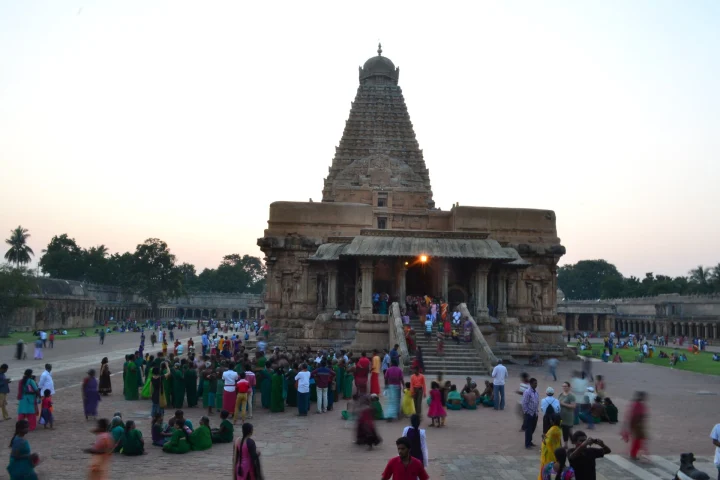
The Kailasanathar Temple is one of the oldest surviving monuments in the city. It was built around 700 CE by the Pallava king Narasimhavarman II, also known as Rajasimha, with later work under Mahendravarman III. The foundations are granite and the superstructure is sandstone, which gives the carvings a soft, weathered look.
Walk slowly around the courtyard: it is lined with 58 small shrines, and faint traces of old murals survive on the inner walls. The Archaeological Survey of India looks after it, and it is usually far quieter than the big working temples. At the time of writing the Kancheepuram district website lists 6:30 am to 12:30 pm and 4 pm to 7:30 pm – check before you go.
Ekambareswarar Temple
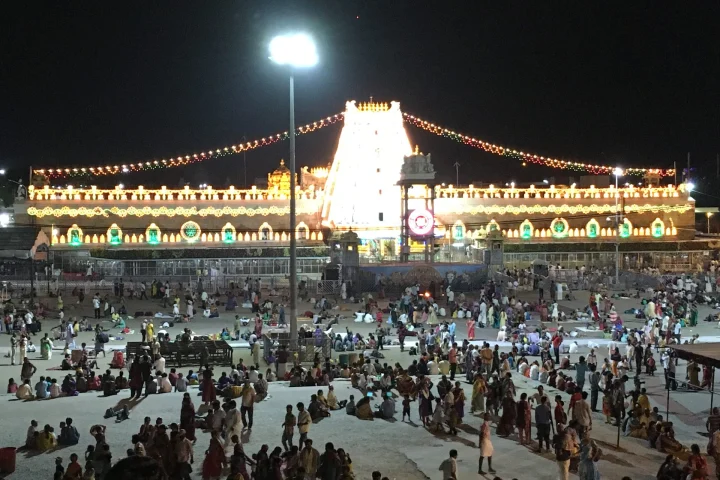
Ekambareswarar is one of the five Pancha Bhoota Sthalams, the Shiva temples linked to the five elements, and here Shiva is worshipped as earth. Its south-facing raja gopuram, which the district website gives as 57 metres tall and credits to the Vijayanagara king Krishnadevaraya, is one of the tallest temple towers in Tamil Nadu.
Inside, look for the sacred mango tree in the outer court, tied to the legend of Parvati’s penance, and the thousand-pillared hall from the Vijayanagara period. Listed hours at the time of writing are 6 am to 12:30 pm and 4 pm to 8:30 pm – check before you go.
Varadharaja Perumal Temple
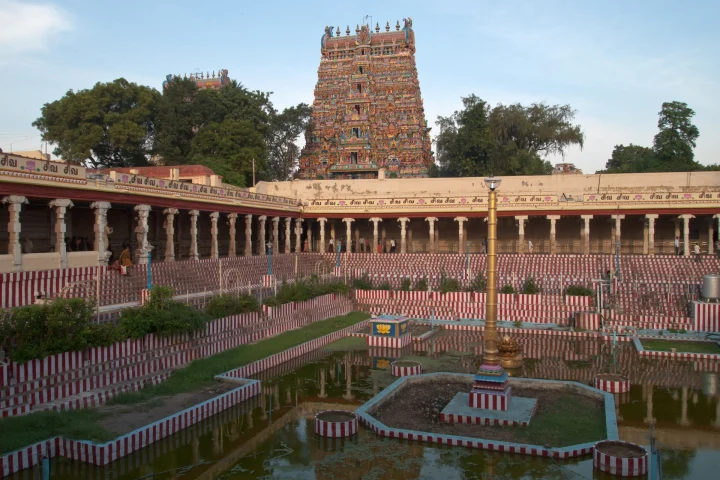
In Vishnu Kanchi, the Varadharaja Perumal Temple is one of the 108 Divya Desams, the Vishnu temples sung by the Alvar poet-saints. The complex covers about 23 acres. Its best-known feature is the Vijayanagara-era hundred-pillared hall, carved with scenes from the Ramayana and Mahabharata, including a stone chain cut from a single block.
Devotees also queue to touch the gilded lizards carved above the sanctum, linked to a local legend. The temple’s wooden Athi Varadar image is brought out for public worship only once every 40 years; the last time was 2019, so the next is due around 2059. At the time of writing the district site lists 6 am to 12:30 pm and 3:30 pm to 8:30 pm – check before you go.
Kamakshi Amman Temple
In the centre of town, the Kamakshi Amman Temple is one of the most important goddess temples in South India and is counted among the Shakti Peethas. The goddess is shown seated, and the sanctum carries a gold-covered vimana. Tradition credits Adi Shankara with installing the Sri Chakra in front of her, and the Kanchi Kamakoti Peetham remains closely tied to the temple. We could not confirm current official hours, so ask locally or check before you go.
Temple dress code, etiquette and timing tips
These are living temples, so dress as you would for any place of worship. Our guide to temple dress code and etiquette in Tamil Nadu covers it in detail; the short version is below.
- Clothing: cover shoulders and knees. A dhoti, trousers or long skirt and a shirt or kurta are safe choices; avoid shorts and sleeveless tops.
- Footwear: leave shoes at the paid or free stands outside the gate. Stone floors get very hot by late morning, so socks or an early visit help.
- Phones and cameras: in 2022 the Madras High Court directed the state to stop mobile phone use inside Tamil Nadu temples, and many temples now ask you to deposit phones. Rules differ from temple to temple – follow the signs.
- Inner shrines: some sanctums may be restricted at certain temples. Follow staff instructions and don’t photograph deities.
- Timing: most temples close from about 12:30 pm to 3:30 or 4 pm. Do the temples in the morning and keep the afternoon for lunch and silk shopping.
Tip: If your trip to Kanchipuram from Pondicherry falls on a festival day, expect big crowds and changed hours, so plan extra time.
Kanchipuram silk sarees: GI tag, Silk Mark and co-operatives
Kanchipuram silk is registered as a Geographical Indication. The Indian GI registry lists “Kancheepuram Silk” with a certificate dated 2005, applied for by the Tamil Nadu Department of Handlooms and Textiles. In short, a saree sold under the name must be woven in the Kanchipuram region to set standards.
According to the district administration, the sarees are woven from pure mulberry silk, which comes mainly from Karnataka, with zari (silk thread coated in silver and gold) from Surat. A traditional feature is that the body and border are woven separately and then firmly interlocked, so the border does not come away even if the fabric tears.
How to buy genuine Kanchipuram silk
- Look for the Silk Mark. This label is run by the Silk Mark Organisation of India, set up in 2004 under the Central Silk Board. The tag carries a hologram and a unique number that traces back to the seller. It certifies pure natural silk, though the scheme is advisory rather than a legal requirement.
- Buy from co-operatives or established shops. Kanchipuram’s first weavers’ co-operative, the Kamatchi Amman society, was formed in 1949, and the district says around two dozen co-operatives now operate, mostly under the state government.
- Consider Co-optex. The Tamil Nadu Handloom Weavers’ Co-operative Society, known as Co-optex, was founded in 1935 and runs a network of around 150 showrooms across India.
- Ask for a bill that states pure silk and the zari type, so you have something to rely on if there is a dispute.
- Be wary of touts who offer to take you to a “factory” shop. Choose the shop yourself.
If you have time, ask a co-operative whether you can watch a handloom at work. Seeing how slowly a heavy silk saree takes shape explains the price better than any sales talk.
Combining Kanchipuram with Mahabalipuram
Mahabalipuram lies about 65 km east of Kanchipuram, a little over an hour by road. Both were Pallava centres, so the pairing makes historical sense: the stone-cut monuments by the sea and the built temples of the capital show two sides of the same dynasty.
Seeing both in one day from Pondicherry is possible but rushed, with about six hours of driving in total. We suggest a two-day loop: drive up the coast to Mahabalipuram for the Shore Temple and Pancha Rathas in the afternoon light, stay the night, then reach Kanchipuram early the next morning before heading home.
- Day 1: Pondicherry to Mahabalipuram along the coast, monuments in the late afternoon, overnight stay.
- Day 2: Early drive to Kanchipuram; Kailasanathar and Ekambareswarar before noon, then lunch and silk shopping; Varadharaja Perumal when it reopens; return to Pondicherry by evening.
For more ideas near home, see our day trips from Pondicherry and the Kanchipuram destination guide.
Plan your Kanchipuram trip from Pondicherry
If you would like help planning Kanchipuram from Pondicherry, our Mahabalipuram and Kanchipuram heritage tour covers both towns in two days, and pilgrims can look at the Pancha Bhoota Sthalam tour. Tell us your dates and interests through our contact page and we will help shape the trip.
Frequently asked questions
How far is Kanchipuram from Pondicherry?
About 118 km by road, which usually takes 2.5 to 3 hours without stops, via Tindivanam and then Vandavasi or Uthiramerur.
Can I do Kanchipuram from Pondicherry as a day trip?
Yes. Leave early, see two or three temples before they close around 12:30 pm, have lunch, shop for silk and catch one more temple when it reopens in the late afternoon.
Which Kanchipuram temple should I see if I only have time for one?
For architecture and quiet, choose the Pallava-era Kailasanathar Temple. For a busy living temple with a huge gopuram, choose Ekambareswarar.
How do I know a Kanchipuram silk saree is genuine?
Look for the Silk Mark tag with its hologram and unique number, buy from a co-operative, Co-optex or an established shop, and get a bill stating pure silk.
Are phones allowed inside Kanchipuram temples?
Many Tamil Nadu temples now ask visitors to deposit phones after a 2022 Madras High Court direction. Rules vary, so check the signs at each gate.