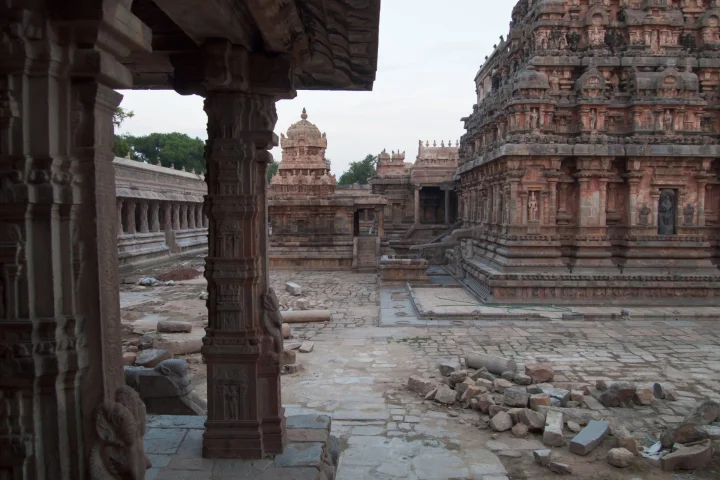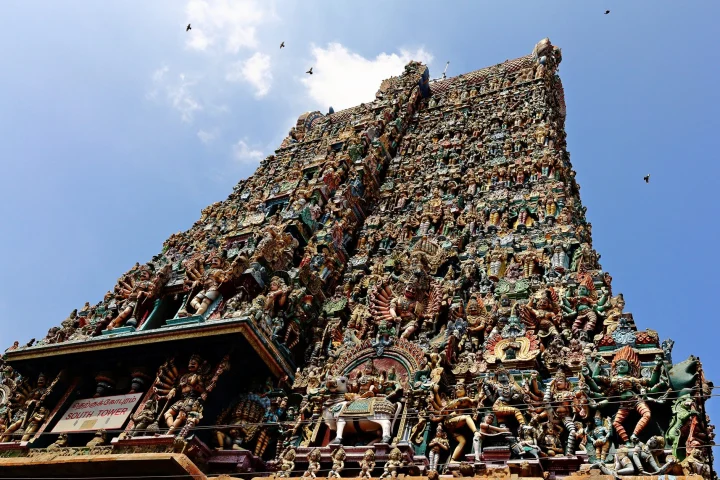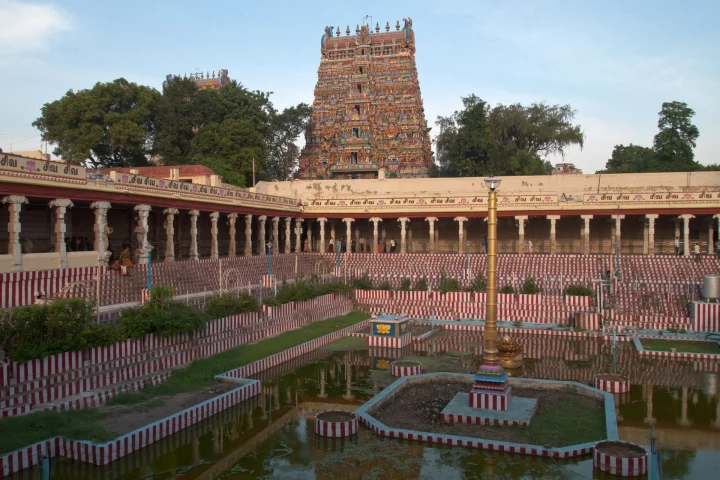
Chettinad is a small region of dry country in Sivaganga and Pudukkottai districts, centred on the town of Karaikudi. It was the home of the Nattukottai Chettiars (also called Nagarathars), a community of traders and bankers who made fortunes across South and South-East Asia – in Burma, Ceylon, Malaya and French Indo-China – during the 19th and early 20th centuries. They spent that money at home, building mansions of a size and richness that still surprise visitors.
Today Chettinad draws travellers for three things: the mansions, the food and the crafts. This guide explains what to see, what to eat and buy, and how to fit the region into a trip from Pondicherry.
On this page
Getting there from Pondicherry
Karaikudi is roughly 270–290 km from Pondicherry by road, about five and a half to six and a half hours by car with breaks. The usual route runs south through the Kaveri delta towards Thanjavur or Trichy, then via Pudukkottai. On the last stretch, the hill fort at Thirumayam – built in 1687 by Vijaya Raghunatha Sethupathi of Ramnad and about 25 km before Karaikudi – makes a good leg-stretch with a view.
Because the drive is long and the villages are best explored slowly, plan at least two nights. Chettinad also fits neatly between the Chola country and Madurai or Rameswaram on a longer tour.
The Chettinad mansions
Most of the great houses were built between the 1850s and the 1940s. In 2014 India placed ‘Chettinad, Village Clusters of the Tamil Merchants’ on UNESCO’s Tentative List for World Heritage status, describing a network of 73 villages and two towns spread over some 1,550 sq km.
The mansions share a plan built around a series of courtyards, moving from a public front hall to private family spaces and kitchens at the back. Builders mixed local skills with imported materials: Burma teak for the pillars and doors, Italian marble, European and Japanese tiles, and cast iron and stained glass. The walls were finished in a lime plaster traditionally polished to a smooth sheen. The effect is part Tamil temple, part colonial villa, and quite unlike anywhere else in India.
Where to see them
- Kanadukathan: about 15 km from Karaikudi, a village of streets lined with mansions. Its best-known house, the Chettinad Palace, was built in 1912 by Raja Sir Annamalai Chettiar, founder of Annamalai University in Chidambaram. It is a private residence, so expect to see it from outside unless access is arranged.
- Athangudi Palace (Sri Letchmi Vilas): one of the few mansions regularly open to visitors, with painted ceilings, glasswork and the patterned floors the village is known for. At the time of writing it opens from about 9.30 am to 5 pm – check before you go.
- Karaikudi: the town has many mansions, including the house known locally as the ‘thousand window house’.
- Heritage hotels: several mansions around Karaikudi and Kanadukathan have been restored as hotels. Staying in one is the easiest way to spend time inside a Chettinad house – we can help you book.
Mansion etiquette
Many houses are still family homes, even when they appear empty. Photograph from the street unless invited in, and ask before entering courtyards. Some caretakers show visitors around informally; agree on any fee beforehand.
Chettinad food: what to eat
Chettinad cooking is one of the best-known regional cuisines of Tamil Nadu. Its character comes from freshly roasted and ground spice mixes rather than ready-made powders. Typical ingredients include dried red chillies, black pepper, fennel, cumin, cinnamon, cloves, star anise, tamarind and kalpasi, a dried lichen also called stone flower that adds an earthy note. The community’s trading links show too: food historians point to influences from Burma and South-East Asia, including dried and preserved fish and prawns.
The food is not just about heat. A good Chettinad meal balances rich, spice-heavy gravies with plain rice, lentils, vegetables and buttermilk.
- Chettinad chicken and mutton: the dishes most people know – dark, peppery gravies or dry roasts built on a freshly ground masala.
- Fish and prawn dishes: tamarind-based curries and fries.
- Vegetarian meals: served on a banana leaf with rice, sambar-style lentils, vegetable dishes and pickles – good value at local ‘mess’ restaurants.
- Paniyaram: small round dumplings cooked in a special pan, sweet or savoury, often eaten at breakfast or tea time.
- Idiyappam and kozhukattai: string hoppers and steamed rice dumplings, common for breakfast or dinner.
Where to eat
Karaikudi’s local restaurants serve the everyday version of the cuisine, and the heritage hotels usually offer set meals in the traditional style, sometimes with a cooking demonstration. If you do not eat very spicy food, say so when ordering; most kitchens will adjust. Back in Pondicherry, our guide to French food and cafés in Pondicherry covers a very different kind of cooking.
Crafts and shopping
For more shopping ideas across the region, see our food and shopping page and our guide to shopping in Pondicherry.
- Athangudi tiles: hand-made cement tiles produced in the village of Athangudi, about 15 km from Karaikudi. Each tile is cast on a glass plate, which gives the surface its shine, and no electricity or firing is used. Small workshops let you watch the process and will pack or ship orders.
- Kandangi saris: bold, checked and striped cotton saris woven around Karaikudi, which received a Geographical Indication (GI) tag in 2019.
- Chettinad kottan: colourful palm-leaf baskets, also GI-tagged.
- Antiques: in Karaikudi, the lanes around Muneeswaran Kovil Street hold a cluster of antique and salvage shops. Much of the stock – doors, pillars, brass lamps, enamelware, glass and wooden boxes – comes from dismantled mansions. Bargain patiently, check condition carefully, and remember that genuine antiques over 100 years old cannot legally be exported from India.
Temples and festivals
Temples are central to Chettiar community life, and the region has many. The most famous is the Karpaka Vinayakar Temple at Pillaiyarpatti, about 12 km from Karaikudi, a rock-cut cave shrine to Ganesha believed to date to the early Pandya period. Karaikudi also has the unusual Tamil Thai temple dedicated to the Tamil language.
Around Pongal in January, the village of Siravayal near Karaikudi hosts manjuvirattu, a traditional bull-taming event that draws large crowds.
A sample Chettinad itinerary
Day 1: Pondicherry – Thanjavur or Trichy – Karaikudi
Leave early and stop at the Brihadeeswarar Temple in Thanjavur or the Rockfort Temple in Trichy. Continue via Pudukkottai and Thirumayam fort to reach Karaikudi by evening. Dinner in the Chettinad style.
Day 2: Mansions, tiles and markets
Morning walk through Kanadukathan’s mansion streets, then Athangudi Palace and a tile workshop. Lunch in Karaikudi, an afternoon in the antique lanes and a visit to Pillaiyarpatti before sunset.
Day 3: Return or continue south
Drive back to Pondicherry, or continue to Madurai (under two hours) and Rameswaram. Our Chettinad Heritage Tour follows this outline and can be joined to Madurai, Rameswaram & Kanyakumari.
When to visit
November to February is the most comfortable time: dry, sunny and not too hot for walking village streets. From April to June Chettinad is very hot by late morning, so sightseeing needs to happen early and late. The northeast monsoon can bring heavy showers from October to December. For a wider view of the seasons, see our list of weekend getaways from Pondicherry and our heritage page.
Send us your dates on WhatsApp and we will suggest a route and give you a quote for the car and driver.
Official information: UNESCO World Heritage Centre
Frequently asked questions
How far is Chettinad from Pondicherry?
Karaikudi, the main town of Chettinad, is roughly 270–290 km from Pondicherry by road, around five and a half to six and a half hours by car.
Can you go inside the Chettinad mansions?
Some, yes. Athangudi Palace is regularly open to visitors, and several mansions are now heritage hotels. Others, including the Chettinad Palace at Kanadukathan, are private homes usually seen from outside.
What is Chettinad food famous for?
Freshly ground spice mixes with pepper, dried chillies, fennel, star anise and kalpasi (stone flower). Chettinad chicken is the best-known dish, but the vegetarian meals and paniyaram are just as good.
What should I buy in Chettinad?
Athangudi tiles, GI-tagged Kandangi cotton saris, Chettinad kottan palm-leaf baskets, and antiques and old household items from the Karaikudi market.
How many days do I need for Chettinad?
Plan at least two nights: one day to drive from Pondicherry and one full day for Kanadukathan, Athangudi and Karaikudi. Add a day if you continue to Madurai or Rameswaram.