Pondicherry was the main French settlement in India from the late 17th century until 1954, and the kitchen is one of the places where that history is easiest to taste. Visitors usually come for the café culture of the French Quarter: butter croissants, strong coffee and crêpes under bougainvillea. Stay a little longer and you find something more interesting – a home-grown Franco-Tamil cooking style, usually called Creole, that exists almost nowhere else.
This guide explains what to try, how the French and Tamil strands fit together, and which parts of town to explore. We have deliberately not named individual restaurants: cafés open and close quickly here, and the best finds are often the ones you stumble on.
On this page
French bakery classics to try
Bread and pastry are the most visible French legacy. Small bakeries around town sell baguettes and croissants alongside Indian sweets and puffs, often with signs in French, Tamil and English. The quality ranges from very good to ‘Indian bakery with a French name’, so look for places that bake on the premises and sell out by midday.
- Croissants and pain au chocolat: best early in the morning, while still warm.
- Baguettes: good with cheese or pâté if you are self-catering, or simply with butter and jam.
- Crêpes: both sweet (butter-sugar, chocolate, banana) and savoury galette-style versions with cheese, egg or mushrooms appear on many café menus.
- Quiche and tarts: a common lunch option in French Quarter cafés.
- Crème brûlée, mousse au chocolat and fruit tarts: the standard café desserts.
- Coffee: espresso-based drinks are easy to find in White Town, but don’t skip South Indian filter coffee elsewhere in town.
Pondicherry Creole: the real local cuisine
Franco-Pondicherrian or Creole cooking grew up in the homes of families with mixed French and Tamil roots. It combines Tamil staples – coconut milk, tamarind, curry leaves, chillies – with European techniques such as braising and roasting, and borrows from Portuguese and other colonial kitchens along the way. Spicing tends to be gentler than in typical Tamil food, with coconut milk used to round off the heat.
Writers who have documented the cuisine note that it has been fading from restaurant menus and survives mostly in home kitchens. Some older families now teach it in cooking classes, and a few restaurants in the French Quarter serve Creole dishes. If you see them on a menu, order them.
Creole dishes worth looking for
- Fish assad: probably the best-known Creole dish – fish in a mild coconut-milk curry, flavoured with curry leaves and aniseed and finished with lime. The name is thought to come from the Portuguese assado.
- Vadouvan (vadavam): a seasoning of onion, garlic, curry leaves, mustard and other spices, shaped into balls and sun-dried for weeks. It gives many Creole curries their deep, savoury flavour, and its strength grows as it ages.
- Meen puyabaise: a turmeric-tinted local take on the French bouillabaisse fish stew.
- Vindail: a sour, garlicky meat curry, the Pondicherry counterpart to Goa’s vindaloo.
- Creole salad and stuffed vegetables: adaptations of French dishes using local vegetables such as snake gourd.
- Vivikam: a rich Christmas cake traditionally made in Creole households for the festive season.
Old bakery words
Older Pondicherry households have their own vocabulary for European bread. ‘Roll roti’ is the everyday loaf, traditionally dipped in sweet tea or coconut milk, and the croissant was called erral roti – ‘prawn bread’ – after its curved shape. Asking about these at an old-style bakery is a good way to start a conversation.
French, Creole or 'continental'? Reading a Pondicherry menu
Menus in Pondicherry mix labels freely, so it helps to know what you are looking at. ‘French’ usually means café and bistro dishes: croissants, crêpes, quiche, ratatouille, steak or fish with a sauce, and classic desserts. ‘Continental’ is the Indian catch-all for pasta, sandwiches, burgers and grills, and has little to do with France. ‘Creole’ or ‘Franco-Tamil’ is the local home cooking described above – curries, stews and roasts with coconut milk, curry leaves and vadouvan.
Many restaurants also have a full South Indian and North Indian section. If you want to taste what is genuinely particular to Pondicherry, look for the Creole dishes by name, and ask staff which ones are made in-house rather than bought in. December is a good month for food lovers: Creole households traditionally bake vivikam for Christmas, and bakeries across town stock rich fruit cakes for the season.
Where to eat: areas rather than addresses
White Town (the French Quarter)
The grid of streets between the canal and the seafront is where most French-style cafés, bakeries and restaurants are, many in restored colonial houses with courtyards. It is the obvious place for breakfast, crêpes and a long lunch. Prices are higher than elsewhere in town. For walking routes and what to see between meals, aurobeach.com has a detailed White Town guide, and our page on White Town covers the highlights.
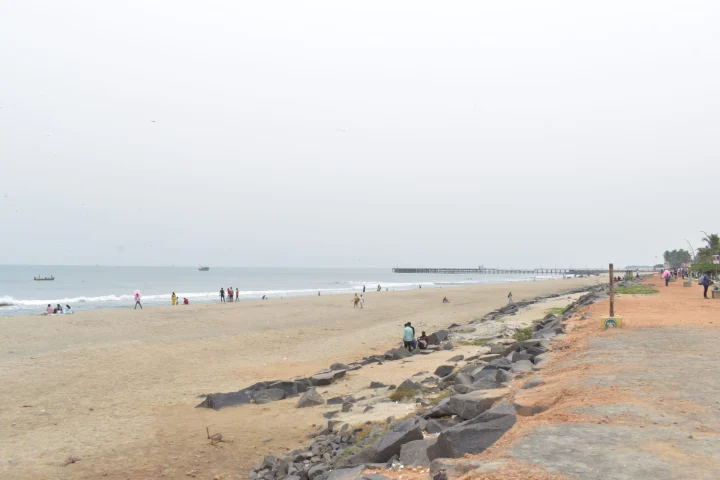
An early walk along Promenade Beach followed by breakfast in one of the lanes behind it is one of the nicest ways to start a day in Pondicherry.
The Tamil town
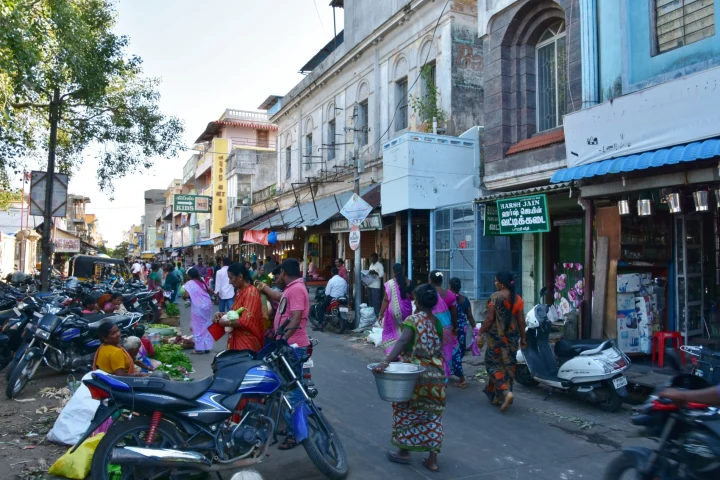
West of the canal, the busier Tamil part of the city is where to eat idli, dosa, pongal, vadai and a proper meal on a banana leaf, often for a fraction of White Town prices. The streets around Goubert Market have snack stalls and sweet shops, and the market itself shows you what local kitchens cook with: fresh seafood, bananas, greens, jasmine and spices.
Seafood by the coast
Pondicherry is a fishing town, and seafood is excellent – fried fish, prawn masala, crab curry and squid. Ask what came in that morning, and ask for Creole-style preparation if the kitchen offers it.
Auroville
About 10 km north, Auroville has its own bakeries and cafés, many using organic produce from local farms. It is a pleasant half-day combination with the Matrimandir viewing area; see aurobeach.com for Auroville visiting details.
A simple food day in Pondicherry
- Early morning: filter coffee and a warm croissant, then a walk on the promenade.
- Mid-morning: browse Goubert Market for spices and seasonal fruit.
- Lunch: a Creole menu if you can find one – fish assad with rice – or a Tamil banana-leaf meal.
- Afternoon: crêpes or a fruit tart in a White Town courtyard café during the hottest hours.
- Evening: seafood dinner, or street snacks such as sundal and bajji near the beach.
Practical tips
- Many White Town cafés close for a break in the afternoon or have a weekly day off; check before going out of your way.
- Vegetarians eat very well in Pondicherry – the Tamil town has countless pure-vegetarian restaurants, and most cafés have vegetarian options.
- Weekend evenings in the French Quarter are busy with visitors from Chennai and Bengaluru. Book ahead for dinner on Friday and Saturday.
- Buy vadouvan, local spices, or cake at Christmas from shops and home bakers as a food souvenir; ask how it should be stored for travel.
- If you are staying for a few days, a cooking class is the best way to taste Creole food as it is made at home.
Frequently asked questions
What food is Pondicherry famous for?
Pondicherry is known for French bakery items such as croissants and crêpes, fresh seafood, Tamil vegetarian meals, and its own Franco-Tamil Creole dishes such as fish assad and vadouvan-spiced curries.
What is Creole food in Pondicherry?
It is a home-style cuisine developed by Franco-Tamil families, combining Tamil ingredients like coconut milk and curry leaves with French and other European cooking methods. Dishes include fish assad, meen puyabaise and vindail.
What is vadouvan?
Vadouvan, or vadavam, is a seasoning made from onions, garlic, curry leaves and spices, shaped into balls and sun-dried for weeks. It is used to flavour many Pondicherry Creole curries.
Where are the French cafés in Pondicherry?
Most French-style cafés and bakeries are in White Town, the French Quarter between the canal and the seafront. The Tamil town west of the canal is better for South Indian food.
Is Pondicherry good for vegetarians?
Yes. The Tamil part of town has many pure-vegetarian restaurants serving idli, dosa and banana-leaf meals, and most White Town cafés offer vegetarian crêpes, quiches and salads.