Thiruvananthapuram (Trivandrum) is the capital of Kerala and was the capital of the princely state of Travancore from the late 18th century. Its name means ‘city of Lord Anantha’, after the serpent on which Vishnu reclines in the great Sree Padmanabhaswamy Temple at its heart. The city is green, hilly and less hectic than most state capitals.
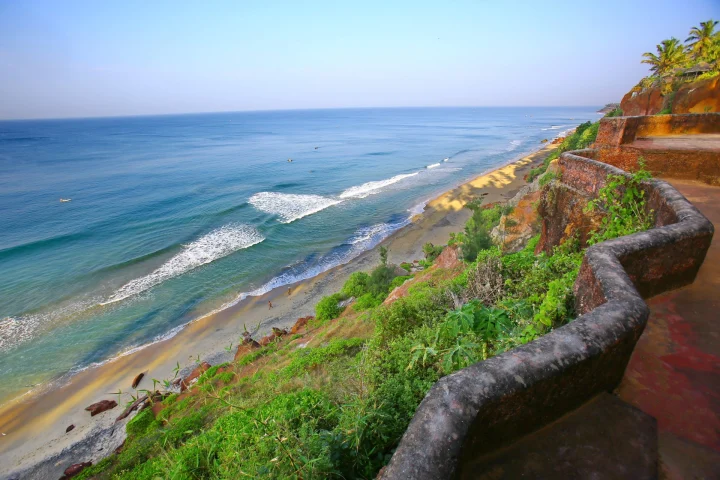
Kovalam, about 15 km south, is one of Kerala’s best-known beach resorts: a series of curved bays separated by rocky headlands, with a red-and-white lighthouse at one end. Together they make a good pairing – a day of temples and museums in the city, and a couple of days by the sea. At about 600 km from Pondicherry, the trip combines well with Kanyakumari and Varkala.
On this page
Why visit Thiruvananthapuram and Kovalam
The city holds some of Kerala’s finest royal and religious buildings, most of them within a few kilometres of each other. The old fort area around the Padmanabhaswamy Temple still feels like a temple town, with its tank, palace and narrow streets, while the museum quarter to the north has broad lawns and 19th-century architecture.
Kovalam adds the beach. It has been a resort since the early 20th century, when a regent queen of Travancore built a seaside palace here, and it drew international travellers from the 1970s. Today it is busy but compact, with cafés along the promenade and many Ayurveda centres.
Top things to see in Thiruvananthapuram
Sree Padmanabhaswamy Temple
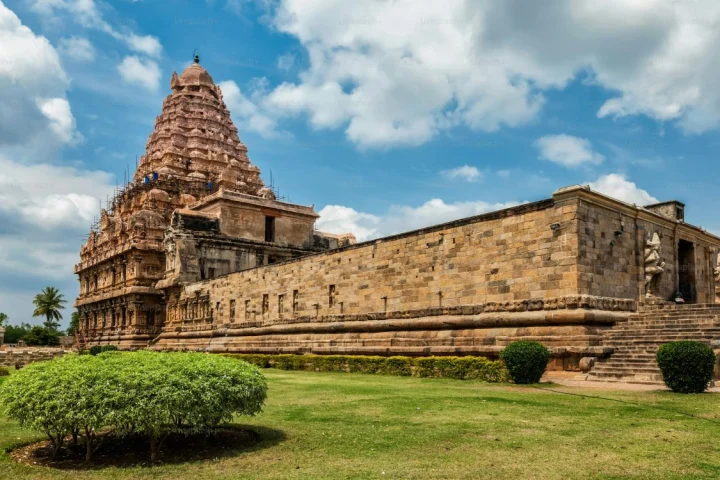
This is one of the 108 Divya Desams, the most sacred Vishnu shrines of the Sri Vaishnava tradition. The deity, Padmanabhaswamy, reclines on the serpent Anantha. The present temple owes much to Marthanda Varma, who rebuilt it in the 1730s; in 1750 he dedicated the kingdom to the deity, and the Travancore rulers thereafter ruled as the god’s servants. Its seven-tiered gopuram, about 100 feet high, overlooks the temple tank.
Entry is restricted to Hindus, and the dress code is strict: men must wear a mundu or dhoti with no shirt, and women a sari, set-mundu, or skirt and blouse. Mobile phones and cameras are not allowed inside. Darshan is in fixed time slots with a long midday closure, and timings change during festivals – check the temple’s announcements before you go.
Kuthiramalika Palace
Next to the temple, this palace was built in the 1840s by Maharaja Swathi Thirunal, the ruler and composer. It is named after the 122 horses carved into the wooden brackets under its roof. Part of it is a museum of Travancore royal belongings, shown on a guided tour.
Napier Museum and the museum complex
Opened in 1880, the Napier Museum was designed by Robert Chisholm in an Indo-Saracenic style that mixes Kerala roofs with Gothic and Mughal touches. It holds bronzes, temple carvings, ornaments and ivory work. The same grounds contain the city zoo, founded in 1857, and the Sree Chitra Art Gallery, which has works by Raja Ravi Varma. At the time of writing the museum is closed on Mondays and on Wednesday mornings – check before you go.
Shanghumugham beach
Near the airport, this city beach is known for its huge reclining mermaid sculpture, Sagarakanyaka, more than 35 metres long, by the artist Kanayi Kunhiraman. It is a popular spot with local families at sunset.
Kovalam's beaches
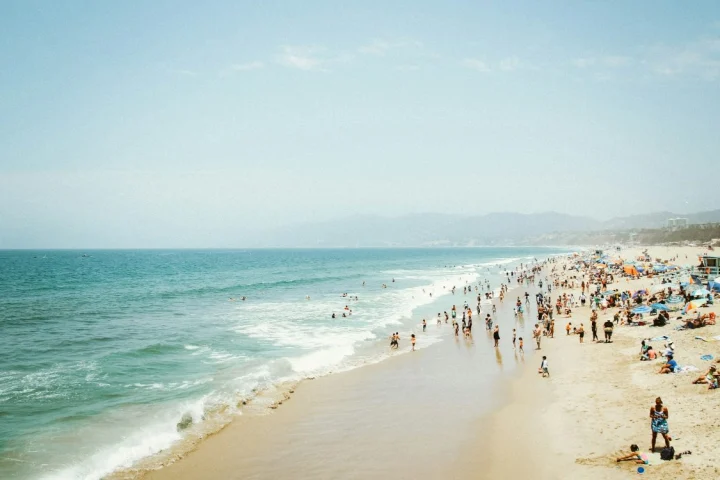
Kovalam is made up of three main beaches separated by rocky outcrops. Lighthouse Beach, the southernmost and busiest, is overlooked by the Vizhinjam lighthouse on Kurumkal hill, a 36-metre tower built in 1972; when it is open to visitors, the climb gives a fine view along the coast. Hawa (Eve’s) Beach lies just north of it, and Samudra Beach, further north beyond a headland, is used by fishing boats and is quieter.
Swim only in the areas watched by lifeguards and follow their flags; currents can be strong, and during the monsoon the sea is dangerous.
Near Kovalam
- Vizhinjam, a fishing harbour just south of Kovalam
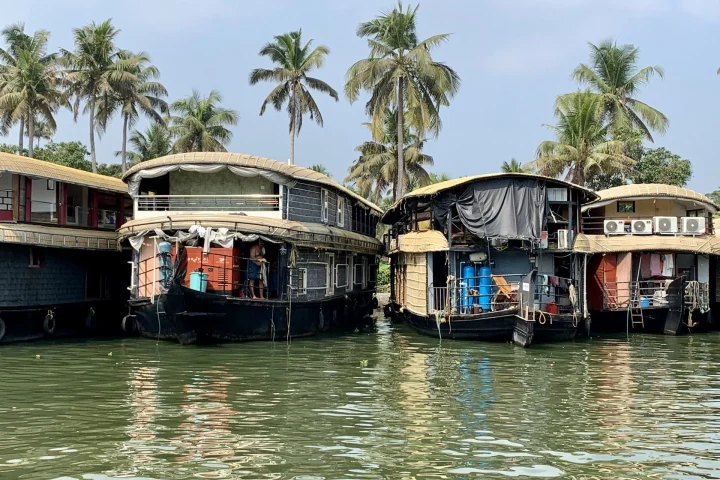
- Poovar, about 18 km south, where a river meets the sea near a sandbar – known for boat rides through the backwaters
- Ponmudi, a hill station about 55 km north-east of the city, for a cooler day out
A realistic plan from Pondicherry
Thiruvananthapuram is the natural southern end of a Kerala trip, or a continuation of a Tamil Nadu temple tour. Our Madurai, Rameswaram and Kanyakumari tour can be extended here, and the Kochi, Kumarakom and Varkala tour covers the coast to the north. A simple plan:
- Day 1: Pondicherry to Madurai (about 334 km). Meenakshi Temple in the evening.
- Day 2: Madurai to Kanyakumari for sunset at the tip of India.
- Day 3: Sunrise at Kanyakumari, then on to Thiruvananthapuram (about 90 km). Padmanabhaswamy Temple and Kuthiramalika, then Kovalam for the night.
- Day 4: Napier Museum in the morning or a lazy beach day, then north to Varkala.
Best time to visit
October to March is the most pleasant, with sunny days and calmer seas; December and January are peak months at Kovalam. April and May are hot and humid. The south-west monsoon arrives in early June and brings heavy rain until around September; the north-east monsoon adds more rain in October and November, though usually in short spells. The monsoon months are the traditional time for Ayurvedic treatments.
If you are in the city in February or March, note that the Attukal Pongala festival, when huge numbers of women cook offerings in the streets, fills the city and makes traffic very slow on the day.
How to reach from Pondicherry
By road
The route runs Pondicherry – Villupuram – Trichy – Madurai – Tirunelveli – Nagercoil – Thiruvananthapuram, mostly on national highways. It is about 600 km, so plan an overnight stop in Madurai or Kanyakumari. Interstate permit charges apply for a Tamil Nadu tourist car entering Kerala.
By train and air
Thiruvananthapuram Central is well connected to Chennai and the rest of India. The international airport is close to both the city and Kovalam, which makes Thiruvananthapuram a practical place to end a road trip and fly home.
Food and shopping
Try a Kerala sadya (vegetarian feast on a banana leaf) in the city, and seafood at Kovalam, where restaurants display the day’s catch in the evening. Local snacks include banana chips and pazham pori (banana fritters). Chalai Bazaar near the temple is the old market for spices, brass and household goods, and government emporiums sell handloom and handicrafts at fixed prices.
Practical tips
- Plan the Padmanabhaswamy Temple visit around its darshan slots and bring clothing that meets the dress code; shops near the East Gate sell or rent mundus and dhotis.
- Phones and cameras are not allowed inside; leave them with your driver or at the paid cloakroom outside.
- Check museum closing days (Mondays and Wednesday mornings at the time of writing).
- Kovalam’s promenade is busy in season; stays on the cliffs above are quieter.
- Choose an Ayurveda centre with qualified doctors and consult them before treatment.
- We can help book hotels in the city or at Kovalam.
Plan your trip
We arrange tailor-made tours from Pondicherry with an AC car and driver, including southern routes through Madurai, Kanyakumari, Thiruvananthapuram and Kovalam, and can help with hotel bookings. Message +91 96265 65138 on WhatsApp with your dates for a plan and quote.
Official information: Kerala Tourism
Frequently asked questions
How far is Thiruvananthapuram from Pondicherry?
About 600 km by road via Trichy, Madurai and Nagercoil, which takes around 11–12 hours. Kovalam is roughly 15 km further south.
Can non-Hindus enter the Padmanabhaswamy Temple?
No. Entry is restricted to Hindus, and a strict dress code applies: men in mundu or dhoti without a shirt, women in a sari, set-mundu or skirt and blouse.
How far is Kovalam from Thiruvananthapuram city?
Kovalam is about 13–16 km south of the city centre, around 30–40 minutes by road depending on traffic.
Is it safe to swim at Kovalam?
In the dry season, swimming is usually possible in the lifeguard-watched areas of Lighthouse and Hawa beaches. Follow the lifeguards’ flags, and avoid the sea during the monsoon.
Which day is the Napier Museum closed?
At the time of writing it is closed on Mondays and on Wednesday mornings, as well as some public holidays. Check before visiting.