White Town is the old French Quarter of Pondicherry, the strip of streets between the sea front and the canal that once divided the colonial town. It is the part of the city on most postcards: pastel villas with tall shuttered windows, high garden walls spilling bougainvillea, street names on blue enamel plates in French, and very little traffic by Indian standards.
There is no single sight to tick off here. The pleasure is in walking slowly, looking through gateways and stopping for coffee. Allow a morning or a late afternoon and wander.
On this page
How White Town came to be
Pondicherry was the capital of French India for most of the period from the late 17th century until 1954. The French laid the town out on a regular grid, with parallel streets crossing at right angles. A canal, now largely covered, separated the European quarter by the sea from the Tamil quarter to the west, which is why the two halves of the old town still feel so different.
The French side became known in English as White Town and the Tamil side as Black Town, labels that come from the colonial era. Today the streets of the French Quarter hold government offices, the French Consulate, the Alliance Française, schools, heritage hotels, galleries and homes. Heritage groups such as INTACH Pondicherry have worked on documenting and restoring many of the old buildings.
What to see and do
- Walk the streets: Rue Romain Rolland, Rue Suffren, Rue Dumas and Rue de la Marine are among the most photogenic, with yellow and white villas and colourful doors.
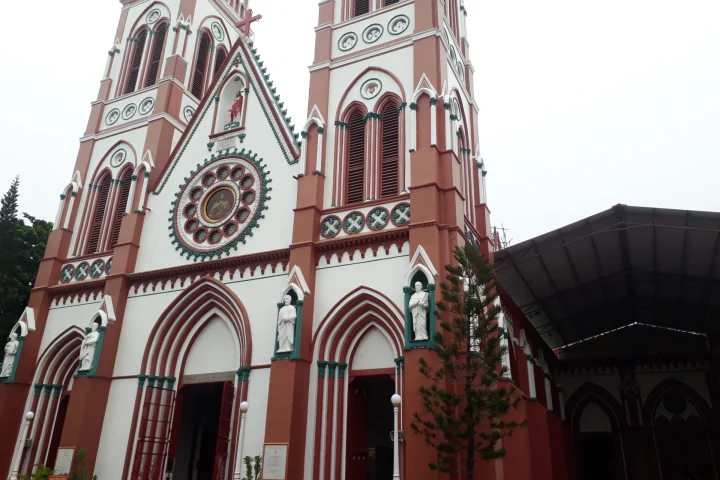
- Churches: Our Lady of Angels Church on Rue Dumas faces the sea and holds services in French, Tamil and English.
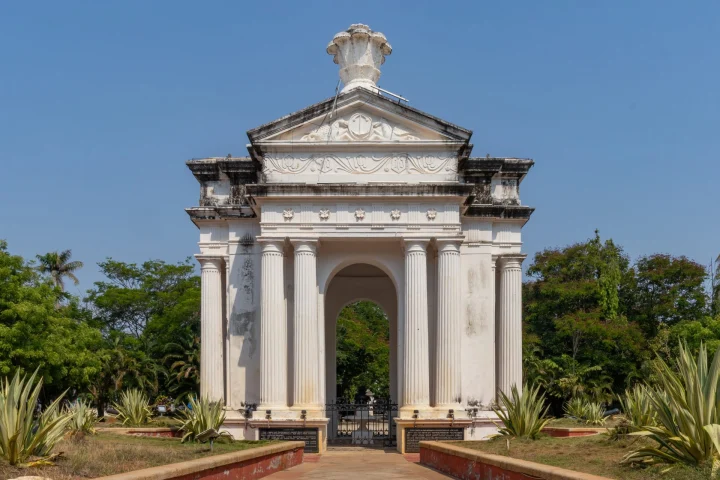
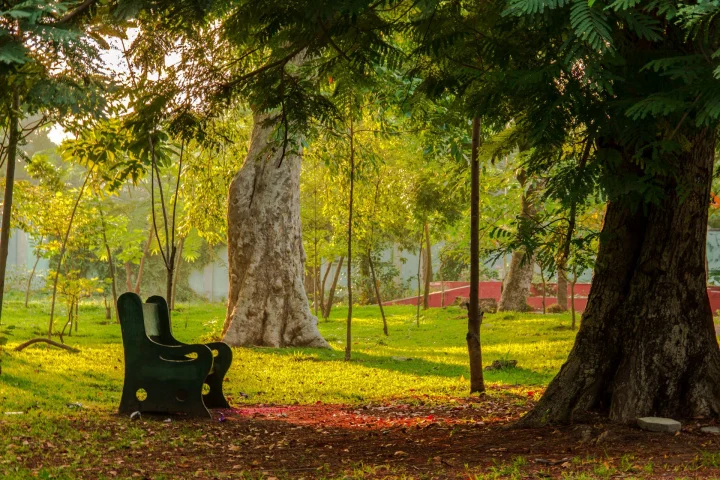
- Parks and monuments: Bharathi Park with the Aayi Mandapam sits at the heart of the quarter, opposite Raj Nivas, the Lieutenant Governor’s residence.
- Museum: the Pondicherry Museum has Chola bronzes, finds from Arikamedu and rooms of French colonial furniture.
- The ashram: the main building of the Sri Aurobindo Ashram is on the edge of the quarter.
- Cafés and boutiques: small bakeries, French and Tamil restaurants, bookshops and design stores selling handmade paper, clothes and home goods.
A simple walking route
Start at the Gandhi statue on Promenade Beach, walk south along the sea to the War Memorial, then turn inland on Rue Dumas to Our Lady of Angels Church. Head north through the parallel streets to Bharathi Park, visit the museum just north of the park, and end at the Aurobindo Ashram and the Manakula Vinayagar Temple, which are a block apart. At an easy pace, with stops, this takes around two to three hours.
Best time to visit
Early morning is the best time for photographs: the light is soft, the streets are empty and it is still cool. Late afternoon into early evening works well too, ending on the seafront when the road closes to traffic. Middays from March to September are hot and humid, so plan indoor stops like the museum or a café for those hours.
November to February is the most comfortable season. Weekends and long holidays bring big crowds from Chennai and Bengaluru, so weekdays are calmer.
Practical tips
- Photography: most of the villas are private homes, guest houses or offices. Photograph from the street, don’t walk into compounds, and ask before photographing people.
- Parking: streets are narrow and parking is limited. It is easier to be dropped at the seafront and walk. Our drivers can wait outside the quarter and pick you up at an agreed point.
- Footwear: comfortable walking shoes or sandals; pavements are uneven in places.
- Dress: casual clothes are fine on the streets. Carry something to cover shoulders and knees if you plan to enter the ashram, temple or churches.
- Heat: carry water and a hat; there is shade on some streets but not all.
Nearby places and tours
Across the canal, the busier Tamil Quarter holds the Goubert Market and the Ananda Ranga Pillai Mansion, both within a 15-minute walk.
White Town is covered on our Pondicherry local sightseeing day and the heritage and beaches tour, and it is the natural base for a Pondicherry honeymoon. Ask us on WhatsApp for help choosing a heritage hotel in the quarter.
Official information: Puducherry Art & Culture Department
Frequently asked questions
Why is it called White Town in Pondicherry?
The name dates from the colonial period, when the French Quarter by the sea was home to the European population and was called the White Town, while the Tamil quarter across the canal was called the Black Town.
Is there an entry fee for White Town?
No. White Town is a regular part of the city, with public streets you can walk at any time. Only individual museums or activities charge a fee.
How much time do you need to see White Town?
Two to three hours on foot covers the main streets, the seafront, a church, Bharathi Park and a coffee stop. Photographers and café lovers often spend half a day.
What is the best time to walk around White Town?
Early morning, roughly 7 to 9:30 AM, for soft light and empty streets, or late afternoon ending on the seafront. Avoid the midday heat, especially from March to September.