Arikamedu is one of the most important archaeological sites in South India, yet few visitors to Pondicherry have heard of it. On a quiet bend of the Ariyankuppam river, about 4 km south of the town, archaeologists found evidence of a port that traded with the Roman world some 2,000 years ago.
Today there is little on the surface to show for it: an open, grassy site under the trees, with the ruined brick arches of a much later French-era building. Come for the story and the atmosphere rather than for monuments, and ideally see the finds at the Pondicherry Museum first.
On this page
History: Pondicherry's Roman connection
In 1937 the French scholar Jouveau-Dubreuil collected gems and other objects here and identified Roman material. The British archaeologist Sir Mortimer Wheeler excavated the site scientifically in 1945, and Jean-Marie Casal continued the work between 1947 and 1950. Their trenches produced Roman amphorae (wine and oil jars), fine red Arretine pottery from Italy, Roman lamps, glass, and huge numbers of glass and stone beads, which were made here.
Wheeler dated the trading settlement to the late first century BCE to around 200 CE. Later excavations led by Vimala Begley between 1989 and 1992 suggested a much longer occupation, from about the second century BCE to the eighth century CE.
The site covers around 35 acres and has been protected by the Archaeological Survey of India since 1982. In 2004 it was put forward, with other sites, for consideration as part of the Silk Road sites in India on UNESCO’s tentative list.
What you will see today
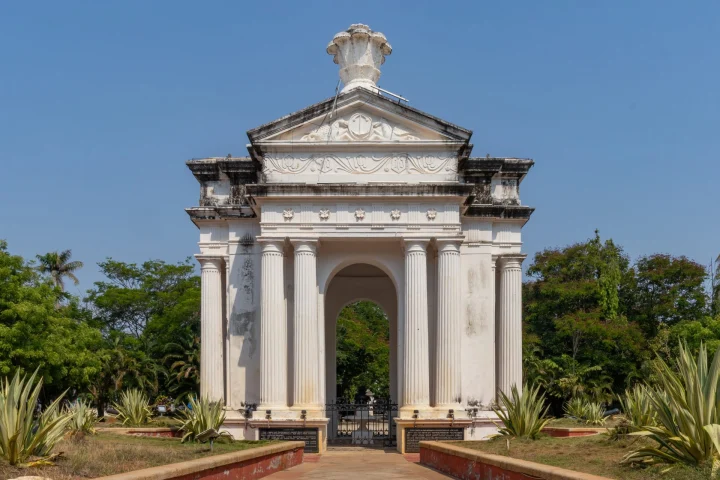
- The ruined brick building: tall brick pillars and a row of arches from a French-era structure, often described as an 18th-century Jesuit mission house, built long after the port had disappeared. This is the most photogenic part of the site.
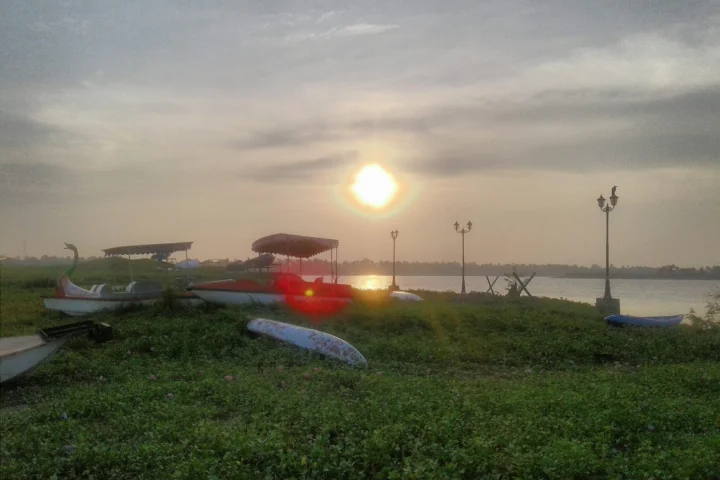
- The river bend: the Ariyankuppam river on whose banks the ancient warehouses and workshops stood.
- The mounds: low, grassy ground where the excavation trenches were dug. Nothing from the ancient port is left standing, so use your imagination.
Timings and entry
At the time of writing, visitors report no entry fee and access during daylight hours, roughly 9 AM to 5 PM. Facilities on site are minimal, so carry water and plan a restroom stop elsewhere. Check locally, as access arrangements for protected sites can change.
Best time to visit
Go early in the morning or late in the afternoon, when the light is soft and the site is cooler. The monsoon months can leave the ground muddy. Forty-five minutes to an hour is enough to walk around and take photos.
Practical tips
- Visit the museum first: the Pondicherry Museum displays finds from Arikamedu, which makes the empty site far more meaningful.
- Footwear: closed shoes or sturdy sandals; the paths are unpaved and can be uneven.
- Carry: water, mosquito repellent and a hat.
- Respect the site: do not climb the brick ruins, dig or pick up anything from the ground; it is a protected monument.
- Getting there: the last stretch is through a quiet village off the Cuddalore road at Kakkayanthope. It is easiest by car; our drivers know the route and wait at the gate.
Nearby places
Arikamedu is on the same side of town as the Chunnambar Boat House, Paradise Beach, Eden Beach and the Arts and Crafts Village, so a morning here combines easily with a beach afternoon.
Visiting on a tour
We include Arikamedu on the heritage and beaches tour and can add it to local sightseeing on request. History lovers may also enjoy the Mahabalipuram and Kanchipuram heritage tour. See our heritage page for more ideas.
Frequently asked questions
Why is Arikamedu famous?
It was an ancient port that traded with the Roman world. Excavations found Roman amphorae, Arretine pottery from Italy, lamps, glass and large numbers of beads made on site.
How far is Arikamedu from Pondicherry?
About 4 km south of Pondicherry town, on the Ariyankuppam river near Kakkayanthope, roughly a 15–25 minute drive depending on traffic.
Is there an entry fee for Arikamedu?
At the time of writing, visitors report free entry during daylight hours. Facilities on site are minimal.
Who excavated Arikamedu?
Sir Mortimer Wheeler led scientific excavations in 1945, followed by Jean-Marie Casal (1947–50) and Vimala Begley (1989–92). It is now protected by the Archaeological Survey of India.