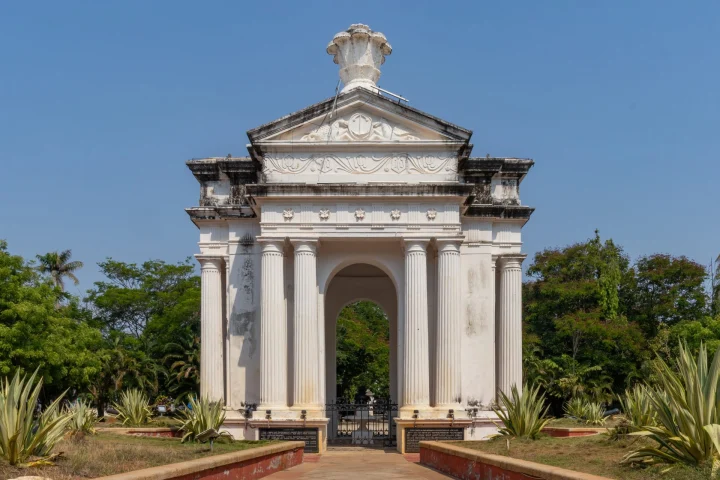
The Botanical Garden is Pondicherry’s largest green space in the town centre, an oval garden of about 11 hectares on the South Boulevard (Subbiah Salai), a short drive west of White Town. It was laid out by the French in 1826, and some of its trees are well over a century old.
It is not a manicured showpiece. It is a shady, slightly old-fashioned public garden where local families picnic, walkers do their morning rounds and children ride the toy train. If you enjoy big trees or need a green break from sightseeing, it is worth an hour.
On this page
History of the garden
According to the Puducherry Agriculture Department, which manages the garden, it was established by the French in 1826, although a garden on the site is mentioned as early as 1740. It was designed in the formal French style under the botanist G. S. Perrottet and began as a testing ground for crops and plants, to find out which species could adapt to Pondicherry’s climate.
By 1829 it already held eight to nine hundred species. After Pondicherry joined India in 1954, the garden passed to the Department of Agriculture, which still runs it.
What to see and do
- Old and rare trees: more than 2,200 trees of around 300 species. Look for the cannonball tree, royal palms, silk cotton trees and Bombax and Khaya trees said to be over 175 years old.
- Tropical dry evergreen species: the garden conserves specimens of the region’s native coastal forest type, now rare in the wild.
- Musical dancing fountain: a coloured fountain show, popular with families in the evening when it runs.
- Toy train: a miniature train ride around part of the garden, a favourite with young children.
- Aquarium: a small aquarium within the garden grounds.
- Flower show: the Agriculture Department holds an annual flower show here; dates are announced locally.
Timings and entry
The garden is open every day. Reported hours at the time of writing range from about 9 or 10 AM to 5 or 6 PM, and the entry ticket is nominal, with extra charges for the toy train, aquarium and fountain show. As different sources give different figures, check the board at the gate. Fountain show times in particular vary.
Best time to visit
Early morning and late afternoon are cooler and the light under the trees is lovely. Weekends and school holidays are busy with families; weekday mornings are calm. Plan one to two hours, more if you have children who want every ride.
Practical tips
- Mosquitoes: carry repellent, particularly in the evening and after rain.
- Footwear: walking shoes or sturdy sandals; paths can be uneven or muddy after rain.
- Photography: fine for personal use; ask at the gate about any fees for professional cameras or photoshoots.
- Food: keep snacks packed away from birds and use the bins; picnics are common but leave no litter.
- Parking: roadside parking on the boulevard. Our drivers drop you at the entrance and wait nearby.
Nearby places
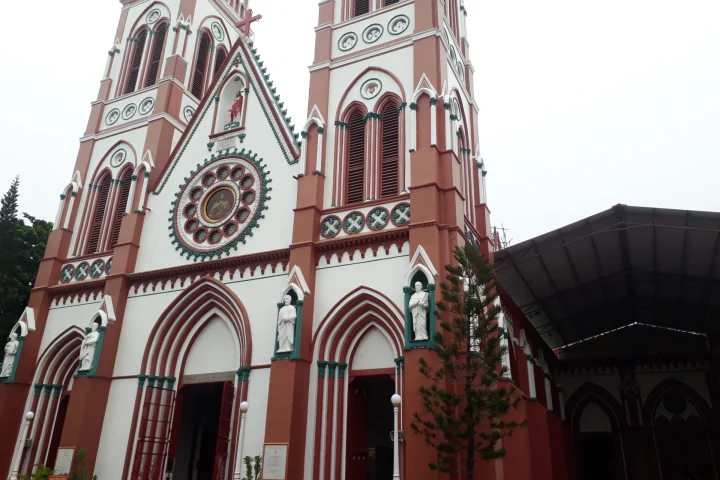
The Gothic Basilica of the Sacred Heart is a few minutes along the same South Boulevard. White Town, the Pondicherry Museum and Promenade Beach are a 5–10 minute drive east. If you enjoy the garden, you will also like the birdlife at Ousteri Lake west of town.
Visiting on a tour
The garden is an easy addition to our Pondicherry local sightseeing day and a good rest stop on the family holiday. For more green escapes, see our wildlife and nature page.
Official information: Puducherry Agriculture Department
Frequently asked questions
When was the Pondicherry Botanical Garden established?
The French established it in 1826, though a garden on the site is mentioned as early as 1740. It is now run by the Puducherry Agriculture Department.
What are the Botanical Garden timings in Pondicherry?
It is open daily. Reported hours at the time of writing are roughly 9 or 10 AM to 5 or 6 PM; check at the gate as timings vary.
Is there a toy train in the Pondicherry Botanical Garden?
Yes, a miniature joy train runs inside the garden for a small extra charge, along with a musical fountain and a small aquarium.
How big is the Pondicherry Botanical Garden?
About 11 hectares (roughly 22 acres), with more than 2,200 trees of around 300 species.