Last updated:
Pulicat – Pazhaverkadu in Tamil – is a fishing town at the southern mouth of Pulicat Lake, about 55–60 km north of Chennai in Tiruvallur district. The lake itself is the second-largest brackish-water lagoon in India after Chilika, a shallow sheet of water about 759 sq km in extent that straddles the Tamil Nadu–Andhra Pradesh border. Most of it lies in Andhra Pradesh; the long barrier island of Sriharikota, home to India’s space launch centre, separates it from the sea.
For a traveller from Pondicherry, Pulicat offers three things in one trip: birds, boats and a surprising slice of colonial history. It is quiet, a little rough around the edges and very different from the polished beach towns further south.
On this page
Birds of Pulicat
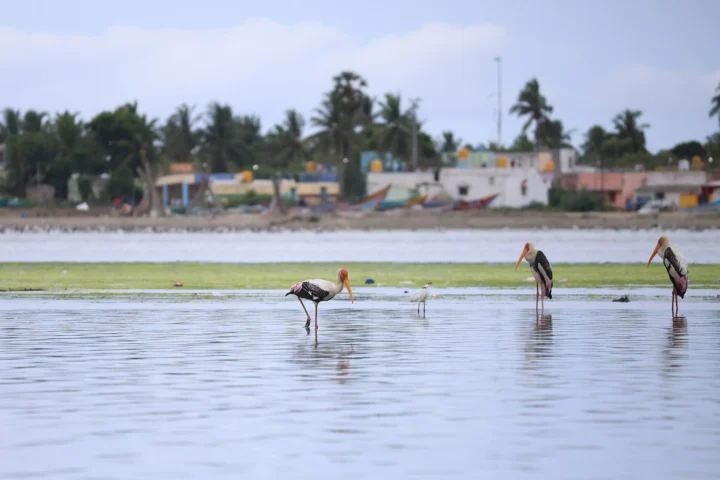
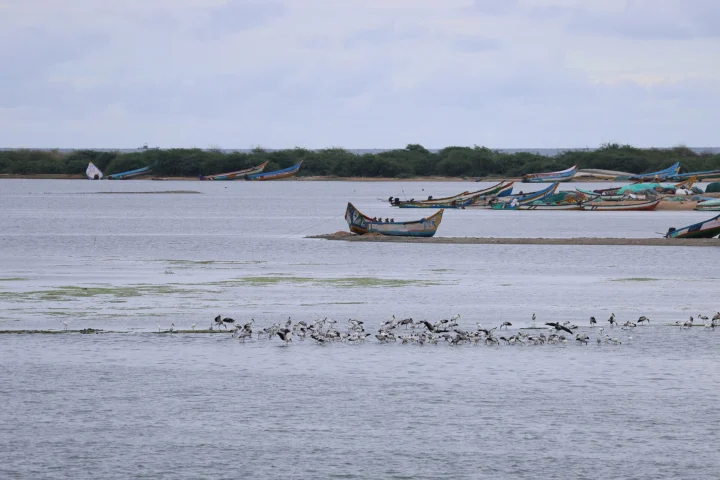
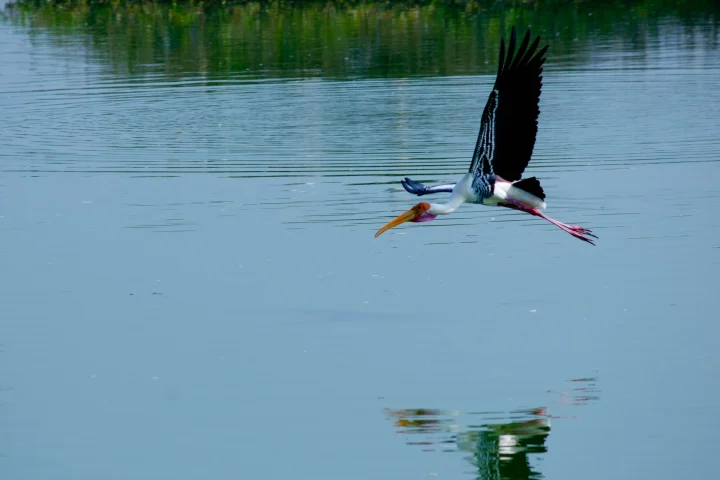
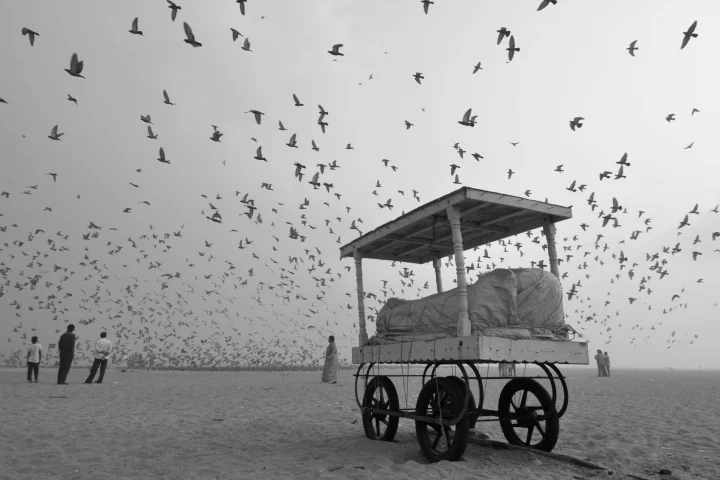
The Tamil Nadu part of the lagoon has been protected since 1980 as the Pulicat Lake Bird Sanctuary, covering about 154 sq km and managed by the Tamil Nadu Forest Department; Andhra Pradesh protects its larger share separately. From October to March the shallows host large numbers of wintering birds. Greater flamingos are the star – counts of up to around 15,000 have been reported in peak seasons – along with pelicans, painted storks, herons, egrets, terns and many small waders.
Flamingos move around the lagoon with the water levels, so they are not always close to the Tamil Nadu shore. A boat or a local guide who knows where the flocks are feeding makes a big difference. Our Pulicat Lake Bird Sanctuary guide goes into more detail, and our bird watching page lists other wetlands near Pondicherry.
Boat rides on the lagoon
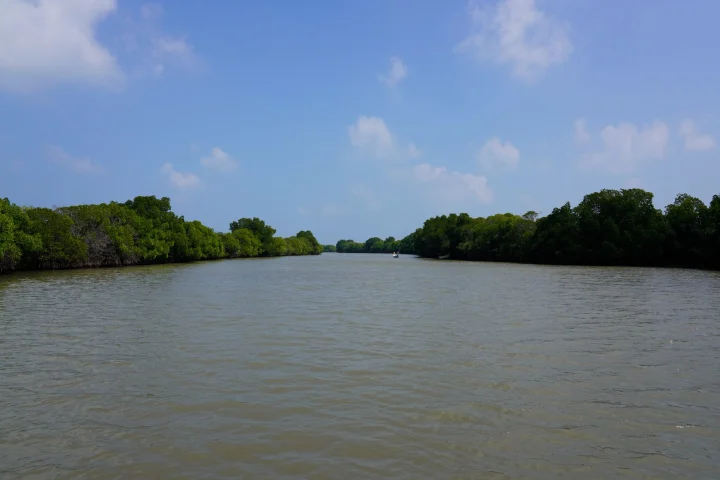
Fishing boats at the Pulicat jetty can usually be hired for a ride across the lagoon to sandbars, the mouth where the lake meets the sea, and the small islands. There is no fixed tourist service – rides are arranged with local boatmen, and availability depends on weather, tides and fishing schedules. Insist on life jackets, agree the route and time before you set off, and avoid going out in rough weather. Details change, so check locally on the day. See our boating and cruises page for other options in South India.
Life on the lagoon
Pulicat is above all a fishing lagoon. More than ten thousand full-time fishers from villages around its shores depend on its prawns, crabs and fish. Early morning is the time to watch boats come in and catches being sorted on the shore. Women in the area also weave baskets and mats from palmyra leaves, a craft mentioned by the district administration as one of Pulicat’s local industries. Be respectful: this is a workplace, not a show.
The Dutch at Pulicat
Portuguese traders were here in the 16th century, but it was the Dutch East India Company (VOC) that made Pulicat important. In 1609 the Dutch built Fort Geldria, which became their headquarters on the Coromandel Coast until they moved the main base to Nagapattinam around 1690. Pulicat changed hands during the Anglo-Dutch wars and finally passed to the British in 1825. Very little of the fort survives above ground today.
The real survivor is the Dutch cemetery, known in Dutch times as the Binnenkerkhof. It holds elaborately carved tombs of officials, merchants and their families, many with Dutch inscriptions and motifs such as skulls and skeletons. It is protected by the Archaeological Survey of India, which notified it in 1921. The Church of Our Lady of Glory and the old lighthouse area are also worth a look as you walk through town.
Best time to visit
October to March is the season for birds, and the weather is also most comfortable then. Flamingo numbers tend to build through the winter, but they vary a lot from year to year with rainfall and water levels. The north-east monsoon (October to December) can bring heavy rain and cyclone warnings to this coast. April to June is hot, and most migrants have left.
How to plan Pulicat from Pondicherry
Pulicat is about 215 km from Pondicherry, along the East Coast Road through Mahabalipuram to Chennai, then north past Ennore and Ponneri. The tricky part is getting across Chennai, so we time the drive to avoid rush hours.
A day trip from Pondicherry is possible but means close to ten hours in the car. It works much better as a two-day coastal trip: Pulicat in the morning when the light and birds are best, then back down the coast with a night in Chennai or Mahabalipuram. Our Pulicat and Mahabalipuram coast tour follows this pattern and includes the Shore Temple. If you prefer a bird sanctuary closer to home, Vedanthangal is about 90 km from Pondicherry.
Sample two-day plan
- Day 1: Drive up the East Coast Road, stop at Mahabalipuram, and stay overnight in north Chennai or Mahabalipuram.
- Day 2: Early start for Pulicat, a boat ride and bird watching in the morning, the Dutch cemetery before lunch, then the drive back to Pondicherry.
Food and facilities
Pulicat is a working fishing town with few tourist facilities. There are small eateries and tea shops, and fresh seafood is the local strength, but don’t expect restaurants or hotels of note. Most visitors stay in Chennai or along the coast to the south. Carry water, sun protection and some cash.
Practical tips
- Arrive early – the lagoon is shadeless and very hot by noon.
- Bring binoculars; many flocks feed far from the shore.
- Dress modestly and ask before photographing people in the fishing village.
- Do not fly drones – Sriharikota and the coast nearby are sensitive areas.
- Weather and boat availability change quickly; keep the plan flexible.
Frequently asked questions
How far is Pulicat Lake from Pondicherry?
About 215 km by road via the East Coast Road and Chennai, which takes four and a half to five and a half hours depending on traffic.
When is the best time to see flamingos at Pulicat?
Between October and March. Numbers and the places where flocks feed vary each year with rainfall and water levels, so a local boatman or guide helps.
Can you take a boat ride at Pulicat Lake?
Usually yes – local fishermen take visitors out from the jetty. Rides depend on weather and tides, so confirm on the day and wear a life jacket.
What is there to see in Pulicat town?
The 17th-century Dutch cemetery protected by the ASI, the site of the Dutch Fort Geldria, the Church of Our Lady of Glory and the fishing harbour.
Is Pulicat Lake in Tamil Nadu or Andhra Pradesh?
Both. The lagoon straddles the border, with the larger part in Andhra Pradesh; Pulicat town and the jetty are in Tiruvallur district, Tamil Nadu.