Chettinad is the homeland of the Nattukottai Chettiars, or Nagarathars, a community of traders and bankers who made fortunes across Burma, Ceylon, Malaya and South-East Asia in the 19th and early 20th centuries. They spent much of that money at home, building enormous family mansions in a cluster of villages in Sivaganga and Pudukkottai districts. The region today counts around 75 villages, with Karaikudi as its main town.
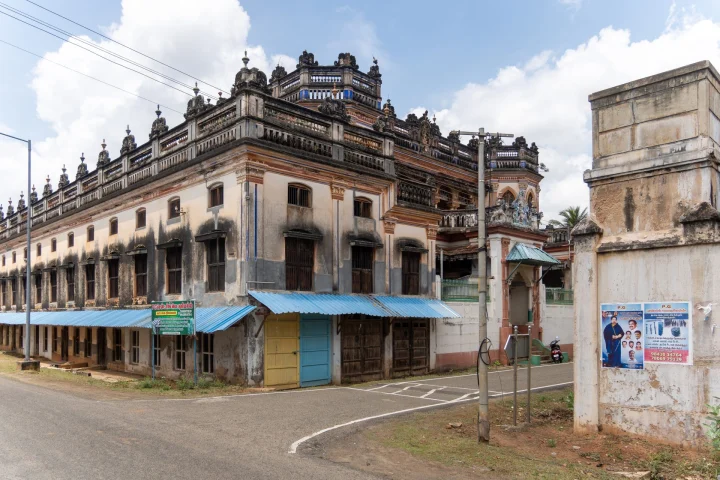
The result is a landscape unlike anywhere else in Tamil Nadu: quiet villages lined with grand houses of lime plaster, Burma teak and imported marble, many of them locked up or slowly crumbling, a few restored as heritage hotels. The Chettinad villages are on UNESCO’s tentative list for World Heritage status, and the region’s food is famous across India.
On this page
Why visit Chettinad
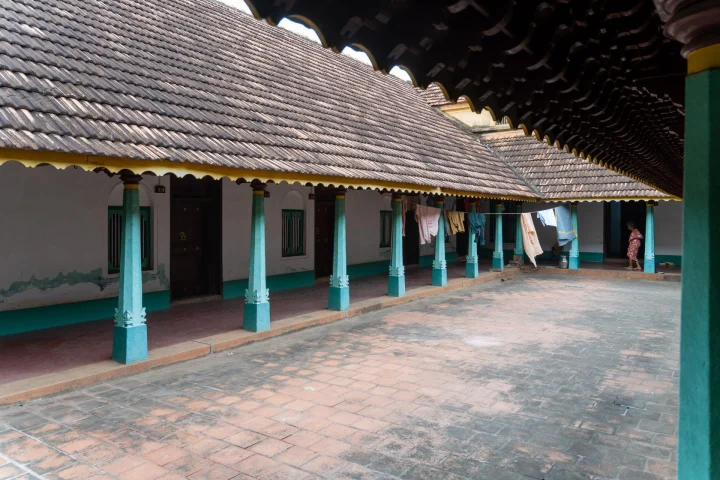
Come for the architecture, stay for the food. Walking through a Chettinad house – from the raised front veranda through a pillared courtyard, a second courtyard for family ceremonies and on to the kitchens at the back – tells you a great deal about how a wealthy merchant family lived. Add village temples, craft workshops, an antique market and meals that are worth the drive on their own, and Chettinad makes a rewarding two-day trip that feels very different from the big temple towns.
Top things to see in Chettinad
Kanadukathan and the Chettinad Palace
Kanadukathan, about 14 km from Karaikudi, is the village most visitors start with. Its best-known house, usually called the Chettinad Palace, was built for Raja Sir Annamalai Chettiar and completed in 1912 after about seven years of work. Teak for the doors and pillars came from Burma, and marble, chandeliers and glass were imported from overseas. The palace is still a private family home; at the time of writing parts of it can be seen by visitors, but access can change, so check locally before you go.
Spend time simply walking Kanadukathan’s lanes. Many mansions have temple-like entrance doorways carved in teak, painted plaster figures over the gates and long rows of windows with coloured glass.
Athangudi: mansion and tiles
Athangudi village gives its name to the handmade cement floor tiles seen in almost every Chettinad house. They are not fired in a kiln. Artisans pour coloured cement and oxide slurry into a metal pattern frame placed on a sheet of glass, back it with a sand and cement mix, then leave the tiles to dry and cure in water for several days. The glass gives the finished tile its glossy surface. Several small workshops in and around Athangudi let you watch the process and buy tiles.
Athangudi also has one of the region’s showpiece mansions, known for its colourful tiled floors, carved teak doors and ornate ceilings. Across Chettinad, families imported marble from Italy, crystal from Europe and mirrors from Belgium for such houses. As with all Chettinad houses, opening depends on the family and caretakers.
Pillayarpatti Karpaga Vinayagar Temple
About 12 km from Karaikudi on the Tirupathur road, this is one of the oldest rock-cut cave temples in Tamil Nadu. Its six-foot image of Ganesha is carved from the living rock and, unusually, has only two arms. More than 15 inscriptions help date the shrine. The temple is managed by the Nagarathar community and is one of the busiest Ganesha temples in the state, especially during the ten-day Vinayagar Chathurthi festival in August–September.
Karaikudi town
Karaikudi is the practical base, with most hotels, restaurants and the railway station. In a lane near the town centre is the antique market, where dealers sell brass lamps, enamel ware, old wooden pillars, doors, clocks and household items from Chettinad homes. Bargain politely and inspect carefully – not everything is as old as it looks. The town is also a good place to buy Kandangi sarees, the bold, chequered cotton sarees of the region, which received a Geographical Indication tag in 2019.
Chettinad food: what to eat
Chettinad cooking is known for freshly ground spice mixes – dried red chillies, black pepper, fennel, star anise and kalpasi (stone flower) – rather than simply for heat. Look for pepper chicken, kozhi kuzhambu (chicken curry), mutton sukka, and fish or crab in thick tamarind gravies. Vegetarians do well too, with kara kuzhambu, vegetable kootu and poriyal.
Snacks and breakfasts are a highlight: kuzhi paniyaram cooked in a dimpled pan, idiyappam with coconut milk, adhirasam and the sweet kandarappam. Many heritage hotels serve a full Chettinad lunch on a banana leaf; ask your hotel a day ahead if you want a traditional multi-course meal.
Sample two-day plan from Pondicherry
Our Chettinad heritage tour follows this outline. Chettinad also fits neatly between Thanjavur or Trichy and Madurai on a longer temple loop such as the Grand Tamil Nadu temple tour.
Day 1: Pondicherry – Karaikudi
- Leave Pondicherry early; stop for breakfast on the way near Trichy or Thanjavur.
- Reach Karaikudi by early afternoon and have a Chettinad lunch.
- Late afternoon walk through the mansion streets of Kanadukathan.
- Evening at Pillayarpatti temple for the lamp-lit puja.
Day 2: Athangudi, Karaikudi and back
- Morning visit to an Athangudi tile workshop and mansion.
- Browse the Karaikudi antique market and saree shops.
- Early lunch, then drive back to Pondicherry, or continue to Madurai (about 90 km).
How to reach Chettinad from Pondicherry
By car the usual route runs inland via Villupuram and Trichy, then south-east through Pudukkottai to Karaikudi, most of it on four-lane highways. An alternative goes via Kumbakonam and Thanjavur, which lets you add the Chola temples. Allow five and a half to six hours without long stops. Karaikudi Junction lies on the Chennai–Rameswaram line, and Madurai and Trichy airports are each about 87 km away.
Best time to visit
November to February is best, with warm days and cooler evenings that make village walks comfortable. From March to June the region is hot and dry, so plan walks for early morning and late afternoon. The northeast monsoon (October to December) brings short, heavy showers but rarely stops sightseeing.
Practical tips
- Most mansions are private homes. Enter only where a caretaker invites you or a ticket is sold, and ask before photographing people.
- A small tip to the caretaker is customary when someone shows you around.
- Sights are spread over several villages, so a car with driver saves a lot of time; distances are short but public transport is sparse.
- Heritage hotels in restored mansions book up in the cool season – reserve early. We can help with hotel bookings.
- Wear footwear you can slip off easily; you remove shoes inside temples and many houses.
Official information: Sivaganga District
Frequently asked questions
How far is Chettinad from Pondicherry?
Karaikudi, the main town of Chettinad, is about 290 km from Pondicherry by road, a drive of five and a half to six hours.
What is Chettinad famous for?
Its grand merchant mansions, handmade Athangudi tiles, Kandangi cotton sarees, antique shops and its spice-rich Chettinad cuisine.
Can you go inside the Chettinad mansions?
Some, such as the Kanadukathan palace and selected houses in Athangudi, admit visitors, and several mansions are now heritage hotels. Most are private homes, so access depends on the family.
How are Athangudi tiles made?
Coloured cement and oxide are poured into a pattern frame on a glass sheet, backed with sand and cement, then sun-dried and water-cured for several days. No kiln is used.
How many days do I need for Chettinad?
Two days with one night in Karaikudi or a heritage hotel is the minimum; three days allows a slower pace and more villages.