Hampi is what remains of Vijayanagara, the capital of the empire that ruled much of South India from the 14th to the 16th century. Its temples, palaces, markets and water tanks are spread over a landscape of enormous granite boulders on the banks of the Tungabhadra river. UNESCO listed the Group of Monuments at Hampi as a World Heritage Site in 1986.
From Pondicherry it is a long journey – about 650 km – but it is one of the most rewarding in the south. With a night in Bengaluru on each side and two or three days on site, it makes a complete week-long heritage trip.
On this page
A short history of Vijayanagara
The city grew from the 1330s into one of the largest and richest cities of its time. Persian and Portuguese visitors described its markets, its gold and horse trade, and the scale of its festivals. Temples were built and enlarged under a series of dynasties, most famously under Krishnadevaraya in the early 16th century.
In 1565 the empire was defeated at the Battle of Talikota by an alliance of Deccan sultanates. The city was looted and burned for months afterwards and then largely abandoned. That is why Hampi today is a ruin rather than a living city – although the Virupaksha Temple has never stopped being a place of worship. Around 1,600 surviving structures are spread across the site, and the Archaeological Survey of India continues to excavate and conserve it.
Top things to see in Hampi
Vittala Temple and the stone chariot
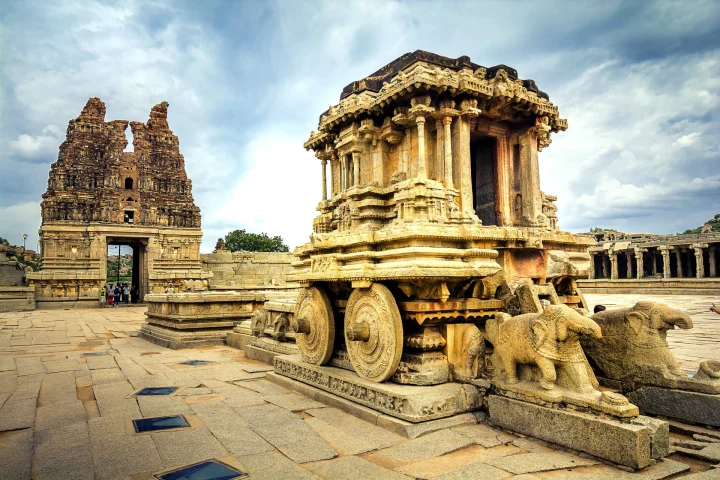
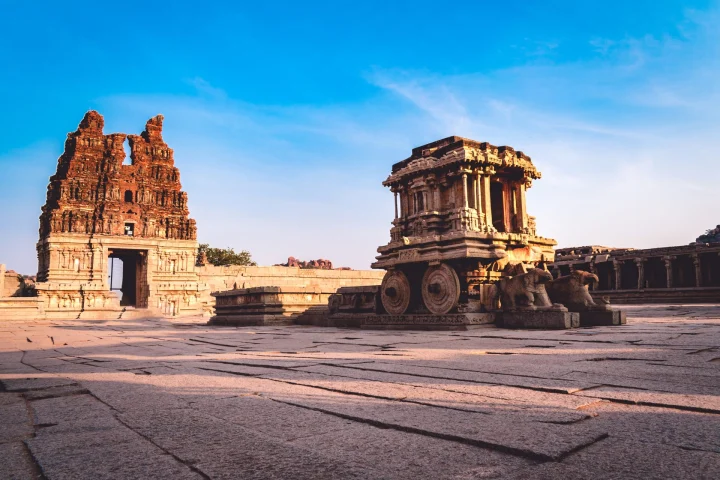
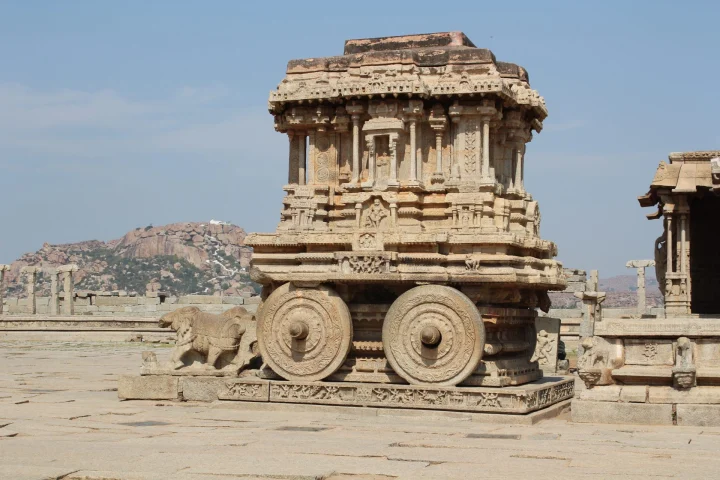
The Vittala Temple is the most celebrated monument at Hampi. Its halls are carved with extraordinary detail, and the main mandapa is known for its slender stone pillars that give out musical notes when struck (visitors are asked not to tap them, to protect the stone). In the courtyard stands the stone chariot – a shrine to Garuda built in the form of a temple car – which has become the symbol of Hampi.
Private vehicles are stopped some distance away. At the time of writing, battery-operated vehicles run from the parking area to the temple for a small fee, or you can walk and pass the Gejjala Mandapa and the old Vittala Bazaar on the way.
Virupaksha Temple and Hampi Bazaar
Dedicated to Virupaksha, a form of Shiva, this is the oldest shrine at Hampi and still an active temple, with a tall gateway tower facing a long colonnaded street – the former Hampi Bazaar. An annual chariot festival is held here in spring. Dress modestly and remove footwear before entering.
Hemakuta Hill and the giant statues
Just above the Virupaksha Temple, Hemakuta Hill is covered with small early temples and is a favourite place to watch the sun set. Nearby are two large monolithic Ganesha figures, Sasivekalu and Kadalekalu, and a short drive away is the 6.7-metre seated Narasimha (often called Ugra Narasimha), carved from a single boulder near the Krishna Temple.
The Royal Centre
This was the palace and administrative quarter. See the Mahanavami platform, from which the kings watched the great autumn festival; the stepped tank; the Hazara Rama Temple, whose outer walls are covered with processions of horses, elephants, soldiers and dancers; and the Zanana Enclosure with the Lotus Mahal, a pavilion that blends Hindu and Indo-Islamic styles. Next to it are the Elephant Stables, a long row of domed chambers. The Queen’s Bath is nearby.
Matanga Hill and the river
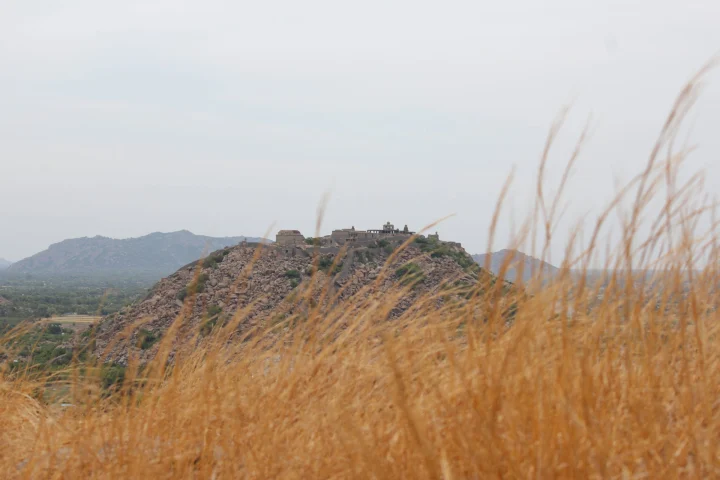
Matanga Hill, the highest point in the core area, gives the best view over the ruins. The climb is on rough rock steps, so start before sunrise or late in the afternoon and wear proper shoes. Along the river path between Hampi Bazaar and Vittala Temple you pass small shrines, rock carvings and the ruins of the Achyutaraya Temple.
Tickets and timings
Most monuments are managed by the Archaeological Survey of India. At the time of writing, a single ticket covers the Vittala Temple, the Zanana Enclosure with the Lotus Mahal and the Elephant Stables for one day, with a higher rate for foreign nationals, and the ticketed monuments are open roughly from 8:30 am to 6 pm. The Virupaksha Temple is run as a working temple with its own hours. Check the current fees and hours on the ASI website or at the counter before you go.
How to reach Hampi from Pondicherry
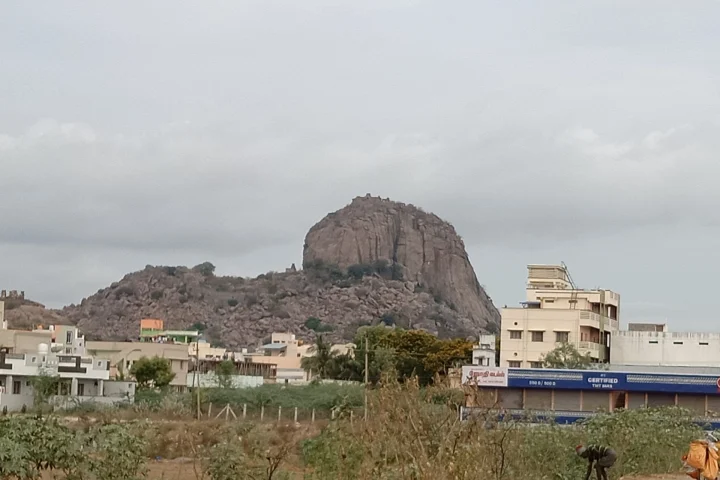
The practical route is Pondicherry – Tiruvannamalai – Krishnagiri – Bengaluru on the first day (about 315 km), then Bengaluru – Tumakuru – Chitradurga – Hosapete – Hampi on the second (about 340 km, 6–7 hours). Chitradurga’s hill fort makes a good break on the second day. Doing the whole journey in one day is possible but tiring, and it wastes your first afternoon in Hampi.
By rail, Hosapete Junction is the nearest station, with connections from Bengaluru. Tamil Nadu tourist cars pay an interstate permit charge on entering Karnataka.
A realistic plan
- Day 1: Pondicherry to Bengaluru, with a stop at Tiruvannamalai.
- Day 2: Bengaluru to Hampi via Chitradurga; sunset from Hemakuta Hill.
- Day 3: Virupaksha Temple, the river path, Vittala Temple and the stone chariot.
- Day 4: Sunrise at Matanga Hill, the Royal Centre, Hazara Rama Temple and the Zanana Enclosure.
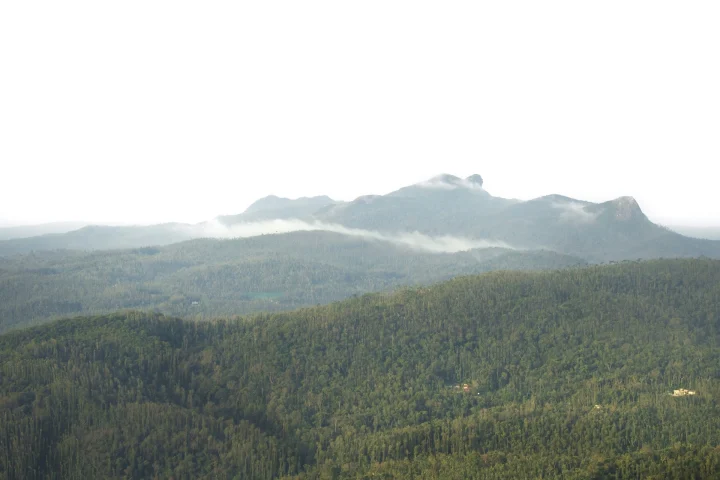
- Days 5–6: Drive back via Bengaluru, or continue west to Chikkamagaluru for the coffee hills.
- Our Hampi heritage tour follows this pattern and can be adjusted.
Best time to visit
October to February is the best period: the days are warm but manageable, and the mornings are cool enough for climbing. From March to May the rocks heat up and afternoon temperatures are very high, so sightseeing is limited to early mornings and evenings. The monsoon from June to September brings some rain and greener surroundings. Hampi Utsav, a state-run cultural festival, is held on dates announced each year; in recent years it has taken place in the cooler months.
Practical tips
- Start early. The sites are spread out and there is little shade.
- Carry water, a hat and sunscreen, and wear shoes you can climb in.
- Allow a full day each for the Sacred Centre (Virupaksha to Vittala) and the Royal Centre.
- Hosapete, about 13 km away, has the widest choice of hotels; we can help you book.
- Photography is allowed at most monuments, but drones need special permission.
Plan your Hampi trip
We arrange tailor-made tours from Pondicherry with an AC car and driver and help with hotel bookings. Send your dates on WhatsApp to +91 96265 65138 and we will suggest a route, with or without Bengaluru and the coffee hills.
Official information: UNESCO World Heritage Centre
Frequently asked questions
How far is Hampi from Pondicherry?
About 650 km by road via Bengaluru, Chitradurga and Hosapete. It takes 11–12 hours of driving, so most people split it with a night in Bengaluru.
How many days are enough for Hampi?
Two full days covers the main monuments; three lets you add sunrises, the river path and a slower pace. From Pondicherry, plan about a week including travel.
Why is Hampi a UNESCO World Heritage Site?
It preserves the ruins of Vijayanagara, capital of one of the great South Indian empires, with temples, palaces, markets and waterworks from the 14th–16th centuries. It was inscribed in 1986.
What is the best time to visit Hampi?
October to February. Summer (March to May) is very hot on the rocks, so if you go then, sightsee early in the morning and late in the afternoon.
Which is the nearest railway station to Hampi?
Hosapete Junction, about 13 km away, with trains from Bengaluru and other Karnataka cities.