Kochi (Cochin) is Kerala’s biggest port city, but most travellers come for its oldest corner: Fort Kochi and neighbouring Mattancherry, on the peninsula facing the harbour mouth. Here the Portuguese, Dutch and British each left churches, warehouses and bungalows, while Jewish, Gujarati, Konkani and Arab traders built synagogues, temples and mosques a few streets apart.
Kochi’s rise as a port is usually traced to 1341, when a great flood on the Periyar river silted up the older port of Muziris and opened the harbour here. Today the old quarter is compact, walkable and full of small museums, art spaces and places to eat. At about 560 km from Pondicherry it is a long drive, but it is also a convenient start or end point for a Kerala circuit, with an international airport close by.
On this page
Why visit Fort Kochi and Mattancherry
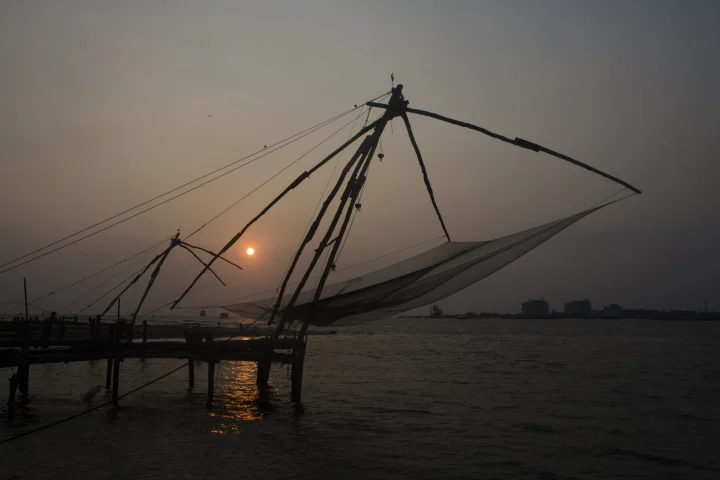
Few places in India show so many layers of history in such a small area. You can see the cantilevered Chinese fishing nets being worked at the water’s edge in the morning, visit a 16th-century church and a 16th-century synagogue before lunch, and spend the afternoon in spice warehouses that still smell of ginger and pepper.
It is also a relaxed base. After the long drives of a Kerala road trip, a couple of nights of walking, cafés and sunset by the harbour is a welcome change of pace. If heritage and architecture interest you, Kochi deserves at least two nights.
Top things to see in Kochi
Chinese fishing nets
The large shore-operated nets along the Fort Kochi waterfront are the city’s best-known sight. Each one is lowered into the water and raised with the help of counterweights, and the catch is sold on the spot. They are thought to have come to Kochi centuries ago through trade with China. Early morning and late afternoon are the best times to watch them in use. Our guide to Fort Kochi covers the waterfront in more detail.
St Francis Church
Founded by the Portuguese in the early 16th century, this is one of the oldest European churches in India. Vasco da Gama died in Kochi in 1524 and was buried here; about fourteen years later his remains were taken back to Portugal. His original gravestone is still inside. The church now belongs to the Church of South India.
Santa Cruz Cathedral Basilica
A short walk away, this large white church stands on the site of a Portuguese church first built in 1505. The original was demolished by the British in 1806, and the present building was completed in 1905. It was declared a basilica in 1984. The painted interior and stained glass are worth a look; dress modestly and avoid visiting during services.
Mattancherry Palace (Dutch Palace)
Despite its popular name, this palace was built by the Portuguese around 1545 and presented to the Raja of Kochi; the Dutch renovated it after taking Mattancherry in 1663. It is a Kerala-style building around a central courtyard, now a museum run by the Archaeological Survey of India. The highlight is the set of mural paintings, including scenes from the Ramayana, along with portraits of the Rajas of Kochi and royal palanquins. It is closed on Fridays at the time of writing – check before you go.
Paradesi Synagogue and Jew Town
Built in 1568, the Paradesi Synagogue is the best-known reminder of Kochi’s old Jewish community. Inside are hand-painted Chinese floor tiles and hanging glass lamps. Footwear must be removed before entering the inner hall. At the time of writing it is closed on Saturdays and Jewish holidays and open only until early afternoon on Fridays, so plan around this. The street leading to it, known as Jew Town, is lined with antique and spice shops.
Other stops
- The old Dutch Cemetery near the beach
- Old spice and ginger warehouses around Bazaar Road
- Art galleries and cafés in restored colonial buildings
- An evening Kathakali performance at one of Fort Kochi’s small theatres
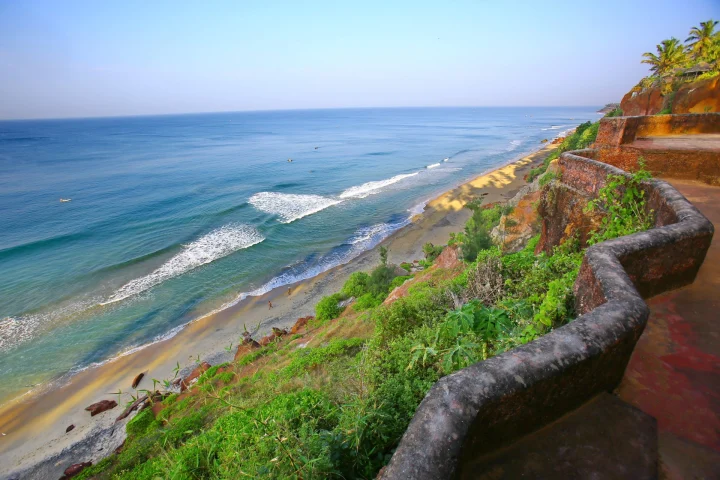
- Sunset from the Fort Kochi beach walkway
Art and the Kochi-Muziris Biennale
Since 2012 Fort Kochi has hosted the Kochi-Muziris Biennale, a large contemporary art exhibition held roughly every two years, usually from December into the following spring. Venues include old warehouses and heritage buildings, notably Aspinwall House on the waterfront. Accommodation fills up quickly during the Biennale, so book early if your dates overlap. Check the official Biennale announcements for the current edition’s dates.
A realistic plan from Pondicherry
Kochi fits naturally into a Kerala loop. Our Kochi, Kumarakom and Varkala tour follows the coast, while the Munnar, Thekkady and Alleppey tour can end in Kochi. A simple outline:
- Day 1: Pondicherry to Coimbatore (overnight) via Salem and Erode.
- Day 2: Coimbatore to Kochi through the Palakkad Gap and Thrissur, about 4–5 hours. Evening walk along the Fort Kochi waterfront.
- Day 3: Chinese fishing nets in the morning, St Francis Church, Santa Cruz Basilica, then Mattancherry Palace and Jew Town (avoid Friday afternoons and Saturdays).
- Day 4: On to Kumarakom or Alleppey for the backwaters, or to Munnar for tea country.
Best time to visit Kochi
October to March is the most comfortable period, with lower humidity and mostly dry days; December and January are the busiest months. April and May are hot and sticky. The south-west monsoon arrives in early June and brings heavy rain until about September – the city is still open and green, but walking the old quarter is harder and the sea is rough.
How to reach Kochi from Pondicherry
By road
The usual route runs Pondicherry – Villupuram – Salem – Erode – Coimbatore – Walayar – Palakkad – Thrissur – Kochi. Most of it is on national highways, so the drive is long rather than difficult. A Tamil Nadu-registered tourist car pays interstate permit charges on entering Kerala. Within Kochi, Fort Kochi is reached from Ernakulam by road bridges via Willingdon Island.
By train, air and water
Ernakulam Junction and Ernakulam Town are the main stations. Cochin International Airport at Nedumbassery, known as the first airport in the world to run fully on solar power, is about 40 km from Fort Kochi. Inside the city, the Kochi Water Metro runs between the High Court jetty in Ernakulam and Fort Kochi, and state water transport ferries also cross the harbour – a pleasant way to arrive.
Food and shopping
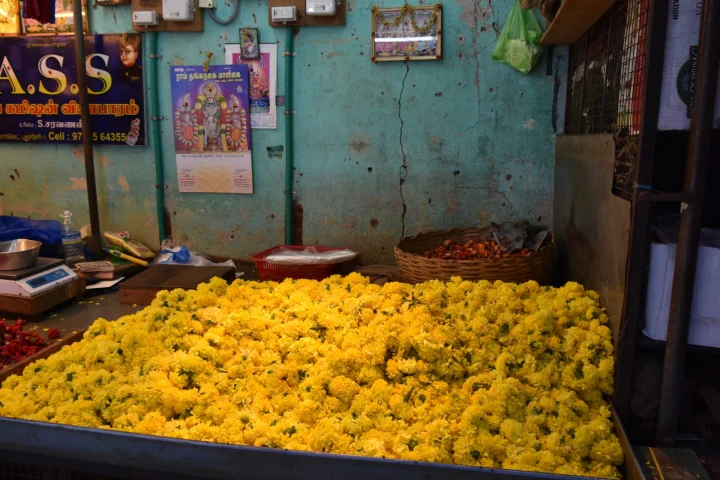
Kochi is a good place to try Kerala seafood: karimeen (pearl spot) fry, prawn roast, and fish cooked in a clay pot with kudampuli. Appam with stew, and Malabar-style biryani, are easy to find too. Fort Kochi has many cafés in old buildings.
For shopping, Jew Town and Mattancherry have antiques and reproduction furniture, textiles and spices. Buy whole spices such as pepper, cardamom and cloves from established shops, and ask for a receipt if you plan to take large quantities home.
Practical tips
- Start early; the old quarter is best explored on foot before the midday heat.
- Check closing days before you plan: Mattancherry Palace is closed on Fridays and the synagogue on Saturdays at the time of writing.
- Cover shoulders and knees when visiting churches, temples and the synagogue.
- Fort Kochi and Ernakulam are 30–45 minutes apart by road; staying in Fort Kochi saves time for sightseeing.
- Carry an umbrella from June to November.
- We can help book hotels or homestays in Fort Kochi.
Plan your Kochi trip
We arrange tailor-made tours from Pondicherry with an AC car and driver, including Kerala circuits that start or finish in Kochi, and can help with hotel bookings. Message +91 96265 65138 on WhatsApp with your dates for a plan and quote.
Official information: Kerala Tourism
Frequently asked questions
How far is Kochi from Pondicherry?
About 560 km by road via Salem, Coimbatore and Thrissur, which takes around 10–11 hours. Most travellers stop overnight in Coimbatore or begin early and arrive in the evening.
Is Fort Kochi the same as Kochi?
Fort Kochi is the historic quarter of Kochi, on the peninsula at the harbour mouth. The modern city centre, Ernakulam, is on the mainland across the backwaters.
Which day is Mattancherry Palace closed?
At the time of writing it is closed on Fridays. Hours can change, so check locally before you go.
Is the Paradesi Synagogue open on Saturdays?
No. It is closed on Saturdays and Jewish holidays, and on Fridays it usually closes in the early afternoon.
How many days are enough for Kochi?
Two nights is enough to see Fort Kochi and Mattancherry at a relaxed pace. Add two or three more days for the backwaters at Kumarakom or Alleppey.