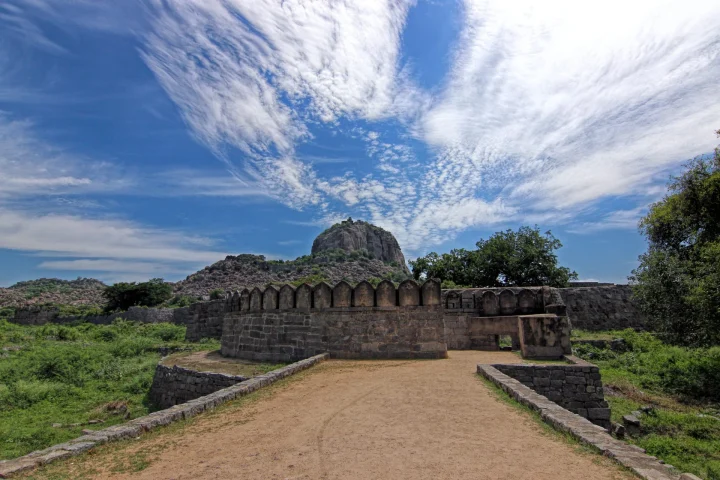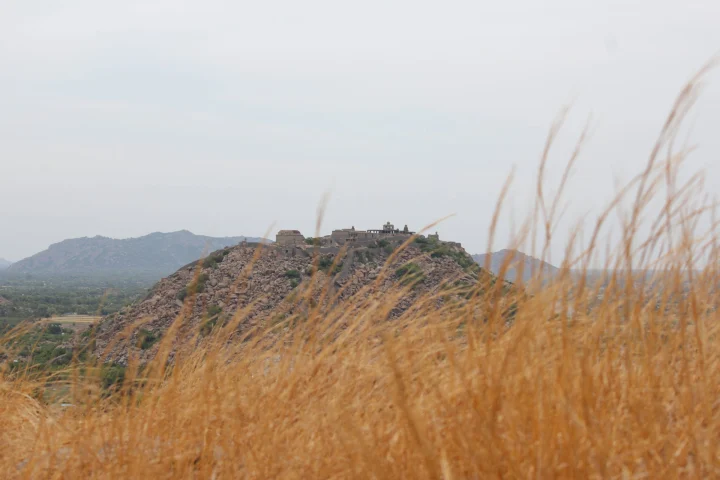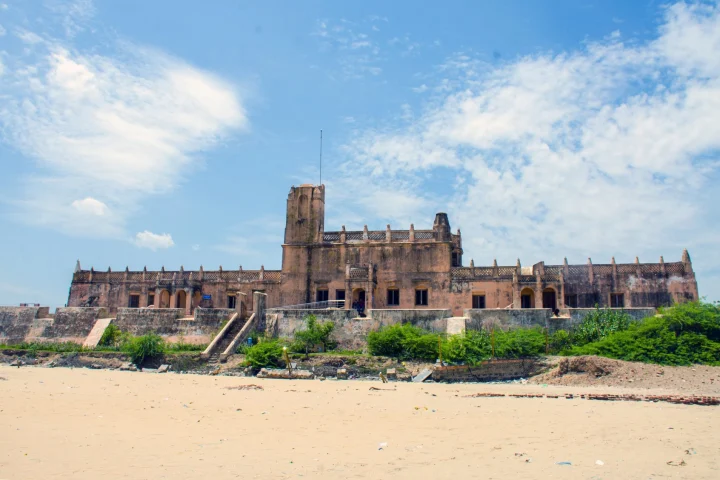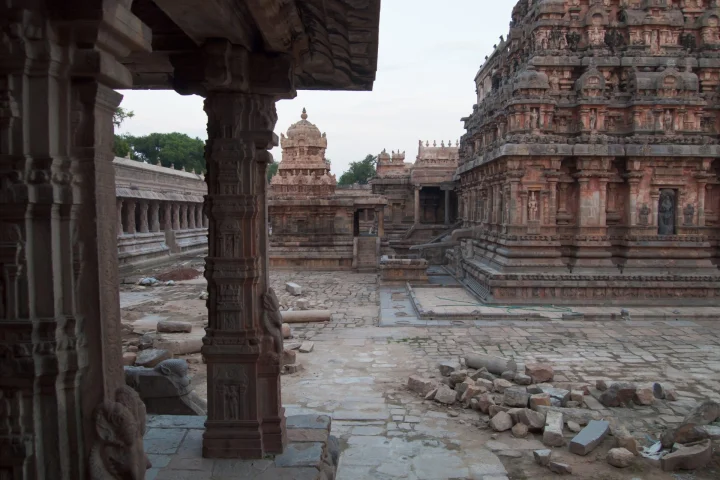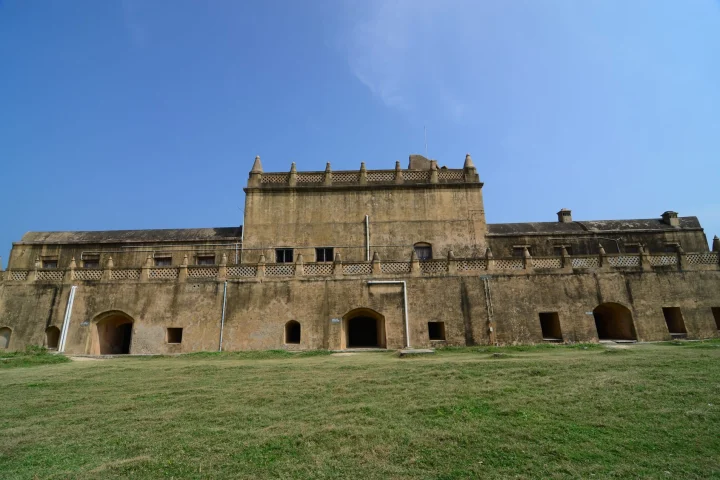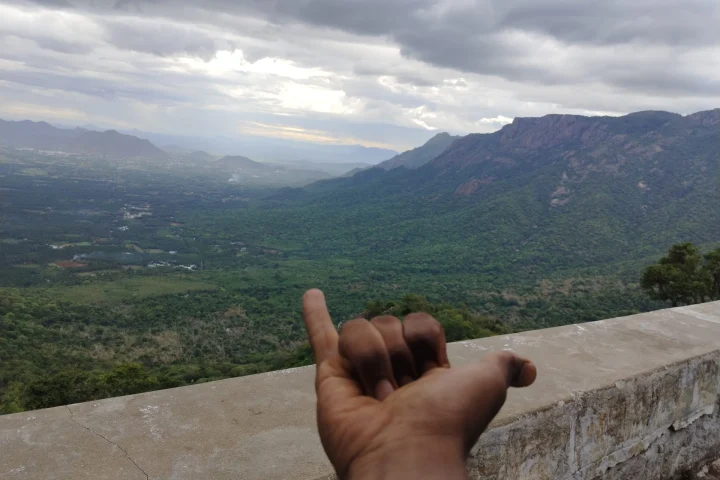
Gingee (Senji in Tamil) is one of the most dramatic forts in South India. Walls and gateways link three rocky hills – Rajagiri, Krishnagiri and Chandrayandurg (also called Chakkiliya Durg) – into a single stronghold enclosing a wide plain with palaces, granaries, temples and tanks. When Shivaji took it in 1677, he is said to have rated it among the most impregnable fortresses in India.
It is the closest major heritage site inland from Pondicherry and fits into a half-day outing, or a full day when combined with Tiruvannamalai further along the same road.
On this page
Why visit Gingee
Gingee is for travellers who want some physical effort with their history. The climb to Rajagiri is steep and exposed, but the reward is a hilltop citadel with a granary, a small temple and a view that explains why so many armies fought over this place. Even without climbing, the lower fort – the Kalyana Mahal, the stables and the tanks – is worth an hour. It is also a good trip for older children who enjoy scrambling up stone steps.
A short history
The earliest fortifications are traditionally dated to around the 11th century, and the site was strengthened by later local rulers and by the Vijayanagara Empire. From the 16th century the Nayaks of Gingee made it their capital and built much of what stands today. Shivaji captured Gingee in 1677 and his forces improved the defences. The Mughals then besieged it from 1691 to 1698 before it fell.
In the 18th century the fort is linked with the legend of Raja Desingh (Tej Singh), whose revolt against the Nawab of Arcot is still sung about in Tamil ballads. The French took Gingee in 1750 and the British in 1761. Today it is protected by the Archaeological Survey of India.
What to see at Gingee Fort
Rajagiri (the King's Fort)
The tallest hill, rising about 800 feet, holds the main citadel. The path passes through several gateways and ends at a narrow chasm once crossed by a drawbridge; today a small bridge leads to the summit, where you find the granary, a Ranganatha temple, a watch tower and a large cannon. Allow two and a half to three hours for the round trip, including rest stops.
The lower fort
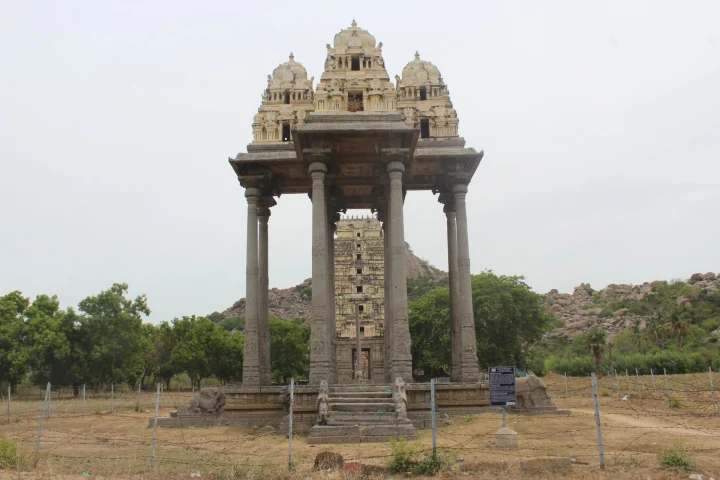
At the foot of Rajagiri stands the Kalyana Mahal, a square tower of several storeys with a pyramid-shaped top, set around a courtyard used by the women of the court. Nearby are long granaries, the elephant tank, stables and a building identified as a gymnasium. The Venkataramana Temple, with its large gopuram and carved pillars, lies between the hills.
Krishnagiri (the Queen's Fort)
Across the road to the north, Krishnagiri is smaller but steeper, with a stone stairway leading to an audience hall and temples on top. The climb is shorter than Rajagiri, which makes it a good option if you have limited time or want something less demanding.
Sample plans from Pondicherry
The full-day version is our Tiruvannamalai–Gingee day trip. Gingee also fits into longer itineraries heading inland, such as the Grand Tamil Nadu temple tour.
Half day
- 7:15 am – leave Pondicherry, with breakfast on the way.
- 9:00 am – buy tickets when the gates open and start the Rajagiri climb before the heat builds.
- 12:00 pm – come down, explore the Kalyana Mahal and granaries.
- 1:00 pm – lunch in Gingee town and drive back.
Full day with Tiruvannamalai
- Early start from Pondicherry, arriving at Gingee for a shorter visit to the lower fort or Krishnagiri.
- Continue about 40 km to Tiruvannamalai for the Arunachaleswarar Temple and Sri Ramanasramam.
- Return to Pondicherry in the evening.
How to reach Gingee from Pondicherry
The drive heads west through Villupuram district – paddy fields, sugarcane and small market towns – until the boulder-strewn hills of Gingee rise out of the plain. The fort lies just outside Gingee town, with Rajagiri and Krishnagiri on either side of the main road. By car it takes about an hour and a half. Buses on the Pondicherry–Tiruvannamalai route stop in Gingee town, but a car is more practical if you plan to continue to Tiruvannamalai the same day.
Best time and weather
November to February is the best time, with cooler mornings for the climb. Rain from the northeast monsoon between October and December can make the stone steps slippery, so take care after showers. From March to June the rock heats up quickly; if you visit then, be at the gate as early as possible and avoid climbing after mid-morning.
Timings and tickets
The fort is managed by the Archaeological Survey of India and is generally open from about 9 am to 5 pm. Rajagiri and Krishnagiri have separate ticket points, and entry to the climbs usually stops by mid-afternoon so visitors can get down before closing. The entry fee is modest, with a higher rate for foreign nationals; check current fees and hours on the ASI website or at the counter before you go.
Food and facilities
There are no restaurants inside the fort and little shade on the climb. Gingee town has simple vegetarian and non-vegetarian eateries serving meals, biryani and South Indian snacks. Carry your own water and a light snack for the climb, and take all litter back down with you.
Practical tips
- Wear proper shoes with grip – not flip-flops.
- Carry at least one litre of water per person; there is nowhere to refill on Rajagiri.
- Monkeys are common; keep food out of sight and hold on to bags.
- The climb is not suitable for people with heart or knee problems, or for small children who need carrying.
- Go with company, and start down well before closing time.
Official information: Archaeological Survey of India
Frequently asked questions
How far is Gingee Fort from Pondicherry?
About 67 km by road, which takes around an hour and a half.
How long does it take to climb Gingee Fort?
The round trip to the top of Rajagiri usually takes two and a half to three hours, including rest stops. Krishnagiri is shorter but steeper.
What are the Gingee Fort timings?
The ASI site is generally open from about 9 am to 5 pm, with entry to the hill climbs closing earlier in the afternoon. Check before you go.
Who built Gingee Fort?
Early fortifications date to around the 11th century, but most of what survives was built by the Nayaks of Gingee in the 16th century, with later changes under Shivaji’s Marathas.
Can Gingee and Tiruvannamalai be covered in one day?
Yes. Tiruvannamalai is about 40 km beyond Gingee, so both fit into one long day from Pondicherry if you keep the fort visit short.